
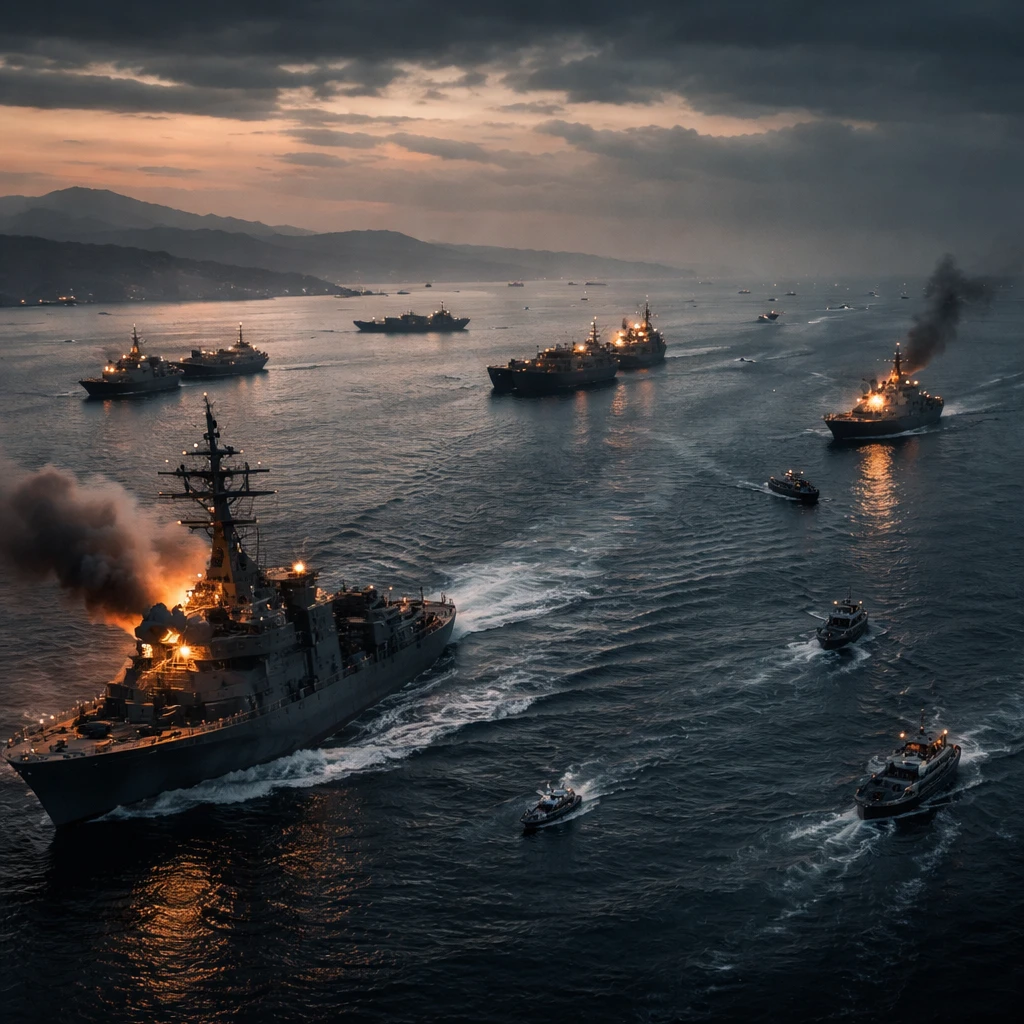
The United States and Iran conducted reciprocal strikes on Tuesday, escalating military tensions to their highest level since late-July amid continuing confrontations over the Strait of Hormuz.
CENTCOM said in a post on X that by Tuesday evening it had completed a wave of strikes against targets belonging to Iran's Islamic Revolutionary Guard Corps. The command said the operations hit air-defense sites, radar installations and naval assets.
CENTCOM framed the strikes as a response to recent actions by the IRGC, saying they followed attacks on commercial shipping transiting the Strait of Hormuz and assaults against American service members in the region.
State-linked Iranian media reported that Iran retaliated by striking multiple U.S.-linked targets located in Iraq, Jordan and Bahrain. Iranian outlets also indicated Tehran had threatened commercial vessels operating in and near the Strait of Hormuz.
The exchange represents the most severe fighting between Washington and Tehran since late-July, with both sides remaining at odds over navigation through the strategic waterway.
Official positions on access to the waterway remain in direct conflict. U.S. authorities have continued to assert that the Strait of Hormuz remains open to maritime traffic, while Iranian officials have declared the crossing closed to all commercial shipping.
President Donald Trump signaled further action against Iran in remarks on Tuesday, saying he would "hit them hard." Separately he threatened an attack on Kharg Island, which is a major Iranian oil export hub. In a social media post on Tuesday evening he wrote: “I like our position now much better, with almost total control of the Hormuz Strait, and their economy totally collapsing… They are just playing out the inevitable.”
Iran also issued warnings to U.S. Gulf allies, urging them to remove American forces from their territories or face escalated Iranian aggression, according to Iranian reporting.
Markets reacted to the heightened hostilities. Oil prices rose this week as the confrontations suggested little movement toward de-escalation. Supply through the Strait of Hormuz remained limited, with shipping data showing traffic in the waterway at only a fraction of prewar levels.
The situation remains fluid, with the competing claims over access to the Strait and reciprocal strikes creating sustained uncertainty for maritime operators and oil markets.