
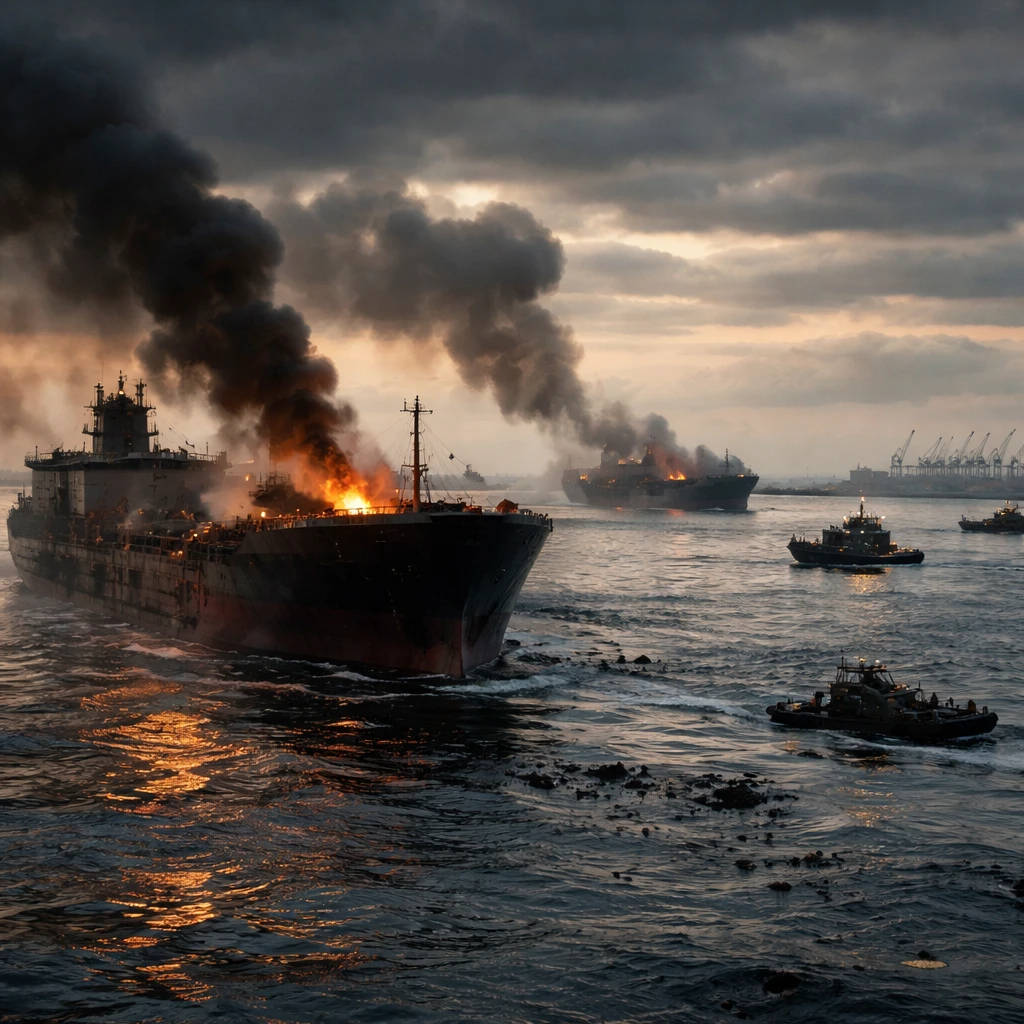
Ukrainian military officials reported on Monday that their forces struck a total of 12 vessels in the Sea of Azov - seven fuel tankers and five dry-cargo ships - as part of an expanded campaign of maritime attacks in the region.
According to a statement from Ukraine's General Staff, the seven tankers were moving Russian oil and petroleum products in contravention of international sanctions. The military authority said the group of dry-cargo vessels and tugboats carried military cargo, equipment and technical materials intended to support Russia's maritime logistics operations. No additional information about the identity, size or ownership of the targeted vessels was included in the statement.
The strikes follow a string of nearly daily attacks last week on ships linked to Russia in the Sea of Azov. Ukrainian officials said those operations initially aimed to cut fuel supplies to occupied Crimea; over the course of the campaign the target set broadened to include other types of vessels beyond fuel carriers.
Moscow's response included assaults on Ukrainian Black Sea ports. Russian attacks on those ports damaged at least one foreign vessel on Monday, Ukrainian authorities said. The naval campaign on the Sea of Azov is occurring alongside strikes on Russian oil refineries, which Ukrainian forces have carried out and which have contributed to a nationwide fuel shortage inside Russia.
In reaction to the refinery damage and related supply pressures, Russian authorities imposed temporary export bans on most diesel, gasoline and jet fuels. Russia also temporarily suspended shipping through the Don-Azov Channel, the waterway that connects the Don River with the Sea of Azov, and closed the Kerch Strait - the link between the Sea of Azov and the Black Sea - from Friday evening.
Ukraine's General Staff noted that previous fuel-carrying ships targeted by Kyiv were relatively small when compared with the ocean-going tankers that operate in global markets. Beyond that comparison, the statement offered no further operational details.
KeyPoints
- Ukrainian forces reported striking seven fuel tankers and five dry-cargo vessels in the Sea of Azov on Monday - actions described as part of an expanded maritime campaign.
- The General Staff said the tankers were transporting Russian oil and petroleum products in violation of international sanctions, while the dry-cargo ships and tugboats moved military cargo and equipment supporting Russian maritime logistics.
- The maritime attacks coincide with strikes on Russian oil refineries that have contributed to a national fuel shortage in Russia and prompted temporary export bans on most diesel, gasoline and jet fuels.
Risks and Uncertainties
- Limited vessel details - the military statement did not provide identifying or technical specifics about the targeted ships, leaving uncertainties about ownership, flag states and exact cargoes. This affects assessments of legal and commercial implications for shipping and trade sectors.
- Disruption to shipping routes - temporary suspensions of the Don-Azov Channel and closure of the Kerch Strait may hinder regional maritime traffic and logistics, with implications for ports, freight operators and energy transport networks.
- Fuel market impacts - refinery attacks and subsequent export bans in Russia have created a domestic fuel shortage and could affect regional energy supply chains and commodity markets.