
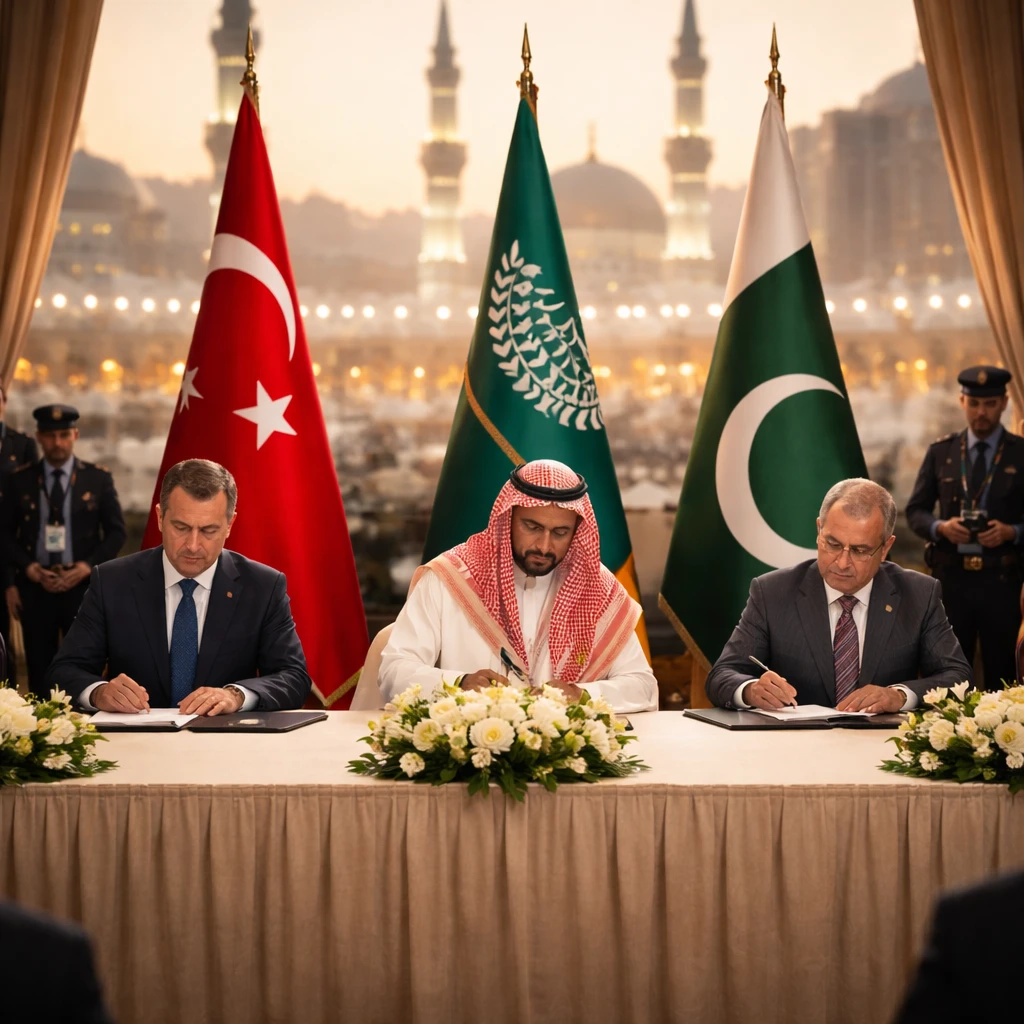
Turkey, Saudi Arabia and Pakistan will sign a joint defense agreement in Mecca today, a Turkish official confirmed, in a development that comes as tensions across the Middle East have intensified following U.S. and Israeli attacks on Iran.
The pact is described as a strengthening of relationships among three major Sunni Muslim countries that are aligned with the United States. The official confirmation said the signing will take place today, but it is not clear whether the agreement will be publicly announced at the time of signing.
Specific obligations and the precise commitments that each country will assume under the agreement have not been disclosed. Officials have not provided details about force contributions, command structures, timelines, or any other terms that would clarify how the agreement would operate in practice.
Observers and officials have also not clarified how this pact will affect the wider crisis unfolding across the Middle East. The impact of the agreement on regional stability and on ongoing hostilities remains uncertain, given the lack of detailed information about the arrangement.
The three countries share heightened concerns about instability in the region and the actions of Shi'ite Iran and Israel. The article notes that Gulf states have faced attacks from Iran following strikes by the U.S. and Israel, and that these developments form part of the backdrop for the agreement.
Finally, the pact is occurring at a time when the United States faces challenges in managing security threats across the region. How the new agreement between Turkey, Saudi Arabia and Pakistan will interact with U.S. efforts, or alter the security environment more broadly, is not specified in the available information.
Clear summary
Turkey, Saudi Arabia and Pakistan will sign a joint defense agreement in Mecca today, confirmed by a Turkish official. The accord aims to reinforce ties among the three Sunni nations aligned with the United States, but the agreement's terms and its potential effect on regional tensions following U.S. and Israeli attacks on Iran remain undisclosed and uncertain.
Key points
- Turkey, Saudi Arabia and Pakistan are scheduled to sign a joint defense agreement in Mecca today, as confirmed by a Turkish official.
- The pact is intended to strengthen ties among three major Sunni nations aligned with the United States, but the specific commitments of each country have not been made public.
- Given the subject matter, sectors related to defense and regional security are directly relevant to this development.
Risks and uncertainties
- Unclear terms - The absence of disclosed details about each country's commitments creates uncertainty about the operational scope and effectiveness of the agreement; this affects defense planning and regional security assessments.
- Unknown broader impact - It is uncertain how the pact will influence the wider Middle East crisis sparked by U.S. and Israeli attacks on Iran, creating risk for geopolitical stability in the region.
- Security management challenges - The United States is facing challenges in managing regional security threats; how this new trilateral agreement interacts with U.S. efforts is not specified and remains a source of uncertainty.