
Switzerland is preparing for a nationwide referendum on June 14 that would impose a ceiling on the country’s population at 10 million people - a proposal that has alarmed many corporate leaders and economic analysts. The measure, driven by the Swiss People’s Party (SVP), is framed by its proponents as a way to ease pressure on local infrastructure and public services. Opponents, including major employers and economists, caution that the consequences for labour supply and international agreements could be severe.
Ballot question and political framing
The initiative would force the Swiss government to take steps to prevent the population surpassing 10 million. Under the draft rules, if the population exceeds 9.5 million - a threshold projected for 2031 - Bern would be obliged to intervene to stop it reaching the 10 million mark, which forecasts indicate could occur in 2042. If the 10 million threshold were reached, the government would have to terminate international accords deemed to encourage population growth, including the agreement with the European Union that allows free movement of people. That free movement accord is one element of a wider set of Swiss agreements that afford the country access to the European single market.
How supporters describe the problem
SVP lawmakers and backers of the cap argue that Switzerland’s small territory cannot absorb the rapid population increase without harming daily life. As SVP lawmaker Yvan Pahud put it: "Switzerland is a small country with a limited territory, and it has experienced the highest population growth in recent years." Supporters say growing numbers have strained roads, public transport and other local infrastructure, while adding pressure to the housing market and increasing crime rates, according to proponents’ messaging.
Corporate and employer concerns
Many Swiss companies and employer groups have warned that restricting population growth would limit access to foreign skilled labour on which large sectors now rely. The potential loss of free movement with the EU is particularly worrying for firms that employ many non-Swiss workers. Martin von Moos, CEO of luxury hotels Belvoir in Ruschlikon and Sedartis in Thalwil, near Zurich, said the proposal threatens the operation of his hotels. "As a Swiss citizen, it concerns me very much for the future of our country and its prosperity," he said. "If we lost all of our foreign staff, the hotel simply wouldn’t function." He noted nearly half of his 115 staff came from outside Switzerland.
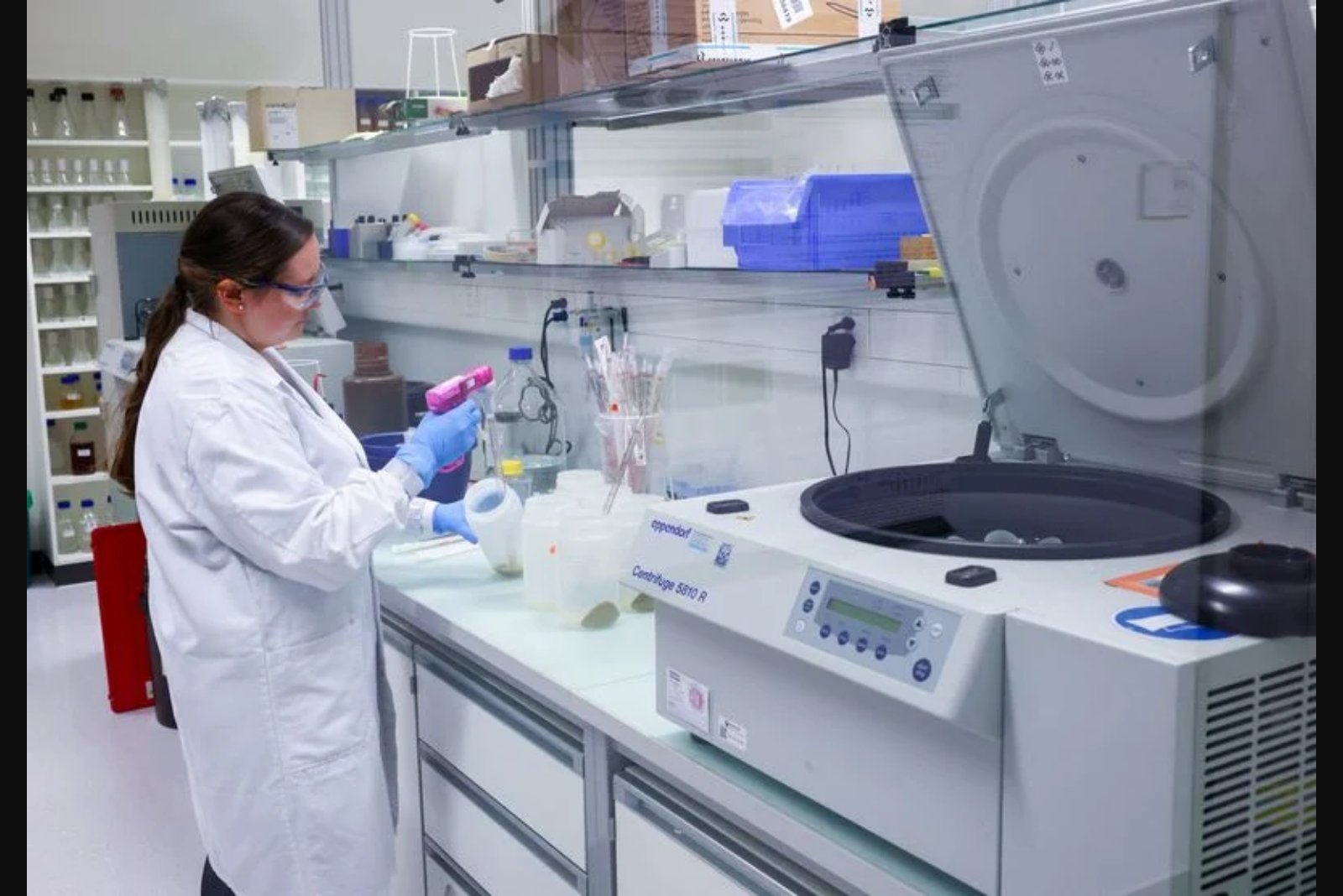
Biotech firms also voice alarm. Molecular Partners, based in Zurich, has more than half of its roughly 120 employees who are non-Swiss. Daniel Steiner, senior vice president targeted radio therapeutics at the company, warned of the practical limits. "I think if we said we could only hire out of the Swiss talent pool, or if we could only collaborate with the Swiss companies, it would basically be a showstopper," he said. "We may be forced to move things out of Switzerland."
Business association economiesuisse has criticised the proposal as an overly simplistic response to complex structural problems. Rudolf Minsch, the association’s chief economist, described the cap as a "populist attempt" to address those issues, saying: "It sells the illusion of a free lunch, and will not solve our housing or traffic problems."
Economic forecasts and measured impacts
Analysts warn the proposal could have a measurable negative effect on economic output if it led to the termination of key bilateral accords. Claude Maurer, chief economist at BAK Economics, said that abandoning the bilateral accords would reduce Swiss economic growth by 7.1% between 2028 and 2045. He quantified that impact as a loss of 685 billion Swiss francs, equivalent to $867 billion. Maurer said the broader effects would include slower growth and upward pressure on inflation, driven by wage increases, which in turn could prompt higher interest rates.
The demographic context complicates the picture. Switzerland’s population rose to 9.1 million by the end of 2025, up from 7.3 million when free movement with the EU began in 2002. Foreign-born residents now account for nearly 28% of the population. Like other European countries, Switzerland faces an ageing profile: the proportion of residents aged 20 to 64 is expected to decline from 60% to 56% by 2055, while the share aged over 65 is projected to increase from 21% to 27% over the same period.
Entrepreneurship and historical contributions
Opponents of the cap point to the role newcomers have played in founding and growing Swiss businesses. They cite well-known firms that were established either wholly or partly by foreigners, including Nestle, Swatch and ABB. A 2023 study by Avenir Suisse is frequently referenced, showing that 39% of company founders in Switzerland were foreigners.
Political debate and public opinion
The referendum has tapped into wider anxieties around immigration, housing and public services that have been harnessed by right-wing parties in other countries. Recent polling has shown a tightly balanced electorate on the question, with the most recent poll indicating 47% support for the cap and 52% opposed.
SVP lawmaker Thomas Matter dismissed many of the economic warnings as scaremongering. He argued that only one out of ten immigrants were workers with the sought-after skills and that GDP growth per head has declined since immigration increased. "We are not against immigration, but it has to be moderate and controlled so we bring in the right people," he said. "Before we had qualitative immigration, now we have quantitative immigration. Switzerland is still the same size as it was in 1848, and more and more people are living in the same space."
Business community response
Major Swiss corporate groups have publicly opposed the initiative. Roche, Nestle, ABB, UBS and Novartis have all criticised the proposal. Roche said: "We reject the initiative," adding that a yes vote would endanger agreements with the EU and worsen shortages of skilled workers. "Companies depend on access to qualified workers - especially from the EU," the company said.
Hotelier von Moos, who also leads the Swiss hotels association, warned of concrete consequences for the tourism sector. He said some hotels could be forced to close, prices could rise, and travel by non-European visitors could become more difficult. "We call this initiative a wolf in sheep’s clothing. It’s a simple message but it hides serious consequences," he said.
What voters will decide
Referendums are a central element of Swiss political life, with citizens voting on multiple national and regional questions across the year. On June 14, voters will decide whether to embrace a policy that supporters say is necessary to control the pressures of growth, and that opponents say risks significant economic and social costs, particularly through limiting labour mobility and potentially undermining key international agreements.
Exchange rate
The article uses an exchange conversion in reporting economic figures: $1 = 0.7902 Swiss francs.
Key Points
- Swiss voters will decide on June 14 whether to cap the country’s population at 10 million, a measure backed by the right-wing Swiss People’s Party.
- Businesses warn a yes vote could limit access to skilled labour, endanger bilateral accords with the EU - including free movement - and subtract from long-term economic growth.
- Demographic trends show rising numbers of foreign residents and an ageing population, intensifying the debate about labour supply and public services.
Risks and uncertainties
- Termination of bilateral accords - If the population cap triggers termination of agreements that support free movement, economic growth between 2028 and 2045 could be 7.1% lower, a loss BAK Economics quantifies at 685 billion Swiss francs; this impacts exporters and firms reliant on EU market access.
- Labour shortages - Restricting immigration could exacerbate shortages of qualified workers across sectors such as hospitality, biotech, health care and finance, potentially forcing firms to relocate activities or reduce operations.
- Inflationary and interest rate pressures - Analysts warn slower growth combined with wage-driven inflation could lead to higher interest rates, affecting borrowing costs and balance sheets across the economy.