
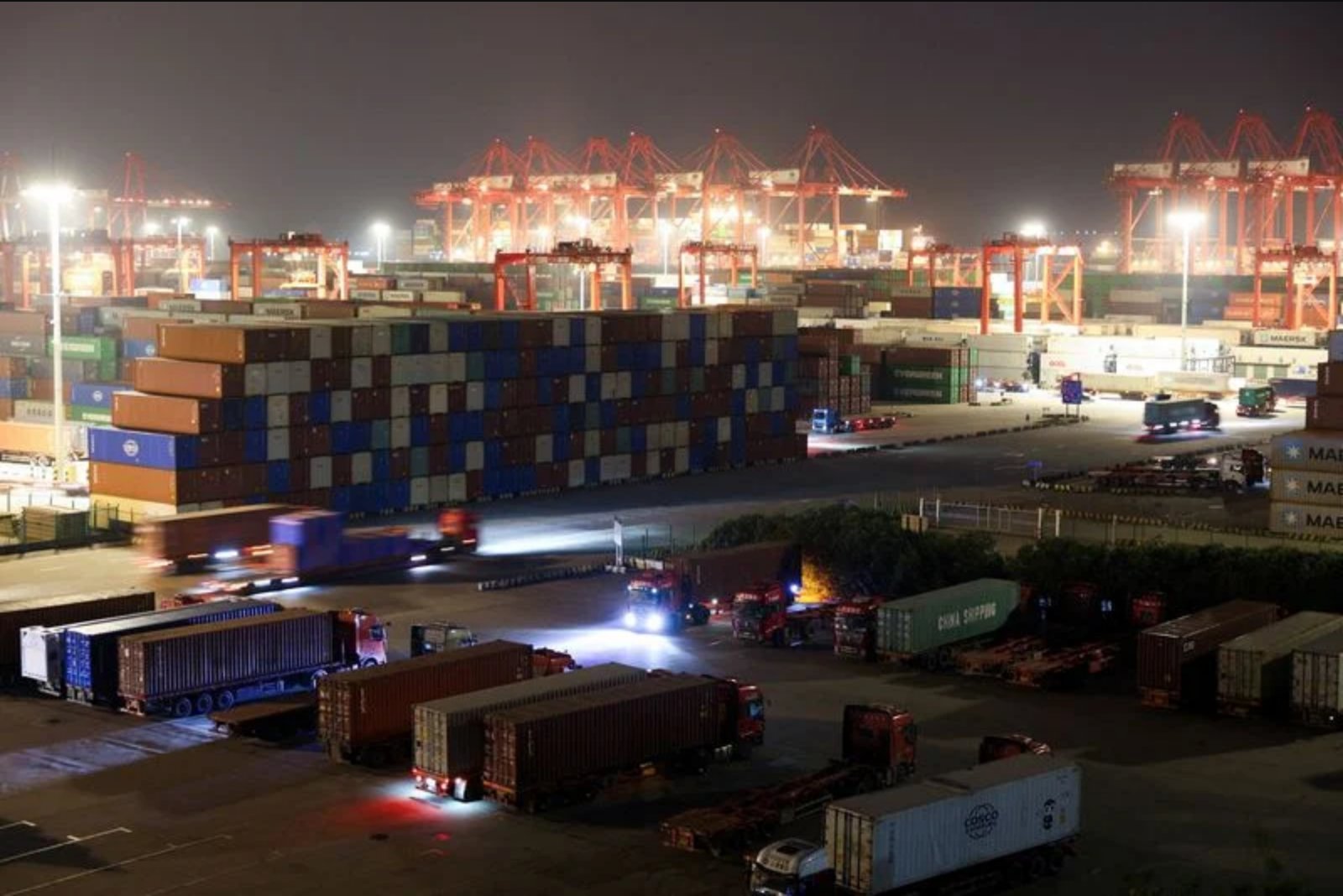
BEIJING, June 8 - China’s export expansion likely picked up in May, driven largely by a wave of overseas orders moved forward to avoid anticipated energy-related cost pressures linked to the Gulf war and by continued foreign demand for semiconductors and components used in artificial intelligence equipment.
In a Reuters poll of 32 economists, the consensus projection was for exports to have climbed 15% year-on-year in dollar terms for May, marginally above the 14.1% increase recorded in April. The poll highlighted that while the recent Middle East conflict has not yet significantly reduced China’s outbound shipments - a policy-preferred growth engine - many economists consider the current resilience temporary.
Those surveyed pointed to two drivers behind the likely stronger May print. First, foreign buyers brought forward purchases to pre-empt possible increases in energy-driven input costs, creating a backlog of orders that lifted shipment volumes. Second, demand for semiconductors and AI-related parts remained robust internationally, sustaining shipments of tech-heavy goods.
But respondents were divided on how healthy exports really were once front-loading effects are stripped out. A subset of forecasters produced notably lower estimates: China Industrial Securities, Huachuang Securities and Zheshang Securities each returned forecasts near 10% growth. The Economist Intelligence Unit and JP Morgan put May exports at roughly 12% growth. At the other end, ING forecast a 19.5% increase.
Separate manufacturing data for May underlined the unevenness of the picture. New export orders fell sharply month-on-month after surging to a two-year high in April, when warehouse managers described business as "booming" amid a scramble by foreign firms to lock in supplies before potential price rises. That abrupt decline in new orders suggests the benefits of front-loading may be diminishing.
The broader macro backdrop remains mixed. Rapid export gains helped propel the roughly $20 trillion economy past expectations in the first quarter, yet momentum cooled afterward. Economists highlighted that weak domestic demand leaves China exposed if international conditions worsen, increasing the likelihood that policymakers may need to provide additional support.
On the import side, the Reuters poll put May inbound shipments up about 25% year-on-year, roughly matching April’s 25.3% pace. The pattern of robust imports aligns with surging tech demand in the region: South Korea’s exports - often read as a gauge of China demand for tech inputs - jumped 80.9% in June, driven by semiconductors and technology parts integral to China’s manufacturing supply chain.
Policy tensions and structural critiques of China’s trade model featured prominently in the commentary accompanying the figures. Domestic and international voices are increasingly urging Beijing to bolster consumer demand at home. Critics argue the country has relied heavily on importing components and re-exporting finished goods rather than stimulating domestic consumption, a strategy that could squeeze other emerging markets out of higher-value manufacturing roles.
The Organisation for Economic Cooperation and Development was reported to have amplified those concerns, noting that nearly 60% of Chinese firms’ recent market share gains can be explained by subsidies received. A U.S. Federal Reserve paper cited in the commentary found China’s trade surplus - when measured against global GDP - has exceeded 1%, above the peaks seen by Japan and Germany in the late 20th century, and shows little sign of narrowing. Analysts interpret that pattern as indicating persistent industrial overcapacity that may reshape global manufacturing over the coming years.
Diplomatic developments offered only limited relief. A high-profile meeting last month between U.S. President Donald Trump and President Xi Jinping reportedly eased tensions but produced no substantive breakthroughs on tariff disputes or on coordinated work to end the Iran conflict.
Finally, the Reuters poll placed China’s trade surplus at around $92.1 billion for May, up from $84.8 billion in April and $51.3 billion in March, reflecting the combined effects of stronger exports and sustained import growth.
Summary
The Reuters poll of 32 economists points to a 15% year-on-year rise in China’s May exports, fueled by front-loaded orders to avoid energy price shocks from the Gulf war and continued demand for semiconductors and AI components. Divergent forecasts and a sharp drop in new export orders after April’s two-year high indicate the front-loading effect may be running out of steam, leaving the economy vulnerable amid weak domestic demand.