
Economy May 6, 2026 10:42 AM

St. Louis Fed's Musalem Says Inflation Risks Now Outweigh Employment Concerns

Fed official signals policy rate near neutral and leaves open the possibility of extended rate stability amid economic uncertainty

By Caleb Monroe

Federal Reserve Bank of St. Louis President Alberto Musalem told bankers that inflation risks have been rising relative to employment concerns and that the central bank's policy rate is at or near neutral. Musalem emphasized significant uncertainty in the outlook and said policymakers may need to keep rates at current levels for a prolonged period while remaining prepared to move in either direction.

St. Louis Fed's Musalem Says Inflation Risks Now Outweigh Employment Concerns

Key Points

  • Musalem said inflation risks are rising relative to employment concerns, signaling a shift in the balance of risks facing policymakers.
  • The Fed policy rate is described as at or near neutral and potentially slightly accommodative, suggesting policymakers could maintain current rates for an extended period.
  • Recent dissents at the last policy meeting cited rising oil prices and uncertainty from the war in Iran, factors that leave the next policy move ambiguous - impacting bond and energy markets as well as broader market expectations.

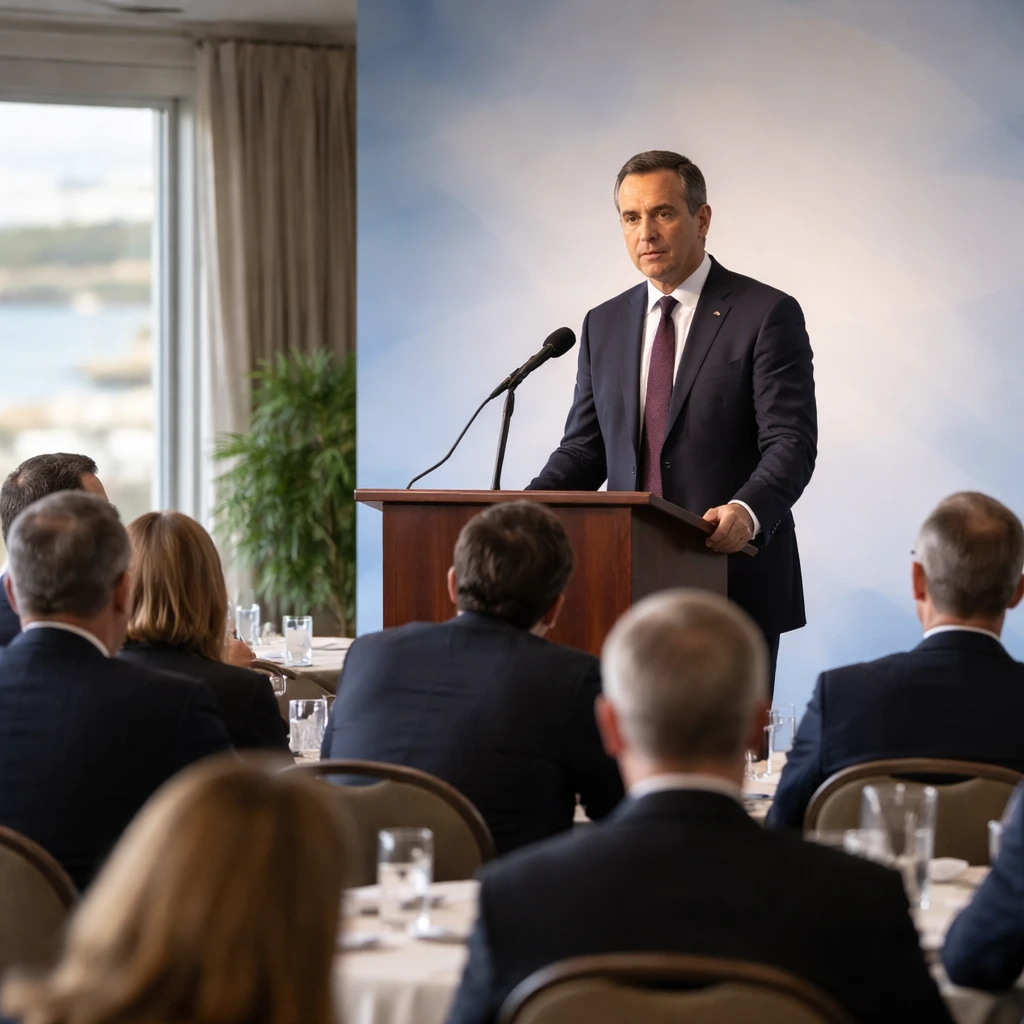
Federal Reserve Bank of St. Louis President Alberto Musalem said Wednesday that risks tied to inflation have been increasing compared with risks related to employment, while stressing a high degree of uncertainty about where the economy is heading.

Speaking at an event hosted by the Mississippi Bankers Association in Fairhope, Alabama, Musalem pointed out that inflation remains well above the Fed's 2% objective. He said policymakers must weigh both labor-market and price pressures, but that, in his view, the balance of risk has shifted.

"We have risks both on the employment side and on the inflation side. In my understanding, the risks have been shifting towards more risk on the inflation side than the employment side," Musalem said.

The Fed official indicated that the central bank's benchmark policy rate is currently at or close to what would be considered neutral for the economy, though he allowed that the stance could be slightly accommodative. Given that assessment, he said it is possible that rates will need to remain at current levels for an extended period to ensure inflation comes down toward target.

Musalem also acknowledged that the outlook is not clear-cut and that a range of outcomes remains possible. He said policymakers must be ready for scenarios in which they would either lower or raise rates depending on incoming data and how conditions evolve.

"So a lot of uncertainty right now, and it’s important to see how things settle," he said.

Last month, Fed policymakers voted to keep interest rates unchanged. The statement that followed the meeting prompted three officials to dissent from language suggesting the next move would likely be cuts. Those dissenters pointed to rising oil prices and uncertainty stemming from the war in Iran as factors that leave open the prospect that future policy could move either toward cuts or toward further tightening.

Musalem's comments underscore the Fed's current balancing act: with inflation still above target, officials are weighing whether to hold policy steady for longer, while remaining attentive to labor-market signals and geopolitical developments that could alter the outlook.

Risks

  • Elevated inflation relative to the Fed's 2% target raises the risk that price pressures remain persistent, affecting markets sensitive to interest-rate expectations - notably fixed income and consumer-sensitive sectors.
  • Significant uncertainty in the economic outlook means policymakers may need to keep rates at current levels longer than expected, which could influence borrowing costs across housing, corporate credit, and consumer lending.
  • Geopolitical tensions and rising oil prices were explicitly cited by dissenting officials as factors that could push future policy either toward cuts or toward further tightening, creating uncertainty for the energy sector and market volatility.

More from Economy

London High Court Upholds Greece's Valuation of GDP-Linked Warrant Buyback May 6, 2026 Musalem Warns Inflation Risks Are Tilting the Scales Higher May 6, 2026 Global supply chain strains spike to highest level since mid-2022 as Middle East conflict disrupts trade May 6, 2026 Colombia’s fiscal watchdog to halt monitoring and legal opinions after budget cut May 6, 2026 U.S. Oil Product Shipments Reach Record 8.2 Million Barrels Per Day May 6, 2026