
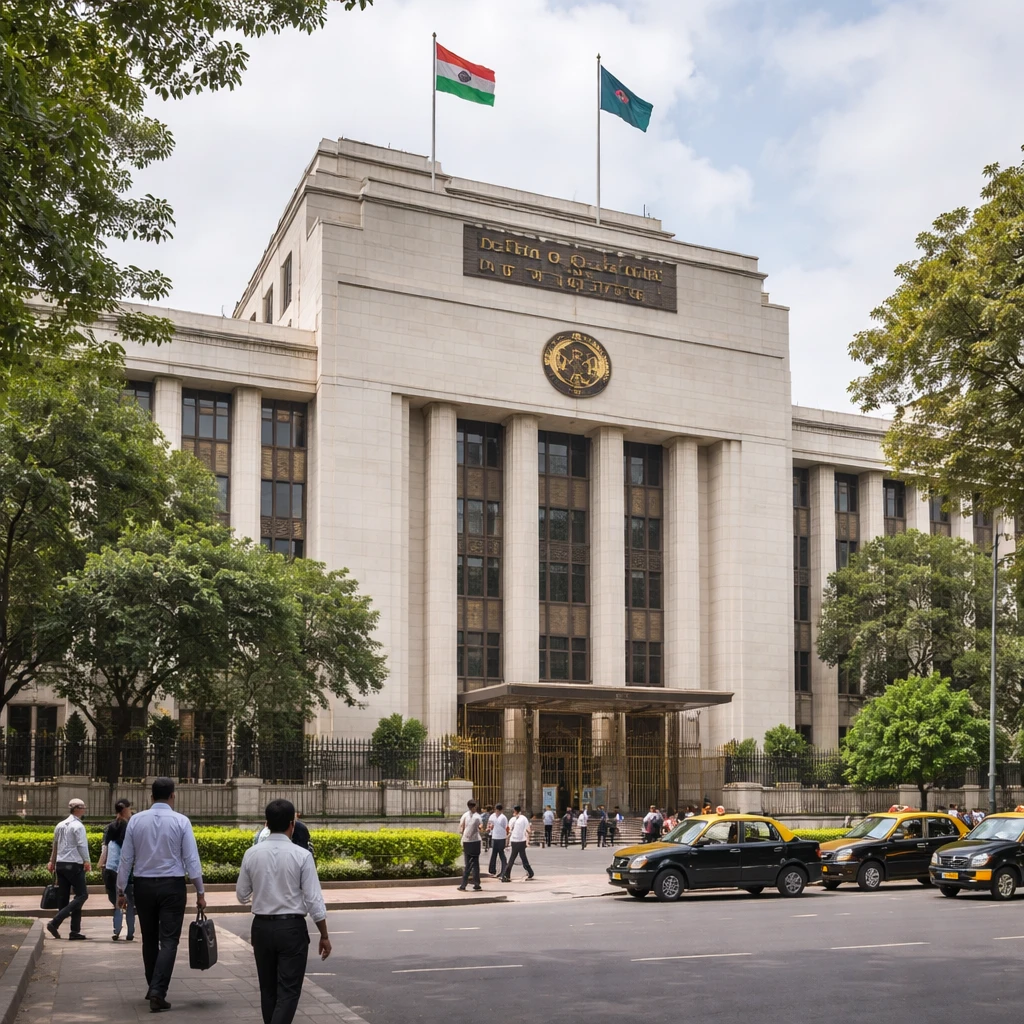
The Reserve Bank of India is expected to leave its key policy rate unchanged at 5.25% in August and through the rest of the year, according to a Reuters poll of economists conducted between July 21 and July 27. The survey indicates the central bank is weighing external shocks - notably the fallout from the Middle East war - and domestic price pressures before any decision to tighten monetary policy.
Inflation rose to 4.38% in June, marking the first monthly reading above the RBI's 4% midpoint target since January 2025. Despite that uptick, many economists polled scaled back bets on a rate increase after Governor Sanjay Malhotra described it as "premature" to discuss hikes. That stance contrasts with some other central banks in both emerging and developed markets that have recently moved to raise borrowing costs in response to inflation and currency weakness.
Nearly 95% of respondents - 68 out of 72 economists surveyed - expected the Monetary Policy Committee to keep the repo rate at 5.25% when it meets from August 3 to August 5. Four economists in the poll anticipated a 25 basis point increase. The RBI reduced the policy rate by 25 basis points to 5.25% in December and has maintained that level since then.
There was not a unanimous view on policy beyond the immediate horizon, but poll medians pointed to interest rates remaining on hold at least until early 2027. Economists cited a range of reasons for the pause, among them the uncertain and potentially adverse effects of global conflict and trade frictions on domestic growth.
"We have already seen some of the effects of the war trickle down to inflation, but it will be too quick a reaction by the central bank to hike rates now because growth will be affected adversely, and the situation outside is too fickle to react in haste," said Aditya Vyas, chief economist at STCI Primary Dealer.
Survey respondents also pointed to other headwinds. Several sectors remain exposed to U.S. tariffs and now to the economic repercussions of the Middle East conflict. Those vulnerable segments have absorbed considerable stress even as aggregate macro indicators appear resilient.
"While overall macro indicators are resilient, the more vulnerable sectors that have been exposed to both tariffs and (the Middle East) conflict have been hit hard," said Kanika Pasricha, chief economic adviser at the Union Bank of India. Pasricha added that persistent oil prices above $90 a barrel could prompt the RBI to reconsider policy in the second half of the fiscal year.
Pressure on the currency is another important factor. The Indian rupee has weakened nearly 7% against the U.S. dollar so far this year. At its June policy meeting, the central bank announced several measures aimed at attracting foreign capital and shoring up the currency. Those steps have helped draw in nearly $20 billion of inflows, but have not halted the rupee's decline.
Despite the currency slide, economists polled said the RBI is unlikely to deploy interest-rate increases primarily to defend the currency, given its potential costs for domestic growth. Growth is forecast to decelerate to 6.6% this fiscal year from 7.7% in the previous year, a slowdown that makes tight monetary policy more costly.
"I do not think the RBI will use interest rate tools to target the rupee because it is ineffective...they cannot simply discard the growth objective, and rate hikes are way more costly now at this particular juncture," said Apoorva Javadekar, chief economist at Muthoot Fincorp. Javadekar said the RBI would consider raising rates only if inflation climbed above 6% and was expected to remain around that level on a sustained basis.
Poll medians showed inflation averaging 4.8% for the fiscal year, slightly higher than the 4.7% median in the May Reuters survey but still below the RBI's own projection of 5.1%. That balance - inflation modestly above target but not at levels judged persistently high - helps explain why most forecasters expect policy to remain accommodative for now, even as external risks and currency weakness add complexity to the central bank's decision-making.
With the August meeting days away, the consensus from the Reuters poll is clear: the RBI is likely to keep the repo rate at 5.25%, prioritizing growth concerns and the uncertain external backdrop over an immediate response to the recent inflation uptick.