
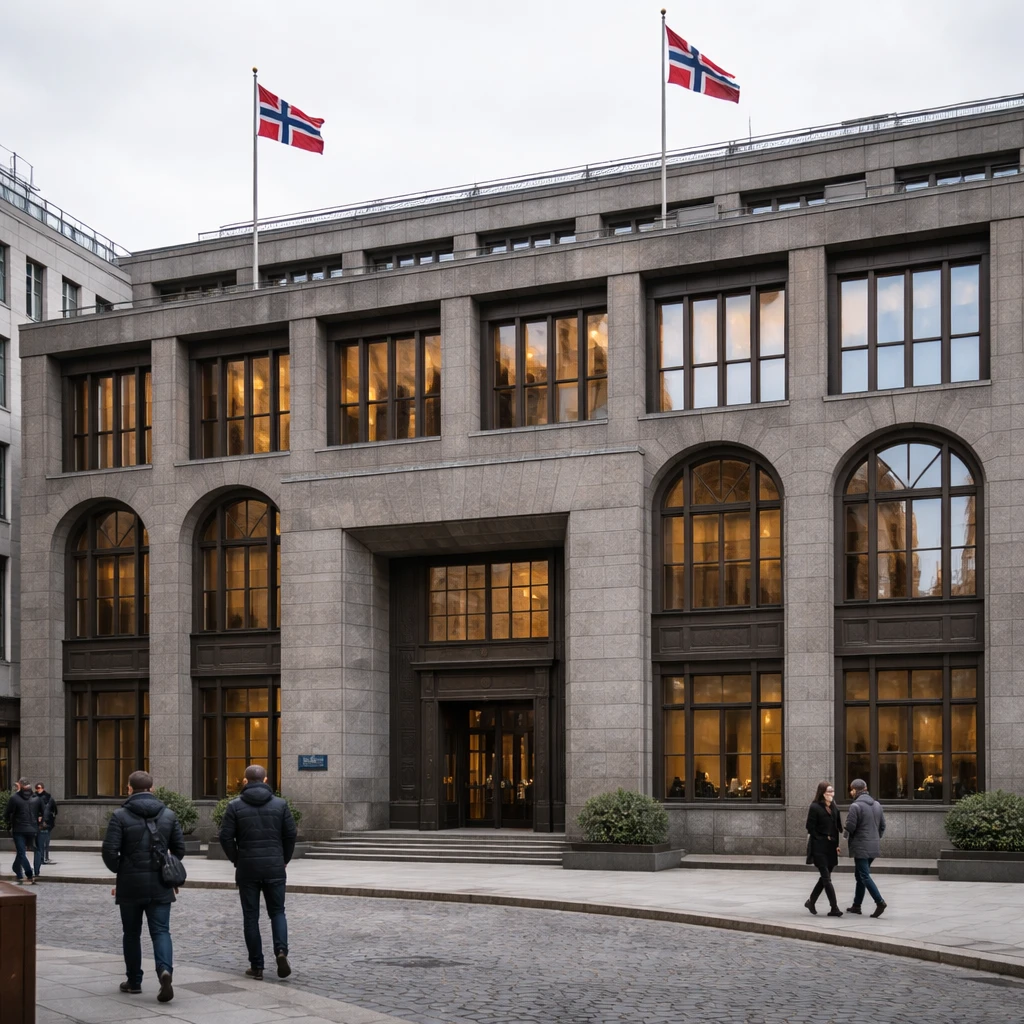
Economy May 7, 2026 04:58 AM

Norges Bank Raises Policy Rate to 4.25% Citing Persistent Inflation

Central bank moves up policy rate by 25 basis points as underlying inflation remains above target and geopolitical risks lift energy prices

By Sofia Navarro
Share
Twitter Reddit Facebook LinkedIn

Norway’s central bank increased its key policy rate by 0.25 percentage points to 4.25% on Thursday. Governor Ida Wolden Bache said inflation has been too high and above target for several years; the bank's preferred underlying inflation measure was 3.0% in March. Norges Bank highlighted significant uncertainty about future economic developments and warned that rising oil and gas prices tied to the Middle East war could further push inflation upward.

Norges Bank Raises Policy Rate to 4.25% Citing Persistent Inflation
Summarize with
ChatGPT Perplexity Claude Grok Gemini

Key Points

  • Norges Bank raised its key policy rate by 0.25 percentage points to 4.25%.
  • The bank's preferred measure of underlying inflation was 3.0% in March, above the roughly 2% target.
  • The decision references substantial uncertainty and the potential for higher oil and gas prices - connected to the Middle East war - to push inflation higher; this has implications for the energy sector and interest-rate sensitive markets.

Norway’s central bank raised its key policy rate by 0.25 percentage points to 4.25% on Thursday, a move the bank described as necessary given persistent inflationary pressures. The decision marks the first rate increase by a European central bank since the outbreak of the Middle East war.

Governor Ida Wolden Bache said inflation remains too high and has been above the bank’s target for several years. The central bank’s preferred gauge of underlying inflation was 3.0% in March, the bank noted, higher than the stated monetary policy target of around 2%.

The bank emphasized the substantial uncertainty that surrounds future economic developments. In particular, Norges Bank pointed to the potential for higher oil and gas prices linked to the Middle East war to feed through into inflation.

Officials framed the rate increase as a response to the current inflation profile and the risks that could keep inflation elevated. The step up in the policy rate is intended to address the gap between measured underlying inflation and the central bank’s target.

While the bank did not provide new numerical forecasts in its statement, it stressed the elevated level of underlying inflation and the uncertainty facing the outlook, including energy-price dynamics connected to the geopolitical situation.


Context and implications

The move by Norges Bank underscores its view that inflation pressures have persisted and that external factors - notably movements in oil and gas prices related to the Middle East war - could add to those pressures. The bank’s emphasis on uncertainty signals that future policy steps will depend on how inflation and those external drivers evolve.

What the bank reported

  • The policy rate was increased by 0.25 percentage points to reach 4.25%.
  • Underlying inflation was 3.0% in March, above the target of around 2%.
  • The bank pointed to substantial uncertainty about future developments and noted that rising oil and gas prices stemming from the Middle East war could push inflation higher.

Risks

  • Substantial uncertainty about future economic developments could complicate monetary-policy decisions and market reactions - affecting financial markets and rate-sensitive sectors.
  • Rising oil and gas prices tied to the Middle East war could add upward pressure to inflation, which would influence the energy sector directly and broader price dynamics.
  • Persistently elevated underlying inflation, having exceeded the target for several years, raises the risk that further policy tightening may be required if inflation remains above the bank's goal.

More from Economy

Fatal Russian Strikes Reported in Ukraine's Kherson Region Jun 5, 2026 Escalating Military Exchanges Near Strait of Hormuz Heighten Regional Tensions Jun 5, 2026 Citi Survey Sees Slight Rise in Mexico Inflation Forecasts, Updates Growth and FX Estimates Jun 5, 2026 May Jobs Surge Reignites Inflation Concerns, Clouds Near-Term Rate Cuts Jun 5, 2026 UK Regulator Takes Control of Euro Exchange Amid Money-Laundering Concerns Jun 5, 2026