
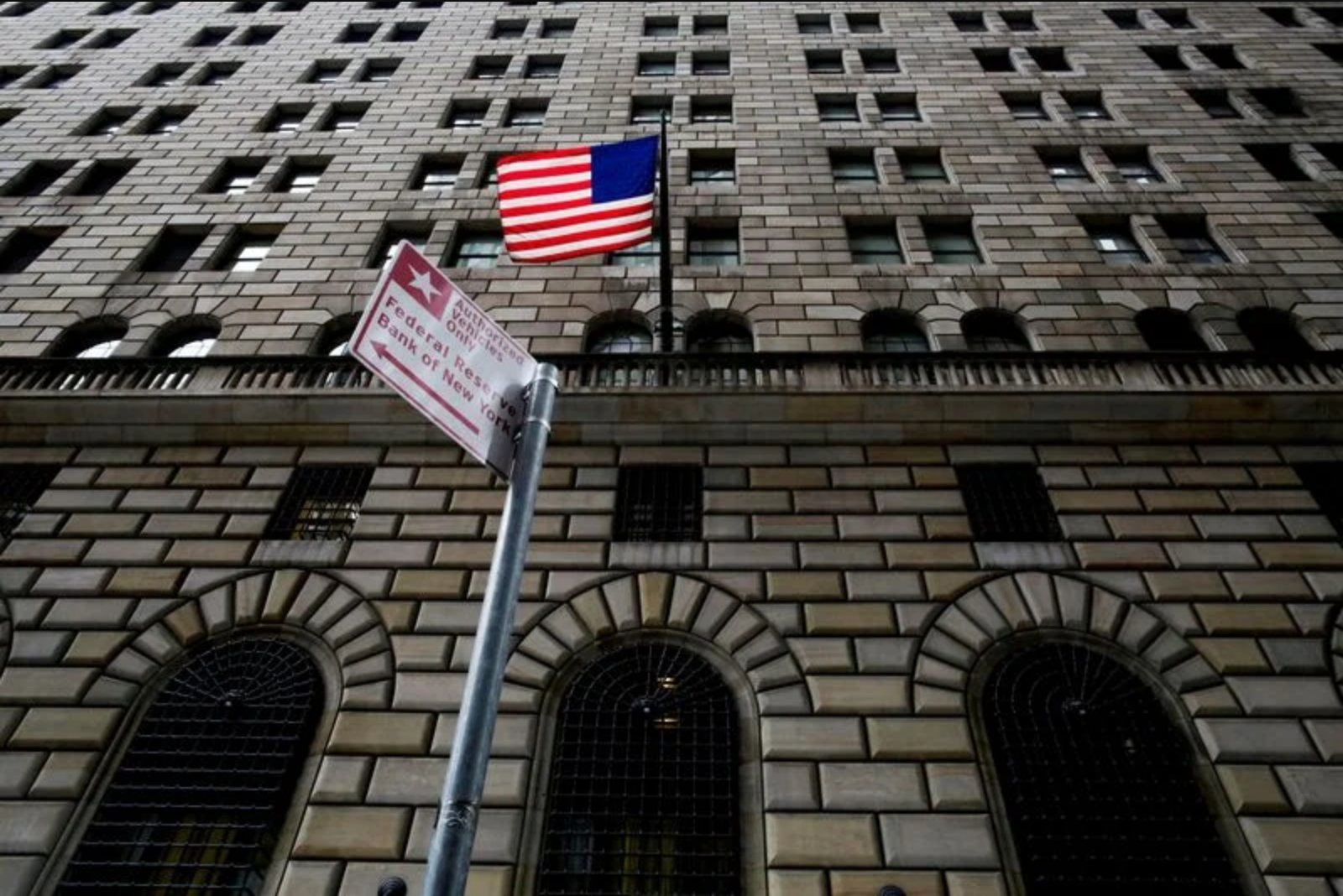
The New York Federal Reserve's consumer expectations survey for May showed that the public's outlook on inflation remained largely steady despite mounting upward pressure on prices linked to conflict in the Middle East and related supply disruptions.
Inflation expectations for the year ahead were 3.5% in May, a hair below April's 3.6% reading. Expectations further out were little changed, with respondents projecting inflation of 3.1% three years from now and 3.0% five years out.
Although the anticipated trajectory of price pressures did not move significantly in May, the regional Fed bank's survey highlighted increases in uncertainty over future inflation on near-term measures. That rising uncertainty coincided with heightened anxiety among respondents about both current household finances and their financial prospects.
Policymakers at the Federal Reserve are likely to take some comfort from the relative calm in inflation expectations as they approach their June 16-17 policy meeting. Markets and analysts currently expect the central bank to hold its benchmark federal funds rate in the 3.50%-3.75% range at that gathering, as officials seek more data on the economic effects of recent geopolitical developments.
The bank cited the war in the Middle East - described in the survey commentary as a U.S.-backed war with Iran - as having produced notable disruptions. The conflict has brought trade flows through the Strait of Hormuz to a near halt and has driven a sharp rise in gasoline prices, which has fed into headline measures of inflation. The survey also pointed to supply chain interruptions stemming from the conflict, another potential source of upward pressure on consumer prices.
The outlook for inflation has helped shape debate over the path of monetary policy. Several Fed officials have started to suggest that interest rates might need to be raised further to ensure that the central bank's preferred inflation gauge - the Personal Consumption Expenditures Price Index - returns to the 2% target. The PCE index registered a 3.8% year-over-year increase in April, a level that has contributed to those concerns.
Support for a case toward higher rates was strengthened by an unexpectedly strong employment report for May, released on the previous Friday. The vigor in the job market was interpreted as easing the trade-off facing Fed officials, making it less costly to tighten policy in order to dampen inflationary pressures while still supporting the labor market.
Fed officials have emphasized that stability in longer-run inflation expectations is a sign that the public believes inflation will eventually return to target. However, the New York Fed survey noted that other datasets - specifically data from the University of Michigan - have pointed to a less sanguine view of future price pressures.
"If we see inflation expectations starting to migrate away from that 2% objective, that’s a signal that this inflationary mindset might be setting in," Cleveland Fed President Beth Hammack said in a June 2 speech. "I’m not seeing signs of that right now, but it’s something that I’m watching closely."
On specific components, the survey found that year-ahead expected gasoline prices stood at a 5% rise in May, down slightly from April. Expectations for home price growth over the next year climbed to 3.5% in May, up from 3.0% in April - the largest reading for that series since July 2022.
Labor market perceptions in the survey were mixed. Respondents reported reduced worries about future rises in unemployment while at the same time expressing growing concern about involuntary job losses. Confidence in the ability to find work if displaced fell in May, suggesting more caution among workers about re-employment prospects.
Household financial sentiment deteriorated in May. Those reporting worse current financial situations reached their highest share since January 2023, and the balance between respondents expecting a better financial future versus those expecting a worse one hit its lowest level since October 2022.
Implications
The New York Fed's findings present a mixed picture for policymakers: inflation expectations have not surged, but increased uncertainty and weakening household financial sentiment add complication to the Fed's decision-making. The interplay of rising gasoline prices, supply-chain disruptions, and a strong labor market frames the economic backdrop as officials prepare for their mid-June meeting.