
U.S. stock futures opened the first trading session of the second half on a cautious note, as investors positioned themselves for fresh guidance from Federal Reserve Chair Kevin Warsh and monitored diplomatic movements in the Middle East. Corporate earnings continued to trickle in, but attention centered on macro signals that could shape the path of monetary policy and energy markets.
By 03:16 ET (07:16 GMT), futures were trading below the flatline. The Dow futures contract was down 202 points, or about 0.4%. S&P 500 futures had fallen roughly 33 points, or 0.4%, and Nasdaq 100 futures were lower by about 195 points, or 0.6%. The premarket tone contrasted with gains on Wall Street the day before, when the main averages closed the volatile second quarter on a positive note.
Tech stocks helped underpin that recent rebound, reversing losses from the prior week. The Philadelphia SE Semiconductor index in particular posted its largest quarterly gain since the index was launched in the early 1990s. Nevertheless, the market's recent resilience was met by a mixed set of U.S. macro readings that left investors weighing the odds of further policy tightening.
Job openings for May surprised on the upside, registering stronger-than-expected demand for labor, while measures of housing and consumer sentiment showed weakness. That combination, together with hawkish language from Cleveland Fed President Beth Hammack, captured market attention and bolstered expectations that the central bank could contemplate a rate increase as soon as July.
Fed Chair Warsh in focus at Sintra panel
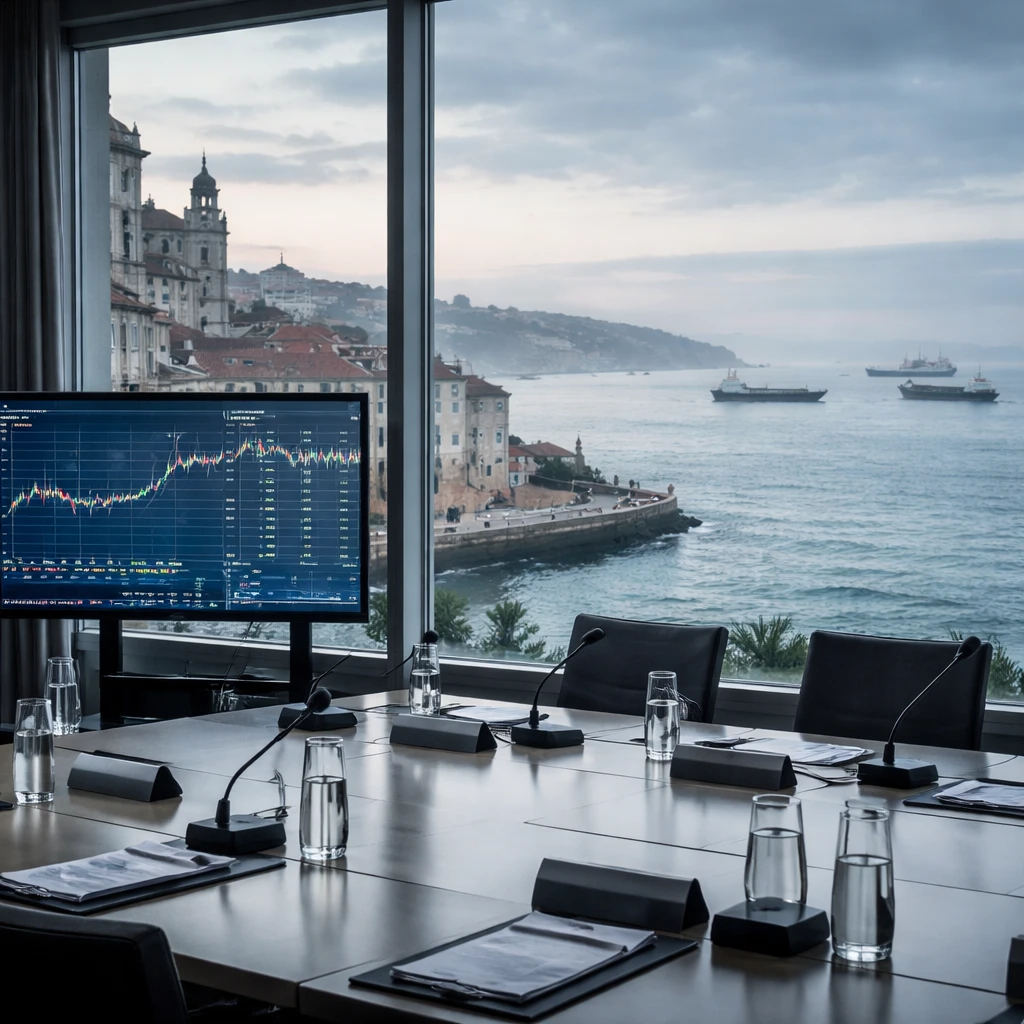
All eyes will be on remarks from Fed Chair Kevin Warsh at a European Central Bank gathering in Sintra, Portugal later in the day. Warsh, who was nominated by President Donald Trump to succeed former Fed Chair Jerome Powell, has signaled a potential departure from his predecessor's approach to forward guidance. He has suggested he may be open to eliminating routine policy road signs that markets have come to expect.
Earlier this month, following his first rate decision as Fed Chair, Warsh outlined the creation of a task force that will examine the Fed’s communication practices and economic assessment processes. While that initiative points to a possible shift in how the central bank frames policy expectations, it does not preclude Warsh from offering concrete perspectives on inflation and economic momentum in his upcoming address.
Energy-related price dynamics have been prominent in Fed deliberations since the outbreak of the Iran war in late February. The signing of an interim peace agreement between the U.S. and Tehran in June pushed oil prices lower toward pre-conflict levels, potentially alleviating inflation concerns tied directly to energy costs. Nonetheless, Fed officials remain attentive to evolving price pressures and their implications for inflation expectations.
Diplomatic track in Qatar and oil market implications
Brent crude, the global benchmark, was holding near $73 a barrel after a modest decline from recent upticks. Market participants have been watching a delegation movement to Qatar, where U.S. and Iranian officials are scheduled to hold separate discussions with mediators. According to reporting, delegations from both countries will meet with mediators from Qatar and Pakistan. The meetings come amid a tentative framework agreement between Washington and Tehran, but recent skirmishes in the Strait of Hormuz have kept tensions elevated.
Both countries remain at odds over control and access to the vital waterway. The White House has stated the strait is open to shipping, while Iran has sought to retain some degree of influence over passage. Earlier this year, Tehran effectively curbed access to the strait, a move that sent oil prices surging to well above $110 a barrel and highlighted the link between geopolitical risk, energy prices, and inflationary pressures that can slow economic activity.
The presence of mediators underscores efforts to stabilize the situation, but public comments from Iran and Qatar indicate that no high-level U.S.-Iran talks are planned at this stage.
ISM manufacturing and private payrolls on the calendar
Economic data will also be front and center, with the Institute for Supply Management’s purchasing managers’ index for manufacturing due for June. Forecasts suggested a modest pullback to 53.8 from May’s 54.0 reading. Readings above 50 signal expansion, and May’s number was the highest since 2022, a result that analysts attributed in part to a front-loading of orders as businesses sought to lock in more favorable prices amid elevated fuel costs and ongoing supply disruptions.
Alongside the headline PMI, the ISM gauge of prices paid by manufacturers was expected to show moderation, a potential sign that decreasing fuel costs following the preliminary U.S.-Iran agreement may be easing input-price pressures. Market watchers also noted a private payrolls tracker as a key preview ahead of the broader U.S. employment report scheduled for Thursday.
Nike flags tougher road to recovery
In corporate news, Nike shares slipped in premarket trading after the sports apparel giant warned that its turnaround would be extended as it contends with declining sales in China. Despite reporting fiscal fourth-quarter revenue that exceeded expectations, the company signaled that the recovery is not yet complete.
Nike’s top-line was weighed down by a double-digit drop in sales in China, a critical market for the retailer. Chief Executive Elliott Hill, who assumed the role in 2024, told investors on the post-earnings call that the results "aren't there yet," and that the company is not "living up to our full potential." The firm’s comments underscore that operational improvements and demand restoration, particularly in China, remain significant hurdles.
Market takeaway
Investors began the second half balancing a recent technology-led rebound with mixed macro signals. Key points of focus include Warsh’s public remarks and the Fed’s evolving communication strategy, the progress and tenor of diplomatic engagement between U.S. and Iranian delegations in Qatar, near-term trends in oil prices, and incoming U.S. manufacturing and payroll indicators. Corporate developments, such as Nike’s caution on its turnaround in China, added a retail-sector angle to the day’s risks.
Given the confluence of monetary policy scrutiny, geopolitical uncertainty, and incoming economic data, markets are likely to remain sensitive to developments across the energy, financial, technology, and consumer discretionary sectors.