
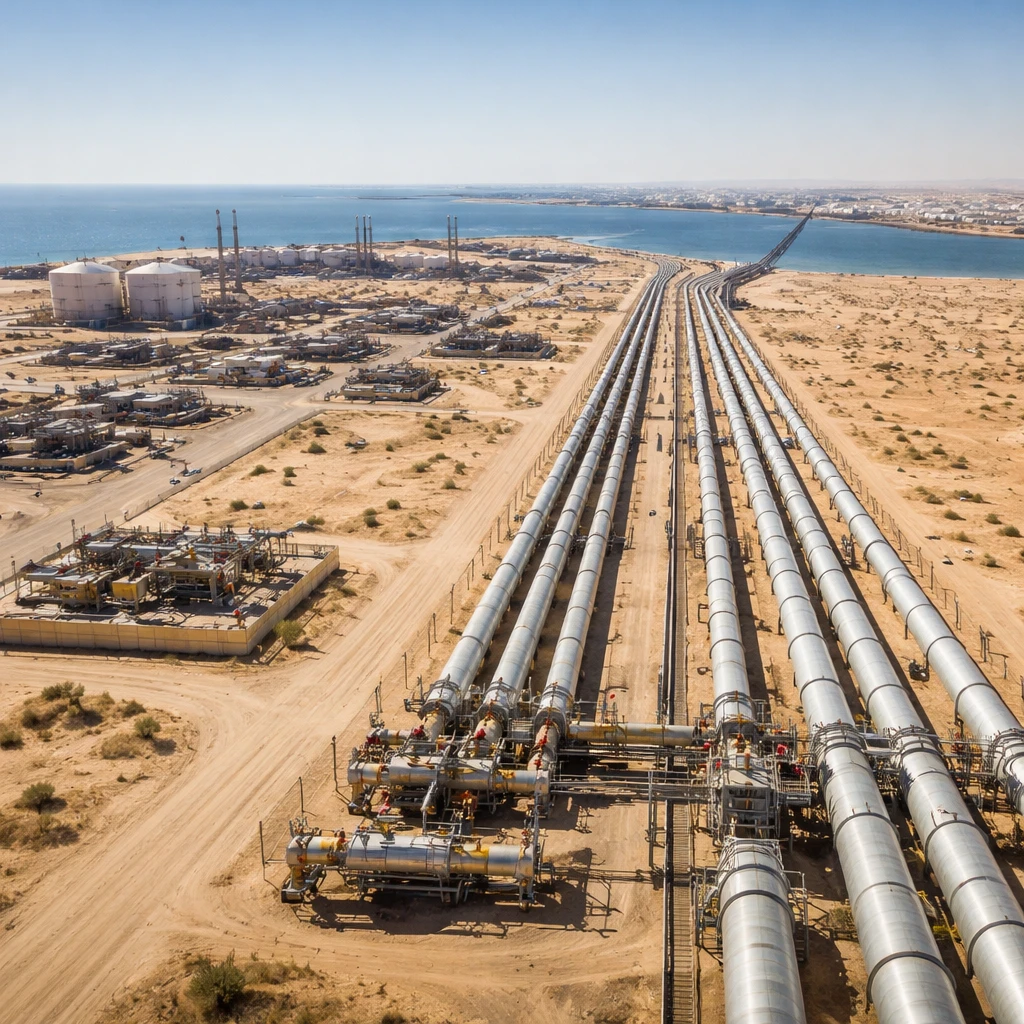
Kuwait Petroleum Corporation (KPC) has signed a landmark $16 billion lease and leaseback agreement covering its crude oil pipeline system with U.S.-based investment groups Blackstone, KKR and Brookfield. The deal, identified internally as Project Peregrine, is described by KPC as the largest foreign direct investment in Kuwait's history.
Under the terms of the arrangement, a KPC unit, Kuwait Oil Company (KOC), will form a joint venture with the three private-equity and infrastructure managers for a period of 20.5 years. The investor consortium will hold a combined 49% stake in the vehicle, while KOC will preserve a 51% majority stake and maintain ultimate control.
When the agreement closes, it is expected to deliver $7.85 billion in upfront proceeds to KPC. Subsequent payments from users to the joint venture will be determined by the volume of crude oil moved through the pipeline network rather than by direct oil price movements.
The physical asset covered by the transaction consists of 13 pipelines stretching about 320 kilometres, or roughly 199 miles. KOC will retain full ownership and operational responsibility for that infrastructure despite the leaseback arrangement.
Transaction structure and investor rationale
The leaseback structure allows KPC to realise capital tied up in established infrastructure without divesting the strategic asset or surrendering responsibility for its operation. For the three asset managers, the arrangement provides exposure to long-term, tariff-based revenue streams that are linked to oil transportation volumes rather than the spot price of crude.
Private-equity and infrastructure investors have been drawn to similar agreements by the extended contract terms, the predictability of cash flows and the direct ties to state-backed energy producers. Project Peregrine follows a wider trend in the Gulf in which national energy companies monetise mature assets - including pipelines and processing facilities - to free up funds for new production capacity and domestic investment programmes.
Strategic context for Kuwait
Kuwait controls about 6% of the world's proven oil reserves and depends heavily on crude exports for government revenue. The country has been pursuing expansions in production capacity and has sought to attract more international capital into its energy sector. Project Peregrine provides KPC with a significant source of immediate funding while preserving majority ownership of the pipeline network.
For the international investors, the deal grants access to an infrastructure system that serves one of OPEC's larger oil-producing members, linking returns to the volume of crude transported across the network.
Implications and next steps
The transaction is structured to align payments with usage of the network, making the venture's revenue sensitive to throughput. KOC will continue to operate the pipelines, ensuring continuity of management and control over day-to-day operations. Closing of the agreement will trigger the upfront payment and begin the 20.5-year term of the joint venture.
Project Peregrine fits into a broader pattern of infrastructure monetisation in the region, where state-backed energy companies have tapped mature assets to raise capital for growth and national investment programmes. The deal represents a major infusion of foreign investment into Kuwait's energy infrastructure while maintaining the state's decisive role in operations and ownership.