
Summary: Japan's finance minister, speaking after a Group of Seven meeting in Paris, said market conditions - including risks arising from the financial markets themselves - will be considered as the government develops funding plans for spending intended to respond to the economic implications of the Middle East conflict. The comments follow a reversal by the prime minister on preparing an extra budget and were linked with a jump in long-term government bond yields.
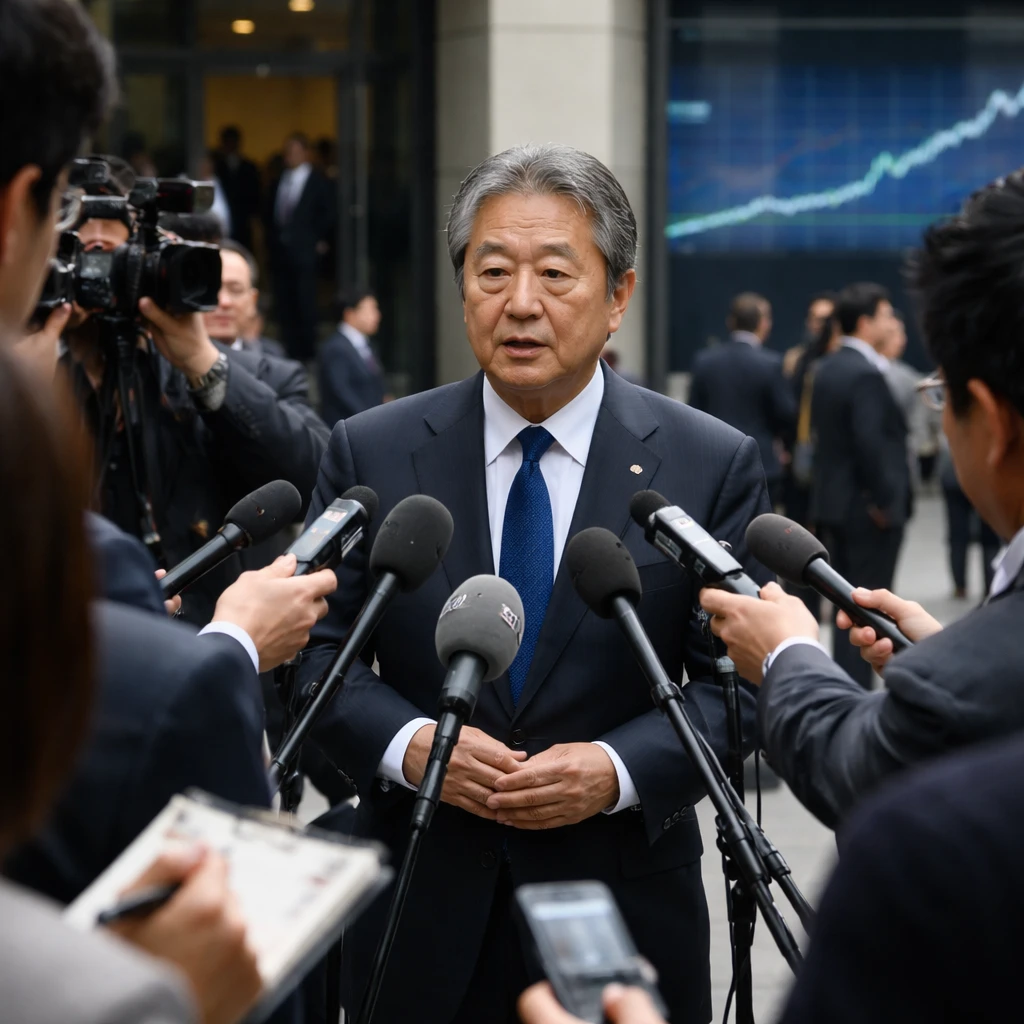
Finance Minister Satsuki Katayama told reporters that the government must minimize risks given developments in the Middle East and that doing so requires attention to market dynamics. "Given the situation in the Middle East, we must be fully prepared from the standpoint of minimizing risks," she said in Paris after meeting with other Group of Seven finance ministers. "Minimizing risks also involves the markets. The overall financial markets are themselves one of the risks."
Katayama's remarks came on the same day Prime Minister Sanae Takaichi reversed course on plans to compile an extra budget. That policy shift coincided with a move that pushed super long government bond yields to a new record high. The finance minister offered limited specifics on the scale of the additional spending or on how the measures would be financed, noting only that the prime minister had directed a comprehensive assessment of the situation.
"In a sense, the Prime Minister's directive is for us to comprehensively assess the situation and consider measures to secure funding, and that is what we intend to do," Katayama said. She declined to say whether the government will need to issue additional government bonds.
According to statements reflected in reporting, Prime Minister Takaichi plans to restore energy subsidies this summer and to aim for household energy bills that are lower than last year's levels. The supplementary budget under consideration is expected to fund emergency relief efforts rather than serve as an economic stimulus measure.
Key points
- The finance minister has pledged to factor bond-market conditions into funding decisions for spending tied to the Middle East conflict, highlighting market risk as a policy consideration - sectors affected include government debt markets and financial markets in general.
- The prime minister reversed plans to compile an extra budget, and that policy reversal was associated with a rise in super long government bond yields to a record high - this impacts fixed income investors and government funding costs.
- The planned supplementary budget is expected to prioritize emergency relief such as energy subsidies aimed at keeping household energy bills below last year's levels, rather than broad economic stimulus - this affects the energy sector and household finances.
Risks and uncertainties
- Uncertainty over the scale and financing of new spending: the finance minister provided no firm numbers or funding methods, leaving uncertainty for government debt issuance and market reaction - relevant to sovereign bond markets and lenders.
- Market sensitivity to policy shifts: the prime minister's reversal on an extra budget coincided with higher long-term yields, indicating that policy moves can trigger volatility in government bond markets - this is a risk for fixed-income investors and the broader financial sector.
- Potential fiscal constraints: Japan carries the world's largest public debt burden among developed countries, and decisions on additional spending must navigate those constraints - this creates uncertainty for fiscal policy and investor perceptions of sovereign credit.
Katayama declined to confirm whether new government bonds will be issued to fund the measures, underlining that the government is still in a phase of assessment and planning. Until the administration announces concrete figures or financing decisions, markets and households will be watching for how authorities balance emergency relief objectives with fiscal and market stability concerns.