
Two prominent Israeli commercial banks have informed officials that they will terminate correspondent banking relationships with several Palestinian lenders within months, a decision that officials on both sides say could precipitate a deepening economic crisis in the West Bank.
Israeli and Palestinian officials said Israel Discount Bank will stop processing transactions for Palestinian banks on September 1 and Bank Hapoalim will follow on October 1. Both institutions currently handle a large volume of shekel payments tied to Palestinian trade and public-sector activity.
Political backdrop and official concerns
The moves come while the Gaza war continues and amid growing tensions between Israel’s right-wing government and the Palestinian Authority (PA). Israeli Finance Minister Bezalel Smotrich - who administers a waiver mechanism that permits cooperation between Israeli banks and West Bank lenders - has periodically withheld portions of tax revenues that Israel collects on behalf of the PA. He has also publicly questioned the PA’s legitimacy, compounding strain on an already fragile financial relationship.
Israeli officials and the finance ministry framed the banks’ decisions as responses to an elevated risk environment. The finance ministry warned that ending correspondent links could have damaging economic consequences, but also argued that the PA’s activities in "financing terrorism through various means have created a severe risk environment for the Israeli banks that maintain financial interfaces with it." The ministry cautioned that discontinuation "could have negative implications for economic stability in the region and could also lead to increased risks of money laundering and terrorist financing due to a shift to unregulated, cash-based alternative financial channels."
Palestinian central bank response and economic exposure
Yahya Shunnar, governor of the Palestinian Monetary Authority (PMA), warned diplomats in Ramallah that cutting correspondent banking links would threaten regional economic stability. He said the payment channels between Israeli and Palestinian banks form "a cornerstone of the infrastructure that underpins our trade, our commerce, our government operations, and the livelihoods of millions." He added that their disruption would have profound consequences not only for Palestinians but also for Israelis and for regional stability.
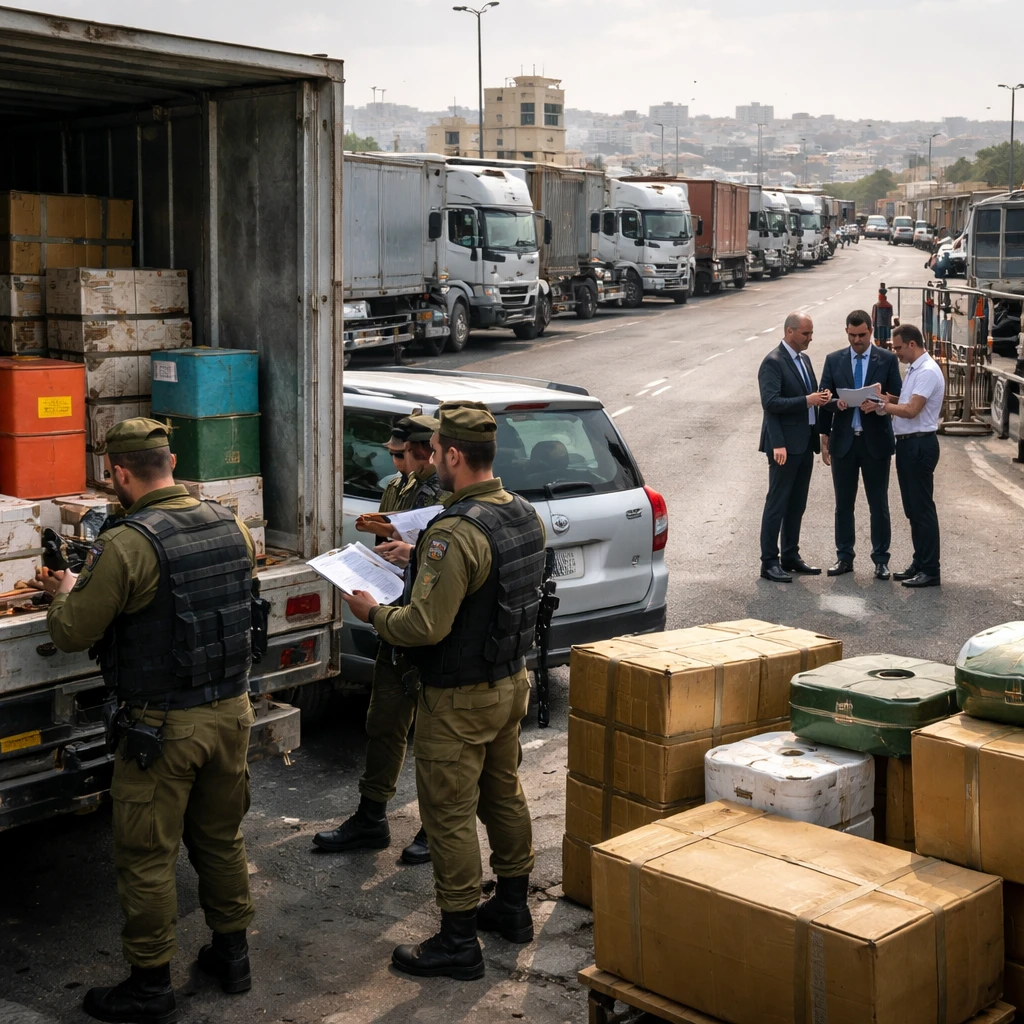
Shunnar provided data to underline the scale of exposure. He said Discount and Hapoalim process 51 billion shekels a year in transactions connected to the PA. He also noted that 90% of Palestinian trade - covering essential imports such as food, fuel and medicines - moves through Israel. According to the PMA governor, these payment and trade links make the Palestinian economy highly dependent on Israeli banking corridors; severing them would place trade flows and the supply chain at risk of collapse.
Shunnar additionally pointed to liquidity constraints inside the Palestinian banking system, saying that billions of shekels in cash remain frozen in Palestinian banks. He also defended the PA’s compliance efforts, saying that over the past decade the authority has established an anti-money laundering framework aligned with international standards. He said assessments by the United States and the UK found that the PA’s counter-terrorism financing practices "meet or exceed international standards when the concern raised is financial integrity risks."
How the waiver system fits in
Israeli officials explained that the situation largely revolves around periodic waivers issued by the finance minister. Those waivers allow Israeli banks to process shekel payments for services and salaries linked to the PA without exposing the banks to prosecution for money laundering or funding terrorism. Without a waiver, Palestinian banks effectively lose access to the Israeli financial system for shekel clearing and settlement.
The current waiver runs until the end of this year. Officials said banks dislike the uncertainty this creates because they do not know in advance whether the finance minister will renew the waiver. Banks have requested a more permanent legal solution to remove the recurring risk.
Banks point to risk and seek clarity
Israel Discount Bank, the country’s fourth-largest lender, said it has been providing services on a temporary basis for years while awaiting a permanent policy. In a statement, the bank acknowledged the importance of economic stability and called for a stable, long-term solution. It said that "in light of the increasing risks associated with providing these services, and given our responsibility to our depositors and shareholders, we brought our concerns to the attention of the relevant authorities."
Bank Hapoalim, Israel’s second-largest bank, described the issue as under review.
The finance ministry said it is actively working with both banks to allow "the continuation of correspondent banking activities in a safe and responsible manner, while safeguarding the security and economic interests of Israel."
Potential economic implications and sector exposures
Officials on both sides signaled immediate economic vulnerabilities if correspondent banking links are severed. The largest exposures noted in official remarks include government payrolls and public services that rely on shekel transfers, cross-border trade in essentials such as food, fuel and medicines, and the broader payments infrastructure supporting commerce and livelihoods in the West Bank. The PMA’s figures on transaction volume and the share of trade passing through Israel underscore the scale of the potential disruption.
For currency reference, the articles noted an exchange rate of $1 = 3.0756 shekels.
Given the centrality of these correspondent links to trade, government operations and private-sector commerce, steps that weaken or halt them would heighten financial stress in the Palestinian economy and increase the risks for firms and households that depend on steady access to imports, cash and electronic payments.