
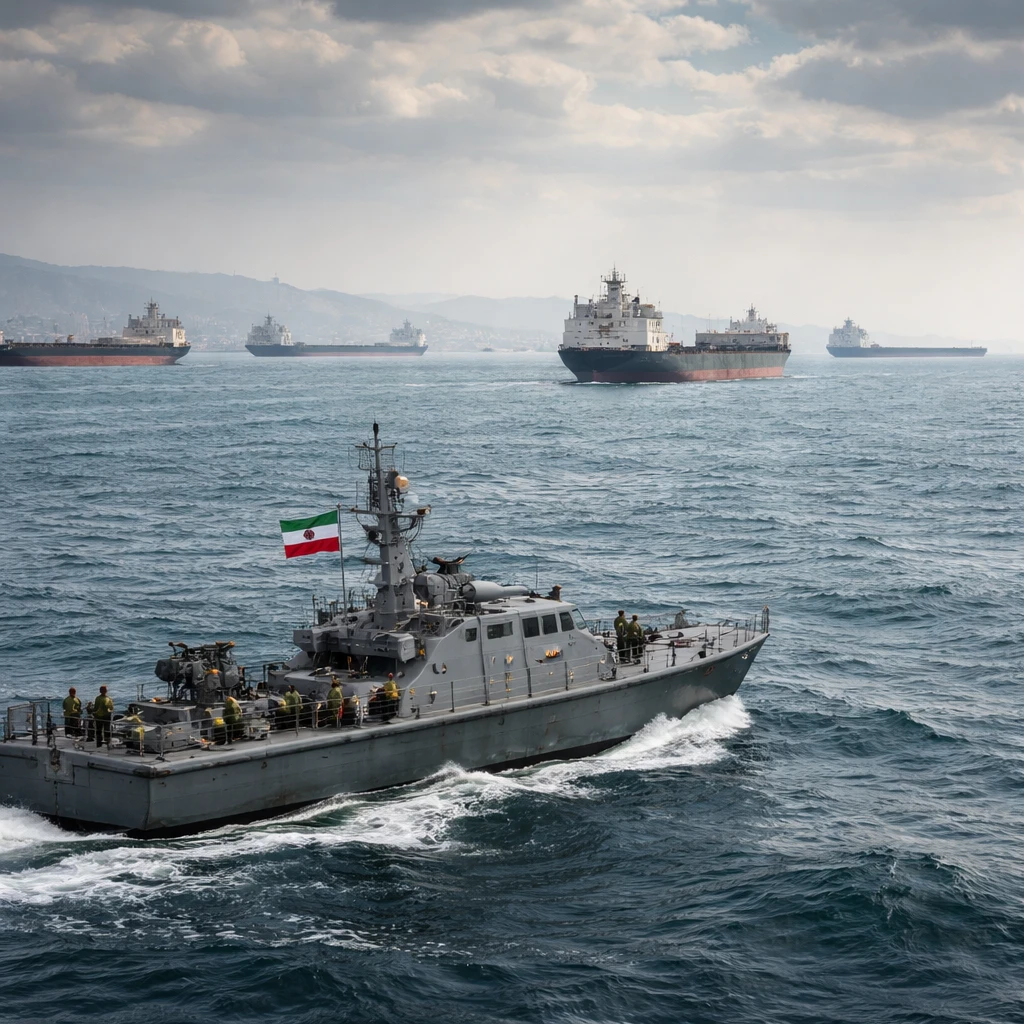
Iran’s Revolutionary Guards Navy issued a pointed admonition on Thursday, saying U.S. military activity and attempts to divert shipping through the Strait of Hormuz are impeding the process of reopening the vital waterway and endangering the interests of nations that rely on it.
In a statement, the Guards reported that under Iranian supervision transit capacity through the strait has reached approximately 50% of pre-war levels over the past two weeks. The statement made clear that authorities are increasing transit capacity only for vessels that have secured permits and that are using routes specified by Iran.
The Revolutionary Guards Navy also issued a warning aimed at U.S. forces, saying further intervention by the United States would be met with a "crushing response." The statement included an assertion that foreigners have no stake in the Strait of Hormuz and accused the U.S. of "adventurism and interference" in determining which shipping routes should be used through the waterway.
Those comments reiterate Iran’s position that control over transit through the strait remains an internal matter and that external attempts to alter vessel movements are unacceptable, according to the Guards’ statement. The force framed recent U.S. actions as an obstruction to the gradual restoration of passage that Iranian authorities say they are overseeing.
The Guards' announcement described a two-week period in which capacity has increased to about half of what it was before hostilities disrupted normal traffic. At the same time, the statement emphasized that any additional expansion of traffic will be conducted under Iran’s permitting process and along routes it designates.
Beyond the declarations about permits and routes, the Guards' notice made explicit the potential for a severe response if U.S. activity continues to interfere with Iran’s management of the strait. The announcement characterized U.S. actions as interference in the determination of traffic corridors and labeled those actions as adventurism.
Iran’s framing highlights a standoff over control of maritime traffic through one of the world’s strategically important chokepoints. The Guards’ comments underline both the limited nature of current transit capacity under Iran’s supervision and the conditions under which that capacity may be increased.
Summary
The Revolutionary Guards Navy said U.S. military moves and efforts to reroute shipping are disrupting the Strait of Hormuz reopening. Iran reported transit capacity under its supervision at about 50% of pre-war levels during the past two weeks, is allowing only permitted vessels on Iran-designated routes, and warned the U.S. against further intervention with a promise of a "crushing response."
Key points
- The Guards said U.S. actions are disrupting the reopening process and threatening the interests of countries that depend on the strait - sectors directly cited include shipping and maritime trade.
- Transit capacity under Iranian supervision has reached roughly 50% of pre-war levels during the past two weeks, according to the Guards.
- Iran is expanding transit only for vessels that obtain permits to use routes designated by Iranian authorities and warned that further U.S. intervention would prompt a "crushing response."
Risks and uncertainties
- Potential for military escalation - The Guards warned that additional U.S. intervention would trigger a "crushing response," creating uncertainty for naval and shipping operations in the area.
- Continued disruption to reopening - According to the Guards, U.S. interference is impeding the waterway's reopening process, leaving transit capacity limited and unpredictable for affected countries and maritime operators.
- Disputes over routing authority - The Guards accuse the U.S. of "adventurism and interference" in determining traffic routes, leaving unresolved questions about who controls passage and which routes will be used, affecting shipping planning and logistics.