
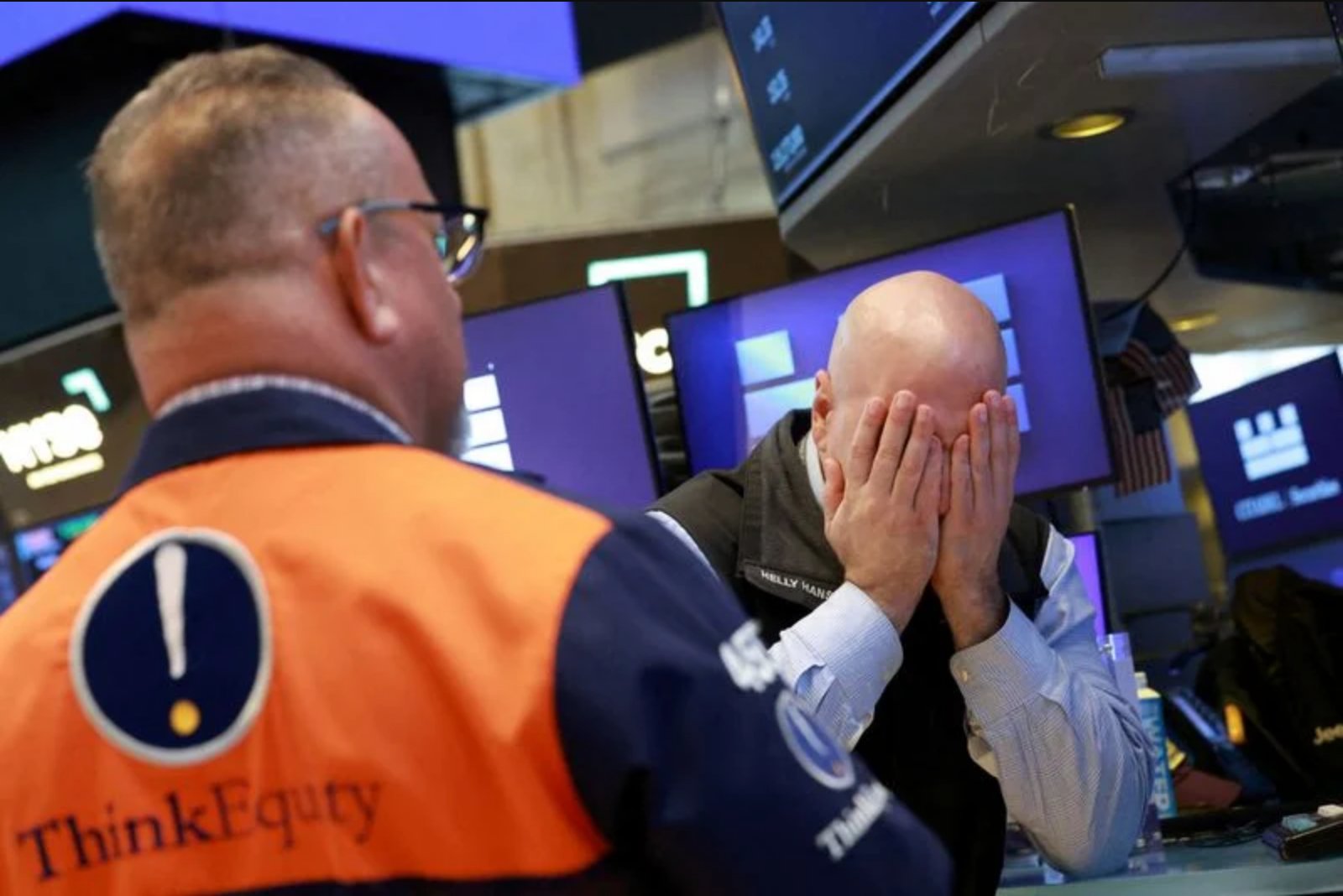
U.S. stock markets saw a general decline during Tuesday's trading session, as investors reacted to a downturn in technology shares and rising geopolitical tensions in the Middle East. The market sentiment was further complicated by news involving an incident where a U.S. helicopter was reportedly shot down by Iran, creating fresh jitters across global exchanges. As traders processed recent trade figures from several prominent economies, attention has shifted toward the significant inflation data expected to be released on Wednesday.
Market Performance and Sector Dynamics
The performance across various asset classes was mixed. In the United States, the S&P 500 fell by 0.3%, while the Nasdaq saw a larger decline of 1%. This downward movement was largely dictated by the technology sector, which dropped 2%. Notable losses were seen in several key tech companies: Super Micro Computer fell 8%, Qualcomm declined 6%, and Dell decreased by 5%. The semiconductor industry also felt the pressure, with the SOX chip index dropping 2%.
Despite the struggle in tech, much of the S&P 500 remained resilient. Nine out of the 11 sectors within the index managed to post gains, including real estate, which rose by 2%. Home Depot was a standout performer, gaining 4%.
International markets showed divergent trends. Asian markets mostly trended upward, with significant gains in South Korea (+9%), China (+3%), and Japan (+2%). In contrast, European and UK markets experienced declines. In the currency markets, Peru's sol saw its best day in five years, rising 4%, while Indonesia's rupiah recorded its most significant increase since September. The USD/JPY remains within what is considered an intervention zone, staying above the 160 level.
Commodities and Fixed Income
The commodities market saw notable volatility. Oil prices dropped by 3%, reaching a seven-week low, while gold prices declined by 2%. In the bond market, U.S. yields saw a slight decrease of 3 basis points at the short end of the curve. A recent 3-year Treasury auction showed a historically high tail, though it managed to attract decent demand.
A growing concern for long-term capital allocation involves the U.S. Treasury's increasing reliance on T-bills to fund the federal budget deficit. Weekly bill issuance is currently averaging over $500 billion. While this does not represent an immediate crisis, there are concerns that it could escalate into a significant issue if interest rates continue their upward trajectory or if the government finds it necessary to increase the supply of these instruments.
Key Economic and Corporate Developments
The corporate landscape is being shaped by high-profile moves in the artificial intelligence and aerospace sectors. OpenAI has filed for a U.S. initial public offering (IPO) following the move by Anthropic, as major AI entities look toward public markets. Meanwhile, SpaceX is preparing for its market debut this Friday. There is significant debate surrounding the valuation of SpaceX; Morningstar analysts have suggested a valuation of $63 per share, which represents a 53% discount to the upcoming IPO offer price. Their analysis involved three different scenarios, including a "moonshot" scenario where the company could be valued at $1.97 trillion, or $154 per share, though they assign only a 7% probability to that outcome. Current reports suggest that demand for the SpaceX IPO is nearly four times oversubscribed.
In emerging markets, Bank Indonesia took a decisive step by implementing an unexpected emergency interest rate hike. The central bank raised its policy rate by 25 basis points to 5.25%. This move was intended to stabilize the rupiah after it faced a series of record lows. This action follows similar moves in other regions, such as Sri Lanka's recent 100 basis point hike, highlighting the intense pressure on emerging markets caused by depreciating domestic currencies and rising energy import costs.
Key Points & Impact
- Technological Sector Volatility: The decline in semiconductor and major tech stocks (SMCI, QCOM, DELL) has directly impacted broader market indices like the Nasdaq. This volatility suggests a shift in investor appetite or a reaction to specific sector headwinds.
- Monetary Policy Shifts in Emerging Markets: Bank Indonesia's unexpected rate hike illustrates the urgent need for emerging economies to combat currency depreciation and high energy costs, impacting global capital flows into these regions.
- U.S. Fiscal Funding Methods: The massive weekly issuance of T-bills (averaging over $500 billion) to cover the federal deficit impacts the fixed income market and poses long-term questions regarding interest rate sensitivity and government supply levels.
Risks and Uncertainties & Impact
- Geopolitical Instability: The tensions involving Iran and the reported downing of a U.S. helicopter introduce significant risk to global markets, potentially leading to increased volatility in energy prices and investor sentiment.
- Impending Inflation Data: Markets face uncertainty as they await crucial May inflation readings. Expected data includes U.S. CPI potentially crossing 4%, Japan's wholesale inflation hitting 5.5% for the first time in three years, and China's PPI rising toward 4%. These figures will heavily influence central bank policies globally.
- Interest Rate Trajectory: The combination of rising interest rates and high Treasury bill issuance creates a risk profile for the bond market, where sustained rate hikes could complicate the government's ability to fund the deficit efficiently.
Looking Ahead
The immediate future for markets will be determined by several upcoming data points: developments in the Middle East, wholesale inflation figures from Japan, PPI and CPI data from China, Canada's interest rate decision, and critical U.S. inflation reports including the Cleveland Fed median inflation and the consumer price index. Additionally, a $39 billion auction of 10-year notes by the U.S. Treasury will be closely watched.