
Economy April 21, 2026 06:53 AM

EU Signals Contingency Measures as Hormuz Blockade Threatens Jet Fuel Supplies

Brussels plans guidance on airport operations, fuel policies and passenger rights while urging rapid shift to sustainable aviation fuels

By Marcus Reed
Share
Twitter Reddit Facebook LinkedIn

European officials will issue guidance on airport slot management, anti-tankering, passenger compensation and public service obligations to prepare for potential jet fuel shortages tied to the Iran conflict. The Commission says there are no shortages at present but warned that a prolonged blockade of the Strait of Hormuz would have catastrophic effects without restored permanent freedom of navigation.

EU Signals Contingency Measures as Hormuz Blockade Threatens Jet Fuel Supplies
Summarize with
ChatGPT Perplexity Claude Grok Gemini

Key Points

  • The Commission will issue guidance on airport slots, anti-tankering, passenger rights and public service obligations to prepare for potential jet fuel shortages.
  • There are no jet fuel shortages "as of today," but a sustained blockade of the Strait of Hormuz would be catastrophic without restored permanent freedom of navigation.
  • The EU will push to scale up sustainable aviation fuel and synthetic fuel production and is exploring imports of alternatives such as U.S. Jet A; emergency jet fuel stocks exist and will be released only when necessary.

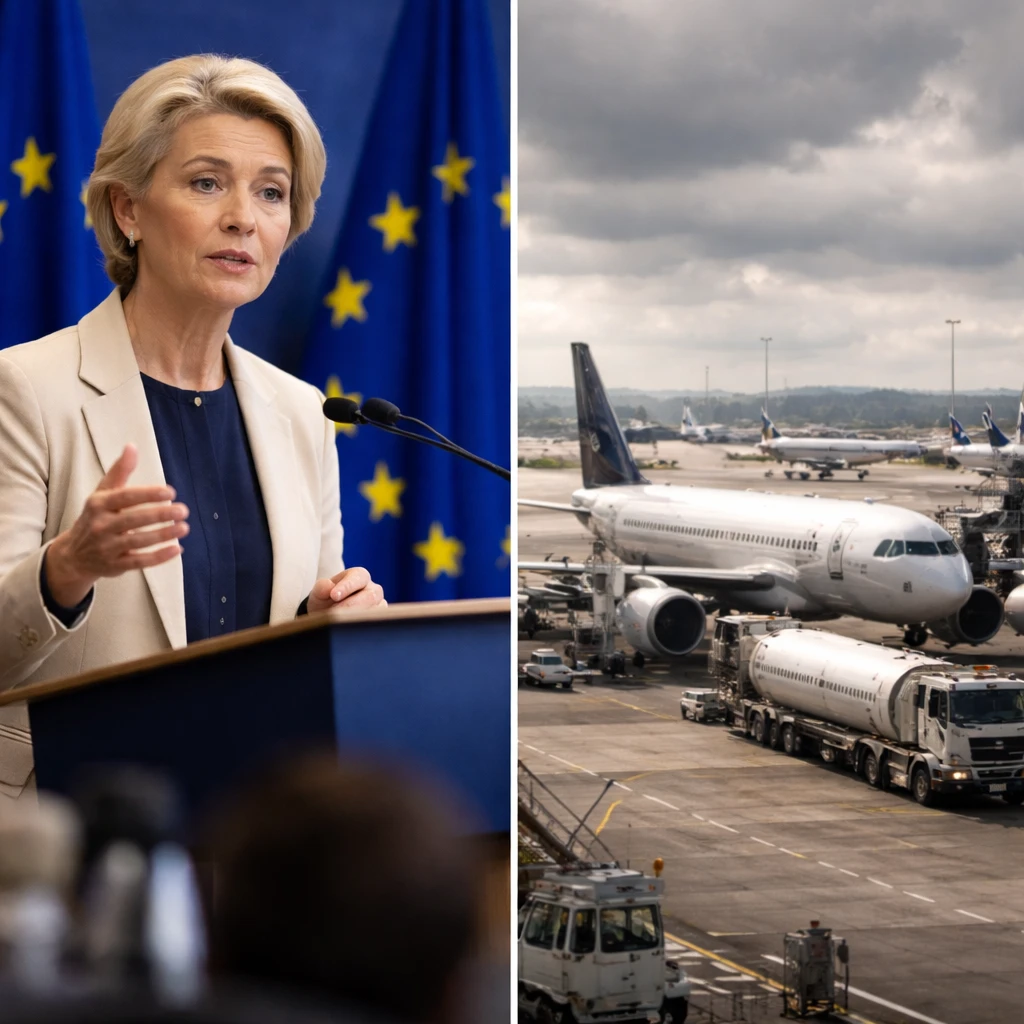
European Commissioner Apostolos Tzitzikostas told reporters in Brussels that the European Commission will provide formal guidance covering airport slot allocations, anti-tankering practices, passenger rights and public service obligations to address the possibility of jet fuel shortages stemming from the Iran war.

At the news conference he emphasized that, "as of today" there are no jet fuel shortages, but he warned that if the Strait of Hormuz remains effectively blocked the consequences would be catastrophic for Europe and the world unless permanent freedom of navigation is restored.

The Commission plans to press member states and industry to accelerate production of sustainable aviation fuel and synthetic fuels as a means to lessen reliance on supplies from the Middle East, Tzitzikostas said, confirming details from a report on Friday.

Europe keeps emergency jet fuel stocks that can be released when needed, he said, adding that these reserves will only be deployed under necessary circumstances. Any national release of jet fuel stocks should be conducted with full transparency to prevent market distortions, the Commissioner added.

Officials are evaluating import alternatives, including U.S. jet fuel of grade Jet A, as part of contingency planning, and the Commission is scheduled to present a broader package of energy and transport measures on Wednesday.

Tzitzikostas said there is currently no sign that widespread flight cancellations are likely in the coming weeks or months and that there is no present requirement to intervene in how Europeans live, work or travel. He also noted that operational disruptions driven by jet fuel shortages are expected to meet the threshold of extraordinary circumstances under flight compensation rules.


The Commission's remarks outline operational priorities for aviation and transport operators if supplies tighten: manage airport slots to maintain network resilience, discourage anti-tankering practices that can exacerbate fuel scarcity, clarify passenger compensation rules where circumstances are extraordinary, and ensure public service obligations are upheld.

For now the situation remains stable, but the Commission's actions signal a preparedness posture designed to limit disruption to air services and to encourage fuel diversification over the medium term.

Risks

  • Continued blockade of the Strait of Hormuz risks severe disruption to aviation fuel supplies, with potentially catastrophic consequences for Europe and global markets - impacts primarily on aviation and energy sectors.
  • If member states release national jet fuel stocks without transparency, market distortions could occur, affecting fuel pricing and airline operations.
  • Jet fuel shortages, if they materialize, are likely to be treated as extraordinary circumstances under flight compensation rules, creating uncertainty for carriers on liability and passenger claims.

More from Economy

Raymond James Sees Split Congress as Most Likely Outcome for 2026 Midterms Jun 6, 2026 Fed Governor Barr Says Easing Bank Rules Raises Risk of Systemwide Instability Jun 6, 2026 Deutsche Bank Warns of a '1999 Meets 1990' Macroeconomic Mix as Inflation and Geopolitics Collide Jun 6, 2026 U.S. Defense Secretary Warns Europe of an 'Invasion' of Dangerous Ideologies at Normandy Commemoration Jun 6, 2026 EU to Trim Power Taxes and Push Smart Meters in Draft Clean-Energy Package Jun 6, 2026