
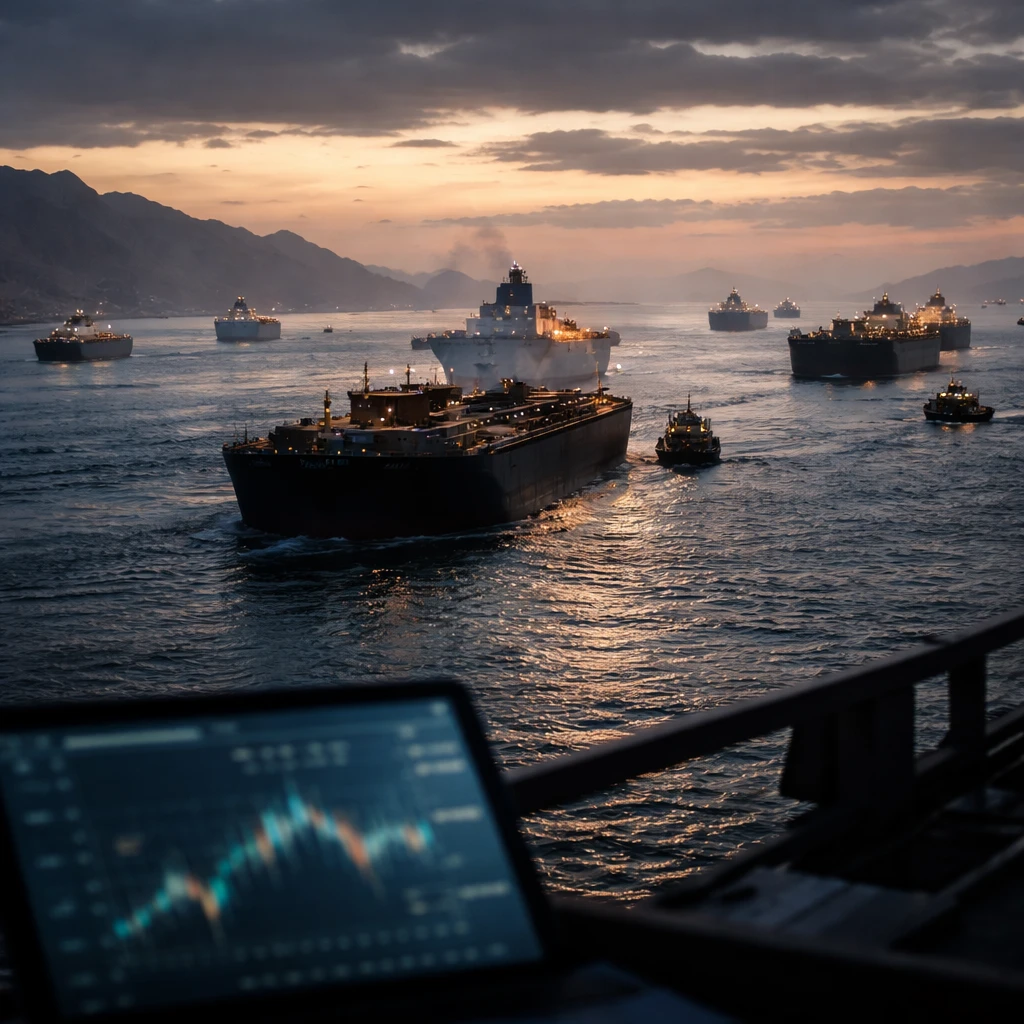
European Central Bank Governing Council member Jose Luis Escriva said in Madrid on Tuesday that complications in energy supplies are expected to persist, despite an agreement to reopen the Strait of Hormuz.
While the US-Iranian pact has contributed to a pullback in oil prices as investors interpreted the deal as a sign the more than three-month conflict is winding down, Escriva warned that policymakers in Frankfurt do not view the risk as resolved. He said the ECB is still likely to raise interest rates further.
"It’s not certain markets are capable of capturing sufficiently the disruptions that have occurred in the supply, the dimension that it’s going to have and the time that it’s going to take to restore production," Escriva said Tuesday in Madrid.
He added that the overall situation remains "uncertain, still doubtful, and an element that’s going to be with us for a certain time." Those comments underline the ECB's focus on energy market developments when assessing inflation risks in the euro zone.
The central bank has been watching energy prices and supply dynamics closely as part of its broader inflation monitoring. Escriva's remarks signal that, from the perspective of at least one Governing Council member, recent diplomatic progress does not eliminate the lingering effects of the supply-side shock.
Markets have reacted to the agreement with lower oil prices, reflecting expectations that the conflict could be drawing to a close. However, Escriva cautioned that the decline in prices may not fully reflect the scale of the disruption or the time required to return production to previous levels.
Those comments come amid continued expectations among policymakers that additional interest-rate increases may be necessary to address inflationary pressures, with energy developments remaining an important input to their assessment.
Summary: Jose Luis Escriva of the ECB said energy supply disruptions are likely to continue despite the pact to reopen the Strait of Hormuz, warning markets may understate the scale and duration of the impact. The ECB is monitoring energy markets as it assesses inflation risks and remains positioned to raise rates further.
- Key points:
- Agreement to re-open the Strait of Hormuz has pushed oil prices down as markets see the conflict easing.
- Escriva warned markets may not fully capture the extent and duration of supply disruptions.
- The ECB is monitoring energy market developments and is still expected to raise interest rates further.
- Risks and uncertainties:
- Ongoing uncertainty about how long it will take to restore production - affects energy and broader inflation dynamics.
- Potential for markets to misprice the magnitude of supply disruptions - impacts oil, energy-intensive sectors, and monetary policy decisions.