
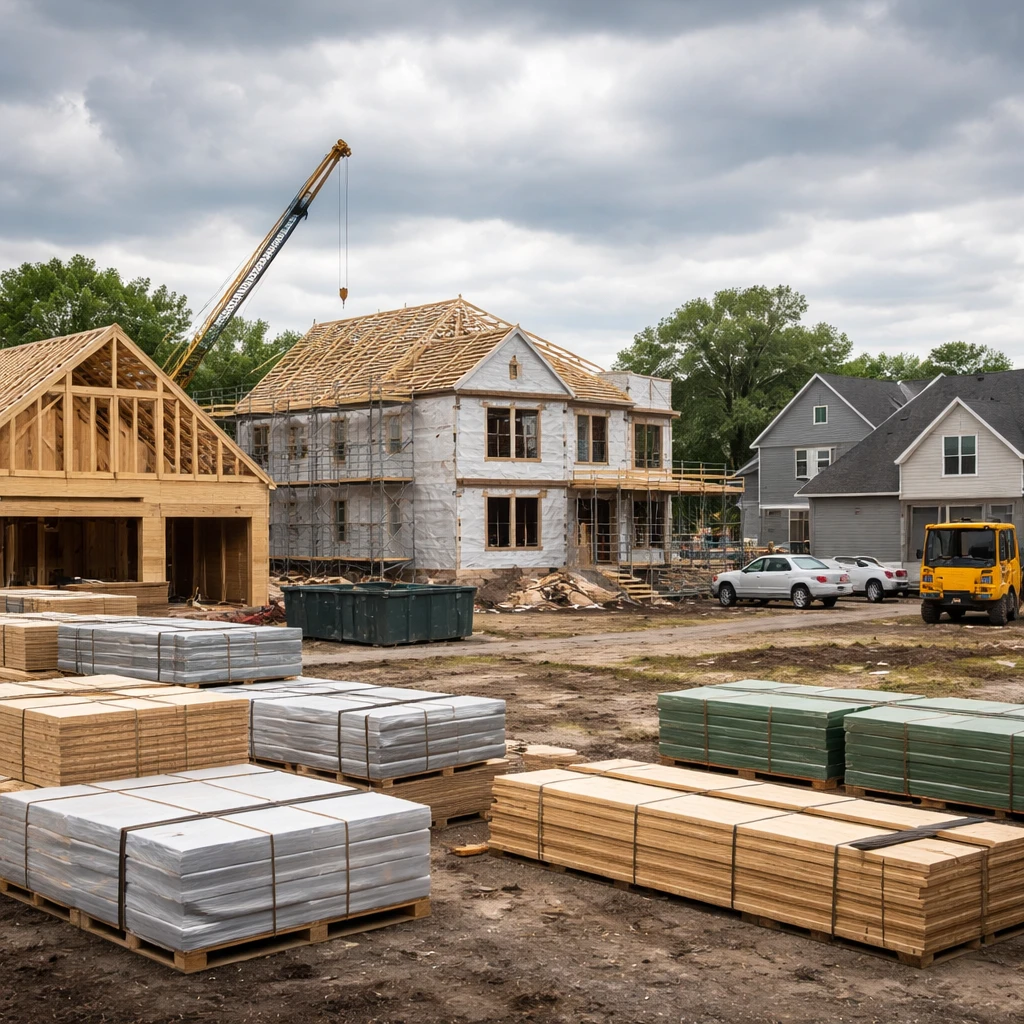
U.S. single-family home construction weakened in May, with starts sliding to their lowest level in eight months as higher borrowing costs and increased prices for building materials continued to constrain builders.
Data from the Commerce Department's Census Bureau show single-family housing starts declined 1.9% in May to a seasonally adjusted annual rate of 882,000 units. That pace represents the weakest monthly showing since September and amounts to a 6.7% drop compared with the same month a year earlier.
Mortgage rate movement has been a central factor behind the slowdown. The 30-year fixed mortgage rate has climbed by more than 50 basis points since the conflict began at the end of February, according to Freddie Mac data cited with the report. Market commentary in the release linked that rise to higher oil prices driven by the U.S.-Israeli war on Iran, which in turn pushed inflation and Treasury yields higher.
In a development noted alongside the housing figures, Washington and Tehran announced on Sunday that they had reached an agreement to end the war and to reopen the Strait of Hormuz.
Despite the drop in actual starts, permits for future single-family construction inched up 0.6% in May to a rate of 886,000 units. On a year-on-year basis, single-family building permits declined 1.8% in May.
The housing sector entered the recent period of strain even before the conflict, as import tariffs raised the cost of building materials and household appliances. Those tariff-driven price increases for inputs are among the factors that have pressured residential construction costs.
The report also underscores a broader trend: residential investment, which includes activity such as homebuilding, has fallen for five consecutive quarters. That sustained contraction highlights ongoing headwinds for the housing market as higher financing costs and elevated input prices persist.
Context and implications
- The decline in single-family starts points to cooling residential construction activity amid higher mortgage rates.
- Permits rose modestly, indicating some forward-looking intent to build despite current headwinds.
- Longer-term residential investment has been contracting, reflecting sustained pressure on the housing sector.