
FRANKFURT, July 24 - The European Central Bank regards the present rise in consumer prices as a medium-sized shock that calls for policy action, but not the sort of aggressive response seen in prior periods, ECB chief economist Philip Lane said.
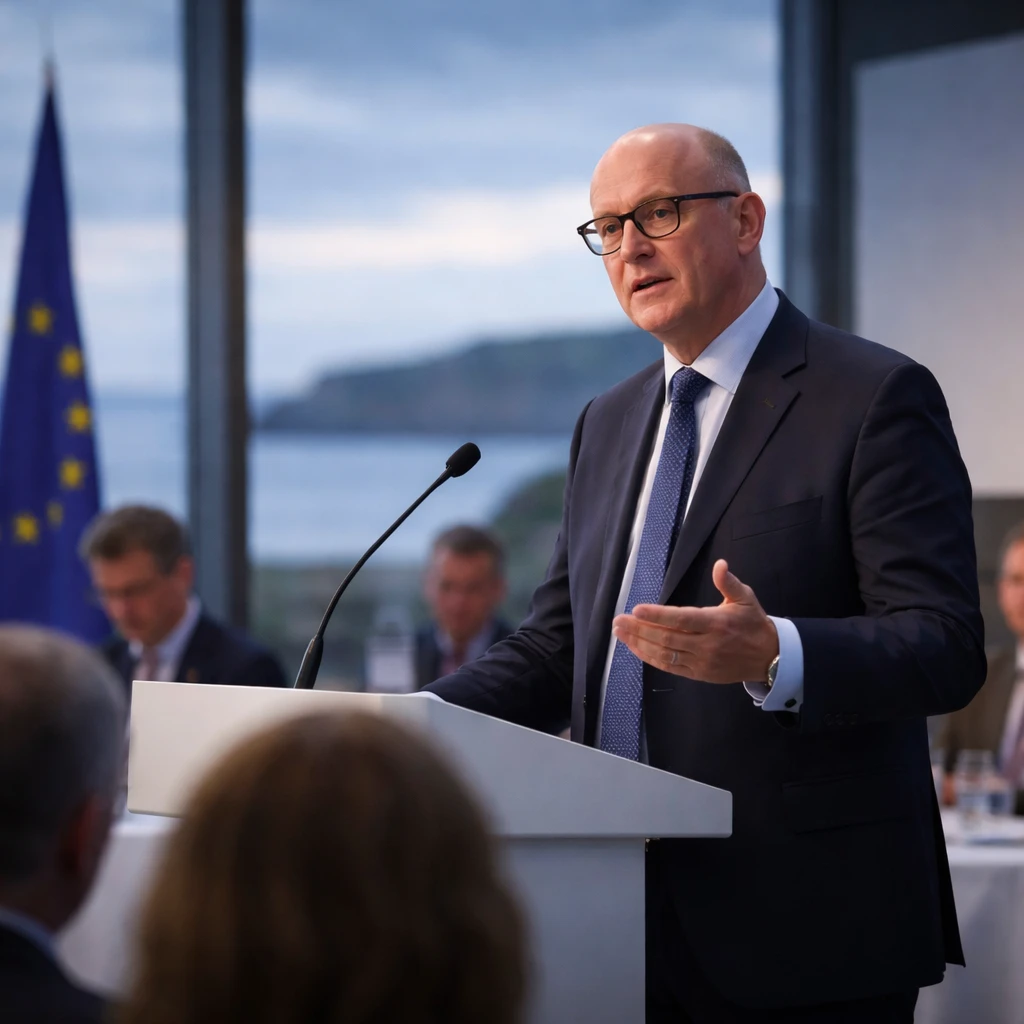
Lane told an audience at a podium discussion in Donegal, Ireland, that the bank's objective is to bring inflation, currently around 3%, back to its 2% target within about a year. He framed that goal as a deliberate, measured process rather than an urgent sprint.
"What we’re saying is, we will make sure that we will guide inflation back from where it is now -- 3% -- back to 2%, over let’s say the next year or so," Lane said.
The ECB left interest rates unchanged at its most recent policy meeting on Thursday, but officials provided broad signals that additional tightening will likely be necessary. Economists and traders have interpreted those signals as pointing to a rate increase in September, and market pricing currently reflects expectations of further hikes.
Lane declined to specify any particular policy moves that might occur in September. He said the central bank will be closely vigilant about whether recent climbs in energy prices produce second-round effects - in either consumer prices or wages - that could risk entrenching higher inflation.
To date, the ECB has not observed clear evidence of such second-round impacts, Lane said. At the same time, he underscored the institution's view that the longer elevated energy costs persist, the greater the chance that those indirect effects will materialize.
Characterizing the current overshoot as moderate rather than extreme, Lane contrasted it with episodes that demanded rapid action. "It’s not for now the kind of red alert level where you have to move quickly as we did (in 2022), so it’s a medium-sized shock," he said. He added that the bank will assess at every meeting what the appropriate level of interest rates should be to prevent the shock from persisting or escalating into a more severe problem.
"...and we’re looking every meeting to say exactly what is the right level of interest rates to make sure it remains medium-sized and doesn’t persist, doesn’t become red," Lane said.
Financial markets currently expect at least two additional interest-rate increases from the ECB, with those moves largely priced in by October and March, according to market-implied timing.
Lane's remarks underline the central bank's careful balancing act: calibrating policy to bring inflation back to target without overreacting to a shock it judges to be of limited size, while remaining alert to energy-driven dynamics that could alter that assessment.