
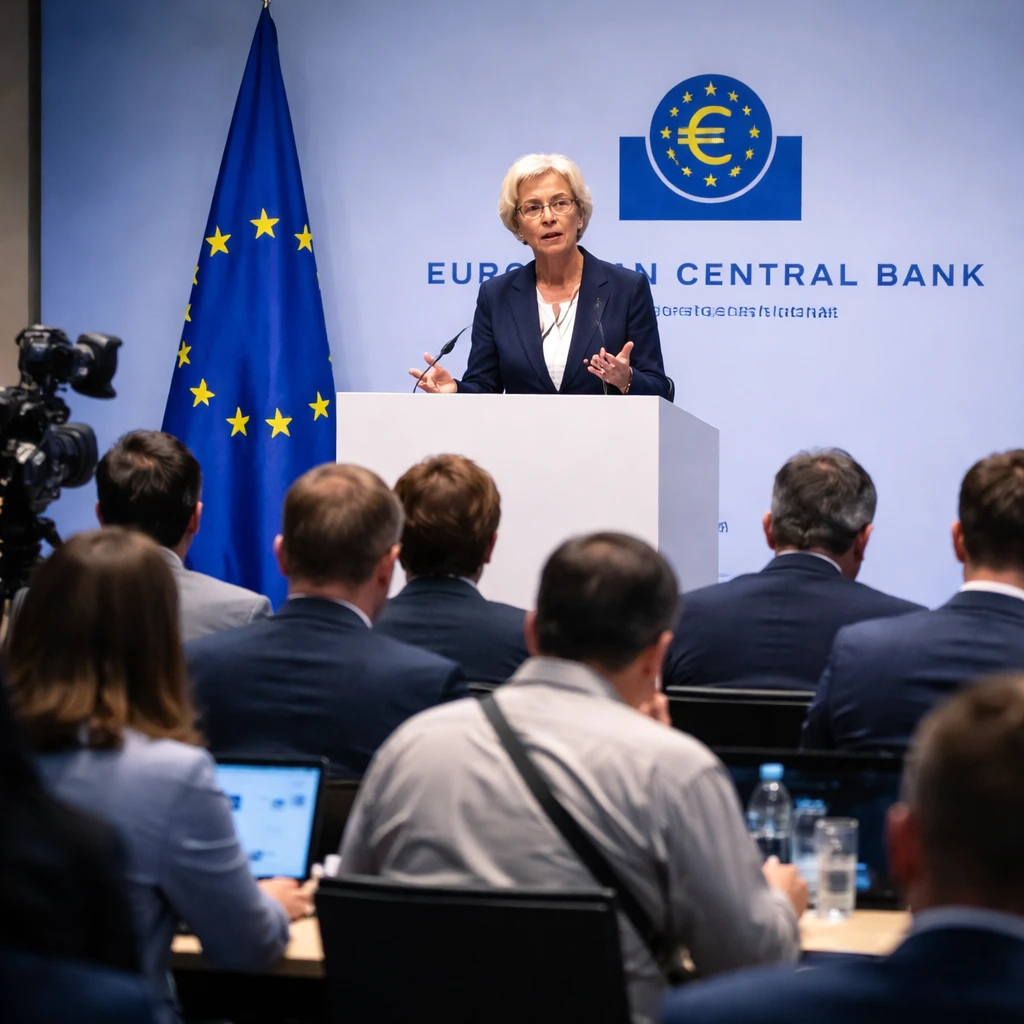
FRANKFURT - The European Central Bank raised its policy rate on Thursday by a quarter point to 2.50%, marking the second increase this year. The move was presented as part of efforts to counter a rise in inflation driven by energy price effects tied to the Iran war.
Policy decision and rationale
The ECB's 25 basis point hike brings the policy rate to 2.50%. Officials framed the action as intended to quell inflationary pressure that has been amplified by energy market developments stemming from the Iran war. The increase follows an earlier rate rise this year and was announced after the ECB's policy meeting.
Highlights from President Lagarde's press conference
ECB President Christine Lagarde summarized her reading of the current economic picture at the post-meeting press conference. On the near-term growth outlook she said: "Looking ahead, the near-term growth outlook has improved compared with the last round of staff projections, reflecting in particular the resilience of private consumption and public spending."
Commenting on recent activity, Lagarde noted: "The economy proved resilient in the second quarter, despite headwinds from the energy shock. Growth was broad-based across countries and sectors. This pattern is likely to have continued into the third quarter."
On price dynamics, she warned that the conflict in the Middle East continues to generate inflation pressures, adding that "inflation is set to remain well above target for an extended period."
Summing up risks to the outlook, Lagarde characterized the economic outlook as "highly uncertain, with risks to the upside for inflation and to the downside for economic growth."
Context and implications
The ECB framed the rate increase squarely as a response to energy-related inflation pressures linked to the Iran war, while also pointing to ongoing resilience in consumption and public spending that has supported recent growth. Yet officials underscored the persistence of inflationary pressures connected to the Middle East conflict and the asymmetric risk profile for the outlook.
What officials explicitly said
- Near-term growth outlook has improved versus the prior staff projections, driven by private consumption and public spending.
- Second-quarter growth was resilient despite the energy shock and was broad-based; this pattern likely persisted into the third quarter.
- The Middle East conflict continues to generate inflation pressures, keeping inflation well above target for an extended period.
- The overall outlook is highly uncertain with upside risks to inflation and downside risks to growth.