
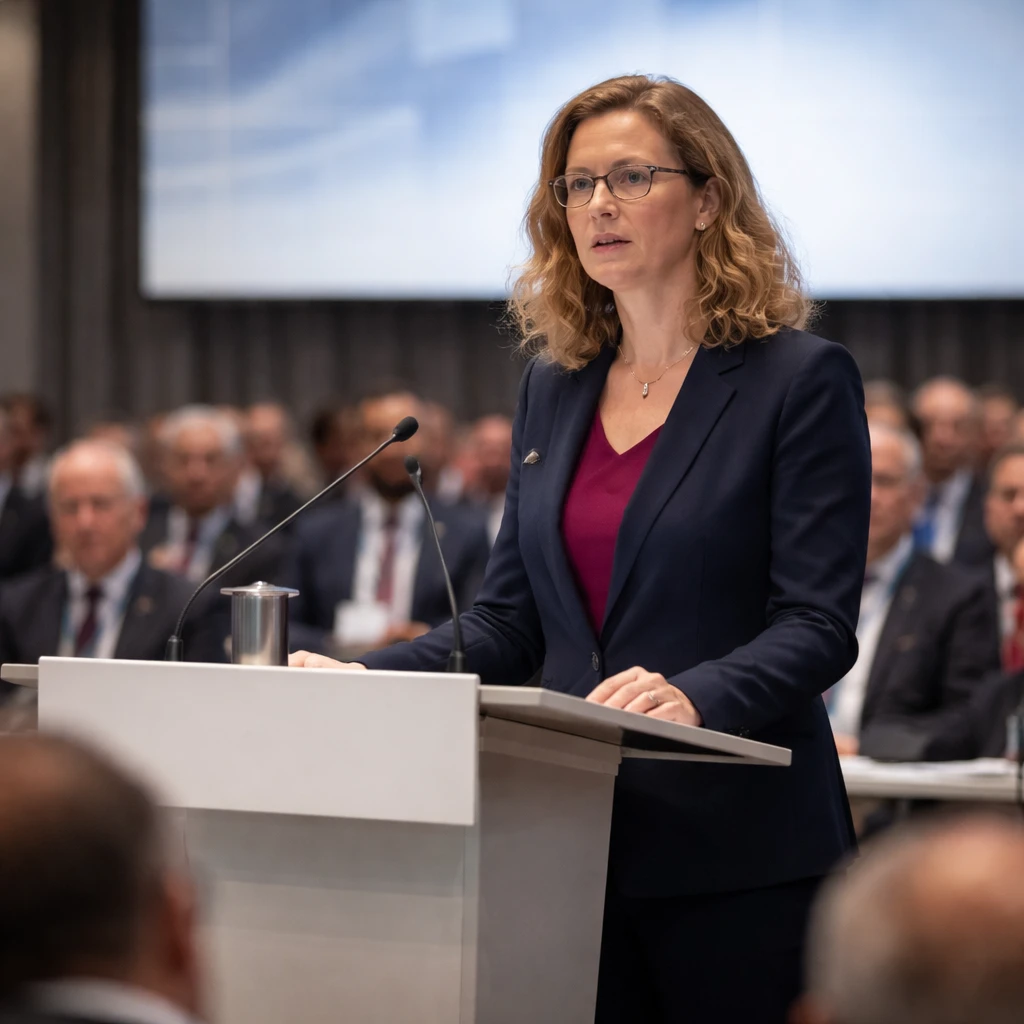
European Central Bank Executive Board member Isabel Schnabel cautioned on Saturday that risks to inflation still lean upward, despite a recent fall in energy prices that followed a ceasefire between the United States and Iran. Her comments add weight to expectations that the central bank may need to raise interest rates further.
Speaking at the Petersberger Summer Dialogue in Germany, Schnabel said the economic outlook remains highly uncertain even though the Washington-Tehran agreement has reduced the immediate threat of major disruptions to global energy flows. She noted that while oil prices have retreated in recent days, they are expected to remain at elevated levels as shipping through the Strait of Hormuz normalizes only gradually.
Schnabel warned that sustained higher energy costs could continue to transmit into wider price pressures, particularly through prices of goods, food and services. The observation highlights the ECB's concern that the inflationary consequences of the Middle East conflict may be longer lasting than first assumed, with policymakers mindful that rising energy bills can propagate through supply chains, increase manufacturers' production costs and ultimately push up consumer prices.
Reiterating the central bank's policy stance, Schnabel said the ECB is expected to lift interest rates further to steer inflation back to its 2% medium-term objective. She also pointed to a rise in consumer inflation expectations, while noting that wage growth has not yet shown clear signs of significant acceleration.
The comments arrive ahead of next week's euro zone inflation release, which economists expect to show headline inflation easing to 3.0% in June from 3.2% in May. Core inflation is forecast to remain unchanged at 2.6%, a pattern that suggests underlying price pressures are proving persistent.
Beyond the direct inflation readings, Schnabel highlighted wider economic effects of higher energy costs: a drag on household confidence and consumption and higher production expenses, particularly for manufacturers. She added that euro zone growth continues to draw support from public investment and robust spending on artificial intelligence, while the labor market has stayed resilient despite a cooling in the demand for workers.
On financial stability, Schnabel warned that lofty valuations across markets combined with rising leverage are heightening risks. That dynamic, she said, creates an additional challenge for policymakers who must try to tame inflation without derailing economic expansion.
Taken together, Schnabel's remarks underscore the ECB's vigilance over inflation dynamics and financial vulnerabilities as policymakers weigh the path of future monetary policy. Her assessment reinforces market expectations that further rate action by the ECB remains on the table as officials seek to return inflation to target.