
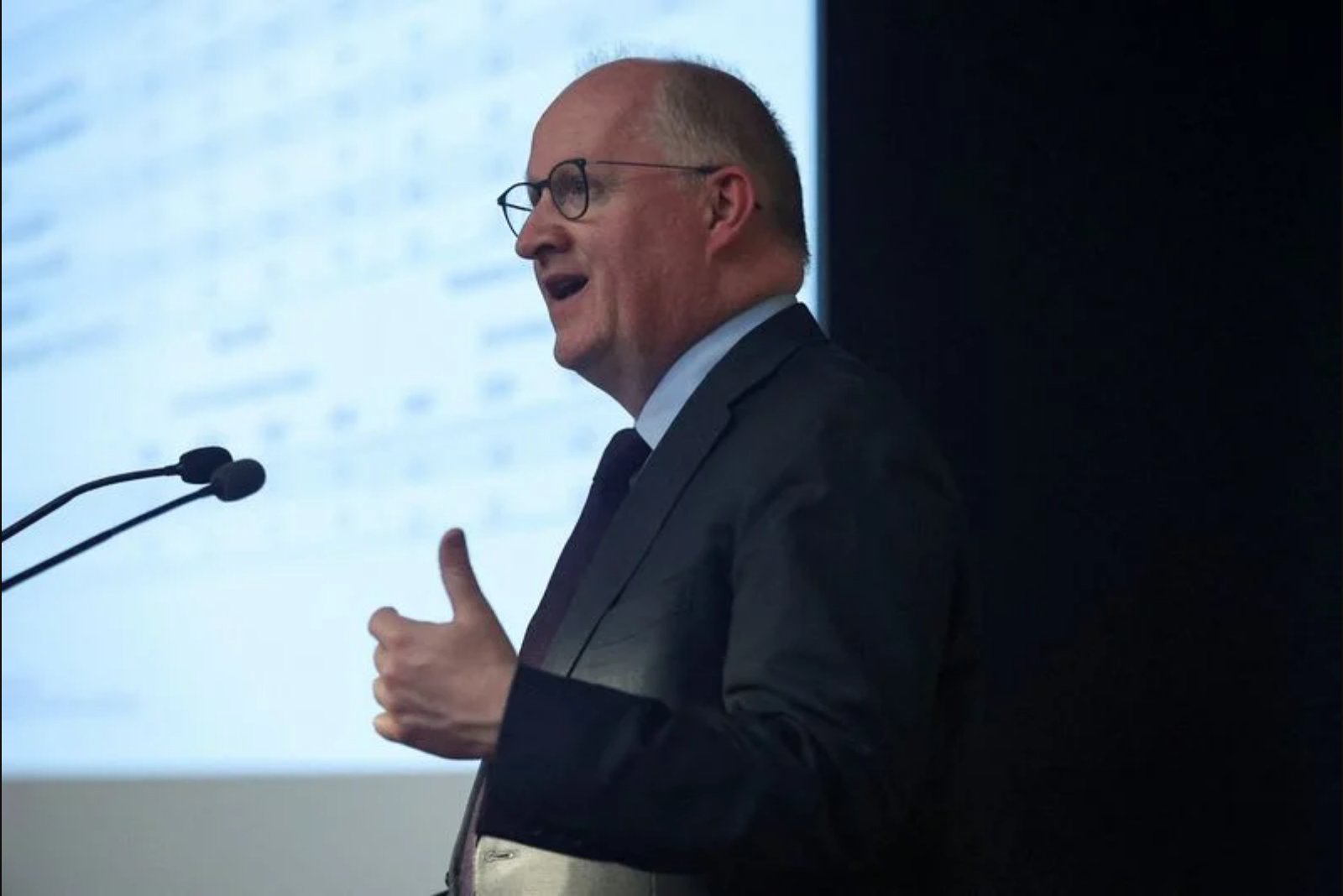
European Central Bank Chief Economist Philip Lane said on Friday that the euro zone is experiencing a mid-sized inflation shock, and that this episode calls for a measured reaction from monetary policymakers. Lane provided his assessment at an event hosted by Natixis, stressing that inflation is expected to stay above 3% for the remainder of the year.
Lane said the ECB raised interest rates last week to curb expectations of rising prices, and noted that financial market participants are now attempting to anticipate whether and when the central bank will act again.
Describing the present inflationary picture, Lane called it a textbook-style shock that differs from the more pronounced pandemic-era price surge of 2021/22 and the very low inflationary period that followed the euro area debt crisis. He said: "It’s kind of a not too big, not too persistent (shock), but you respond with monetary policy in a measured way. That if you like is maybe where we are now." He added: "We’re not so far in that big (inflation) dislocation scenario."
At the same time, Lane warned that the effect of recent geopolitical tensions has already transmitted into higher costs, and that even if the Middle East conflict eases there has been sufficient inflationary impact to keep price growth above the ECB's 2% objective into next year, supporting the case for policy action.
He reiterated: "We’ve seen some improvement this week, (but) there’s enough cost increases in the pipeline that we think inflation will be above 3% (for) the rest of this year." Lane said that this persistence in price growth will ripple through to other prices and is likely to create upward pressure on wages in the coming year.
Financial markets are already pricing in further tightening. Current market-implied expectations point to between one and two additional hikes to the ECB's deposit rate, now at 2.25 percent, with the next increase fully priced in by October. The ECB has previously estimated the neutral interest rate - the level that neither stimulates nor restrains growth - to lie between 1.75 percent and 2.50 percent, meaning an additional rate rise would place the deposit rate at the top end of that range.
Lane also noted the growth implications of sustained higher energy costs, saying they will act as a drag on economic expansion. However, he argued that the broader economy still retains significant resilience, limiting how far overall growth might fall below the bloc's potential.
He pointed to several supportive elements in the euro area outlook: households have accumulated ample savings that can underpin consumption; investment is rising, driven primarily by AI-related spending and increased defence requirements; and the financial system remains profitable with abundant liquidity.
Contextual takeaways
- Lane frames the current episode as moderate in size and persistence, warranting measured monetary tightening rather than emergency action.
- Markets expect between one and two more ECB rate hikes, with the next move fully priced by October.
- High energy costs pose a growth headwind, but household savings, rising investment, and strong bank liquidity provide resilience.