
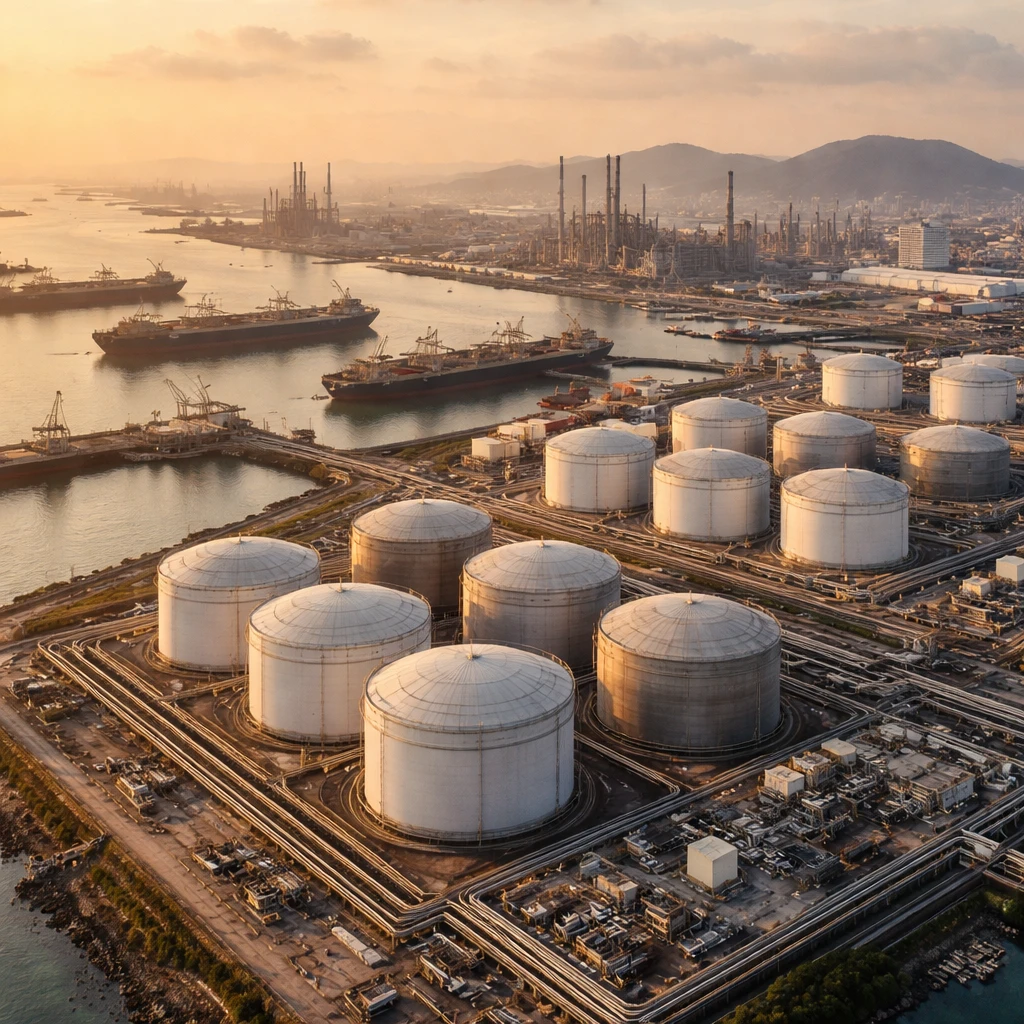
China's sizable oil holdings have offered the country strategic flexibility during the Iran war, allowing authorities to slash crude purchases while helping to limit upward pressure on global oil prices.
Analysts estimate China's crude reserves range from 1 billion to 1.4 billion barrels, a volume that translates to roughly 120 days of imports. Some calculations put the country's stockpile last year at nearly 600 million barrels more than U.S. reserves. That buffer has been central to Beijing's ability to step back from the market as disruptions unfolded.
From March through July, China's crude imports fell 23% compared with the same period a year earlier. Reduced buying from the world's largest crude importer lowered competition for supplies strained by the conflict and helped keep prices in check.
China had been expanding its strategic and commercial inventories through 2024, adding an estimated 1 million to 1.2 million barrels per day to its stockpiles. At the same time, flows from discounted sources that had become available amid sanctions rose - with Russian crude imports up 26% between 2022 and 2025 and Iranian shipments more than doubling over the same interval.
Starting in early May, authorities began to withdraw from commercial inventories. Through mid-August, those withdrawals averaged around 700,000 barrels per day, while aboveground strategic reserves largely remained intact.
The adjustment in crude buying was accompanied by a sharp pullback in refined-product exports. In the second quarter, gasoline exports plunged 93% year-on-year, diesel shipments fell by about 25%, and jet fuel exports were halved. These cuts in outbound shipments coincided with a step-down in refinery throughput - runs dropped to roughly 12.5 million barrels per day in June and July from more than 15 million per day before the war.
Beyond stockpiles, Beijing has pursued other measures to reduce import exposure, including investment in renewables, expanded electric vehicle deployment, high-speed rail and development of coal-based chemical capacity. Renewables supplied about two-fifths of China’s electricity in the first half of the year.
Those shifts, however, are not cost-free. Prior to the conflict, China relied on imports for about 70% of its crude needs, and the current softer refining footprint is acting as a drag on industrial activity. Macquarie estimates that the oil and petrochemical sector accounted for 90% of the second-quarter slowdown in Chinese industrial production.
Implications
- China's stockpiles have reduced near-term import demand, easing pressure on global crude markets.
- Lower refinery utilization and curtailed fuel exports are weighing on domestic industrial output and trade flows.
- Shifts in sourcing toward discounted Russian and Iranian crude altered import composition between 2022 and 2025.