
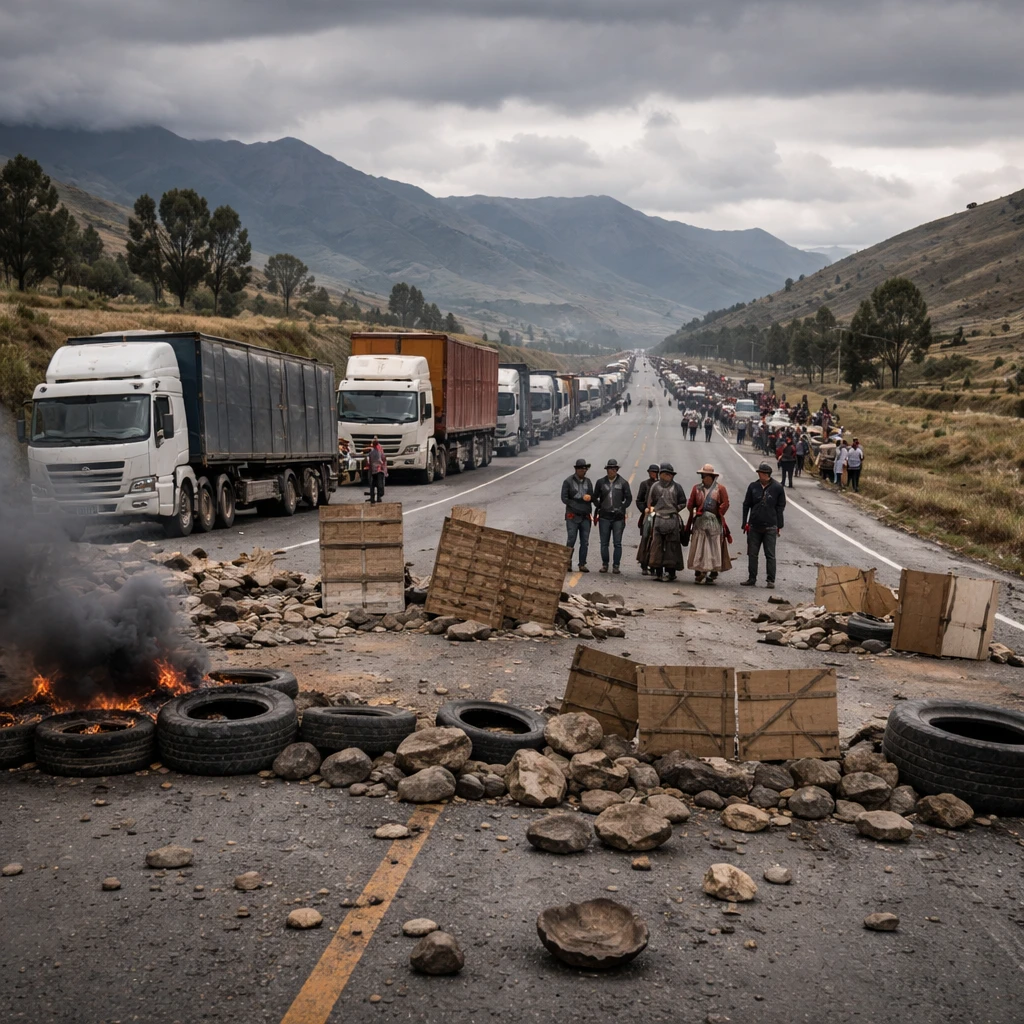
Bolivia has moved to declare a state of emergency after nearly two months of persistent road blockades that have interrupted economic activity and impeded access to essential services across the country. President Rodrigo Paz announced the measure and said it aims to reopen blocked highways and restore the movement of goods and people.
In a post on X, Paz said the blockades were preventing people from working and studying, limiting access to medical care and making it difficult for households to obtain necessary supplies. The declaration followed a government agreement with Bolivia's primary labor federation, the Central Obrera Boliviana (COB), reached hours before the emergency measures were announced.
The impasse on the nation's roads has produced tangible shortages in some regions, with food and medicine noted among the affected categories. Transportation networks have been disrupted, complicating distribution channels and undermining the steady delivery of essentials to communities outside major urban centers.
The National Chamber of Industries has placed the economic cost of the unrest at roughly $3 billion, reflecting the strain on commerce and industry from prolonged blockades. Earlier this month, Paz signed legislation broadening the government's powers to deploy emergency measures intended to address public disorder, a step officials say is part of efforts to regain control over disrupted supply lines and economic activity.
Separately, the administration is pursuing a financing arrangement with the International Monetary Fund. Government officials have indicated that negotiations over a program valued at about $3 billion are approaching conclusion, though they have not provided additional details in the context of the current measures.
Paz emphasized that the state of emergency is designed to restore normal economic functioning rather than impose additional restrictions on citizens. He further stated that the government remains willing to hold talks with groups prepared to engage in negotiation as authorities work to reopen roads and stabilize supplies.
Context and current status
The emergency declaration comes after nearly two months of blockades and unrest. An agreement with the COB emerged shortly before the state of emergency was announced, but road closures and supply disruptions have persisted long enough to produce regional shortages and substantial economic costs.
Government actions in recent weeks include legislation expanding powers to respond to public disorder and ongoing negotiations with the IMF for sizable financing that officials say is nearly finalized. The stated goal of the emergency measures is the resumption of normal economic and social activity while maintaining an openness to dialogue with protest groups willing to negotiate.