
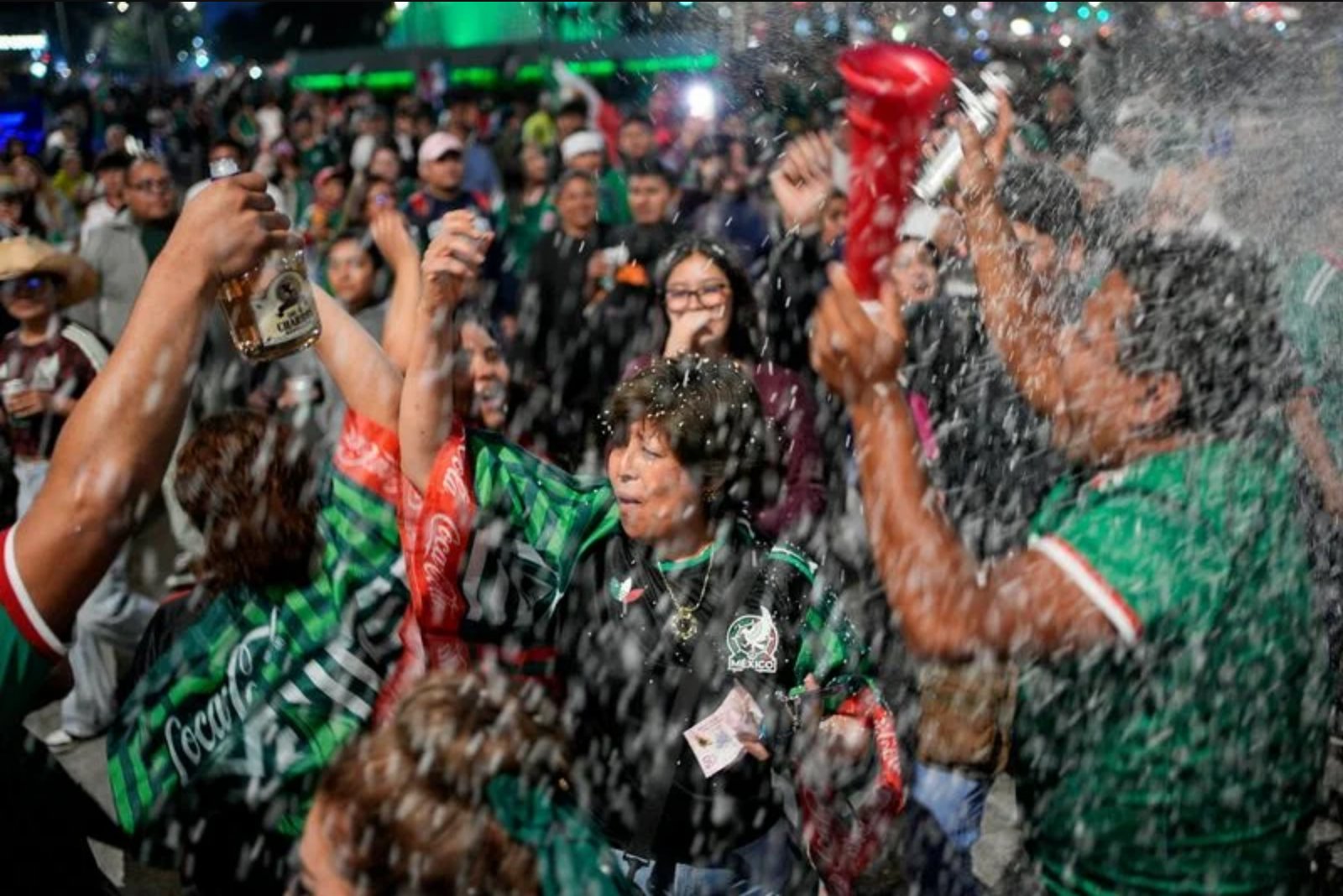
MEXICO CITY - City authorities are evaluating new steps to restrict alcohol sales in public spaces after downtown streets swelled with supporters celebrating Mexico's World Cup victory. Officials said more than 700,000 people gathered in the historic center following the national team's win against South Korea, producing large-scale street partying and significant public cleanup needs.
Celebrating fans filled the avenues in green Tri jerseys and colorful Lucha Libre masks, dancing in the rain, waving flags, singing team anthems and sounding vuvuzelas. The gatherings left a heavy footprint: the following morning Reforma Avenue - one of the capital's principal thoroughfares - was strewn with litter and many of the yellow cempasuchil flowers that line the boulevard had been trampled.
City sanitation crews collected around 40 tons of waste from the area surrounding the historic center, a tally officials used to underscore the challenges of managing such large, spontaneous congregations.
Government Secretary Cesar Cravioto addressed the situation at a press briefing, framing the proposed actions as part of the government's duty of prevention during large-scale public events. Cravioto highlighted control of illegal alcohol sales on the streets as a central concern and described steps the administration will request of local businesses.
Specifically, authorities plan to ask restaurants and bars near the historic core to prevent customers from taking alcoholic beverages off premises. In addition, convenience stores in the area could be asked to pause alcohol sales in the hours leading up to major matches. The government also intends to increase personnel focused on limiting the sale of beer by street vendors.
To reduce concentrated crowding in single locations, officials announced intentions to deploy seven additional large public screens around the center, supplementing the 12 screens already in place. The aim is to disperse spectators more evenly across public space during televised matches.
Cravioto reiterated the administration's approach in a single line: "We will keep insisting that fans have fun but without excessive alcohol consumption."
The wave of celebrations in Mexico City follows similarly intense fan activity in other World Cup host cities. In Boston, officials reported that Scottish supporters - known as the Tartan Army - consumed such high volumes of beer after a match that several bars reported running dry. Mexico is slated to play the Czech Republic next in the group stage on Wednesday.
Contextual note: The city is balancing crowd management measures with efforts to preserve public order and sanitation during successive high-attendance sporting events.