
BASF SE Chief Executive Markus Kamieth said rising inflation and the fallout from the US-Israeli conflict with Iran have darkened the outlook for both the automotive industry and the broader economy.
Speaking to a group of reporters in Frankfurt on Tuesday, Kamieth warned that the current geopolitical environment is raising the probability of material shortages that could disrupt supply chains that are usually tightly managed - notably car production.
He pointed to concrete examples of inputs already being affected, naming sulfur and helium as materials in growing scarcity as a result of the conflict. "That's a downside risk that I can see for the second half of this year," Kamieth said. "There is this creeping risk that at some point a material won't be available."
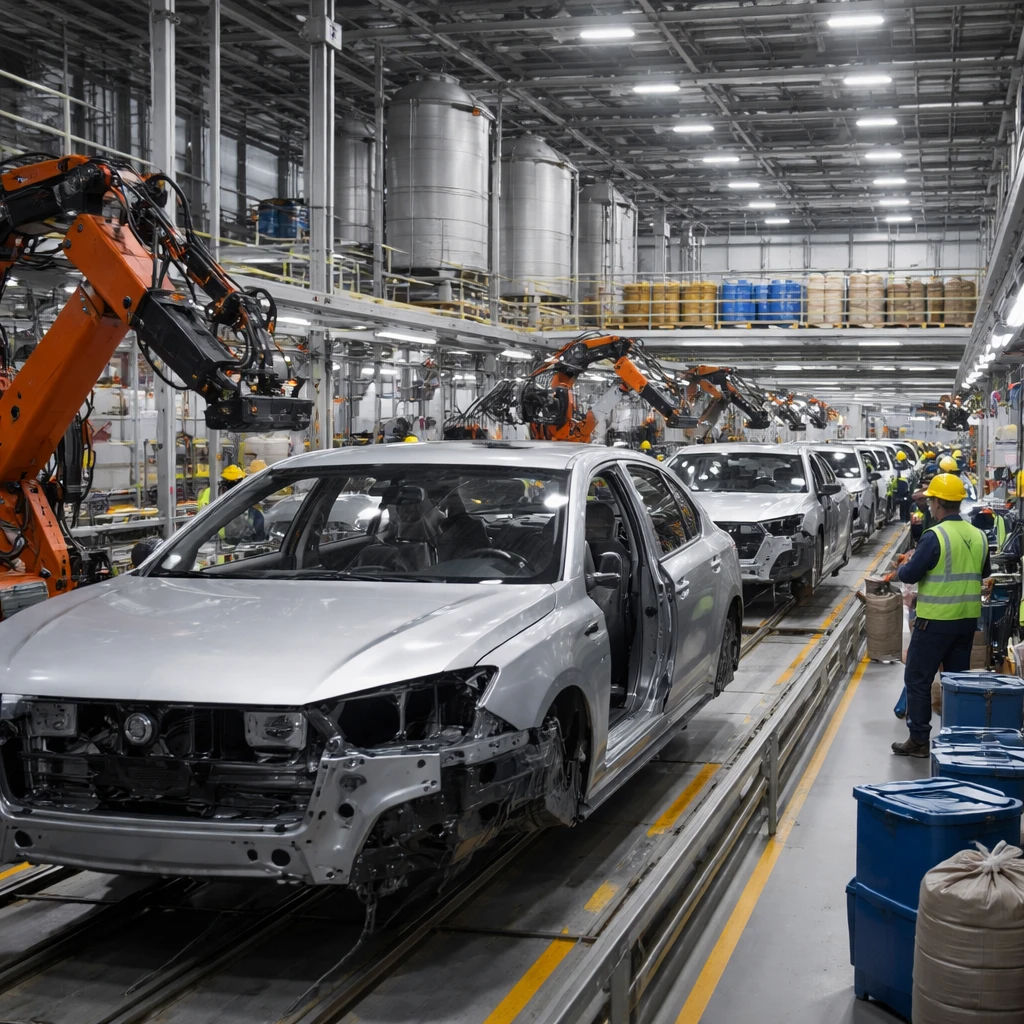
BASF is a key supplier to the global auto sector, providing coatings, plastics, catalysts, battery materials and other chemicals that carmakers and their suppliers use across the production process. Because modern vehicle assembly depends on thousands of components sourced from many suppliers, shortages of basic inputs heighten the possibility of assembly-line stoppages.
"Shortages of basic inputs could increase the risk of assembly-line stoppages in an industry that relies on thousands of components from multiple sources," Kamieth said, underscoring the interconnected nature of automotive manufacturing and the vulnerability to disruptions in upstream chemical supplies.
On broader geopolitical questions, Kamieth said he does not believe China or the US want to provoke a conflict over Taiwan, and he said a complete Western break from China would be unachievable even if a confrontation were to occur.
"Sanctions would come, countermeasures would come," he said, arguing against direct comparisons with Russia's invasion of Ukraine and the limited economic effect of that conflict relative to China. "Russia is economically a mini-mini effect compared to China," he said.
Kamieth's remarks link immediate operational risks - potential shortages of sulfur, helium and other inputs - with wider strategic considerations about trade links and economic interdependence. He framed the supply and pricing pressures as a downside risk for the second half of the year while warning that the creeping possibility of unavailable materials could pose tangible disruption to production schedules.
The comments highlight how geopolitical friction and inflationary pressure intersect to elevate supply-chain vulnerability, particularly in sectors like automotive manufacturing that require precise coordination across numerous suppliers.