
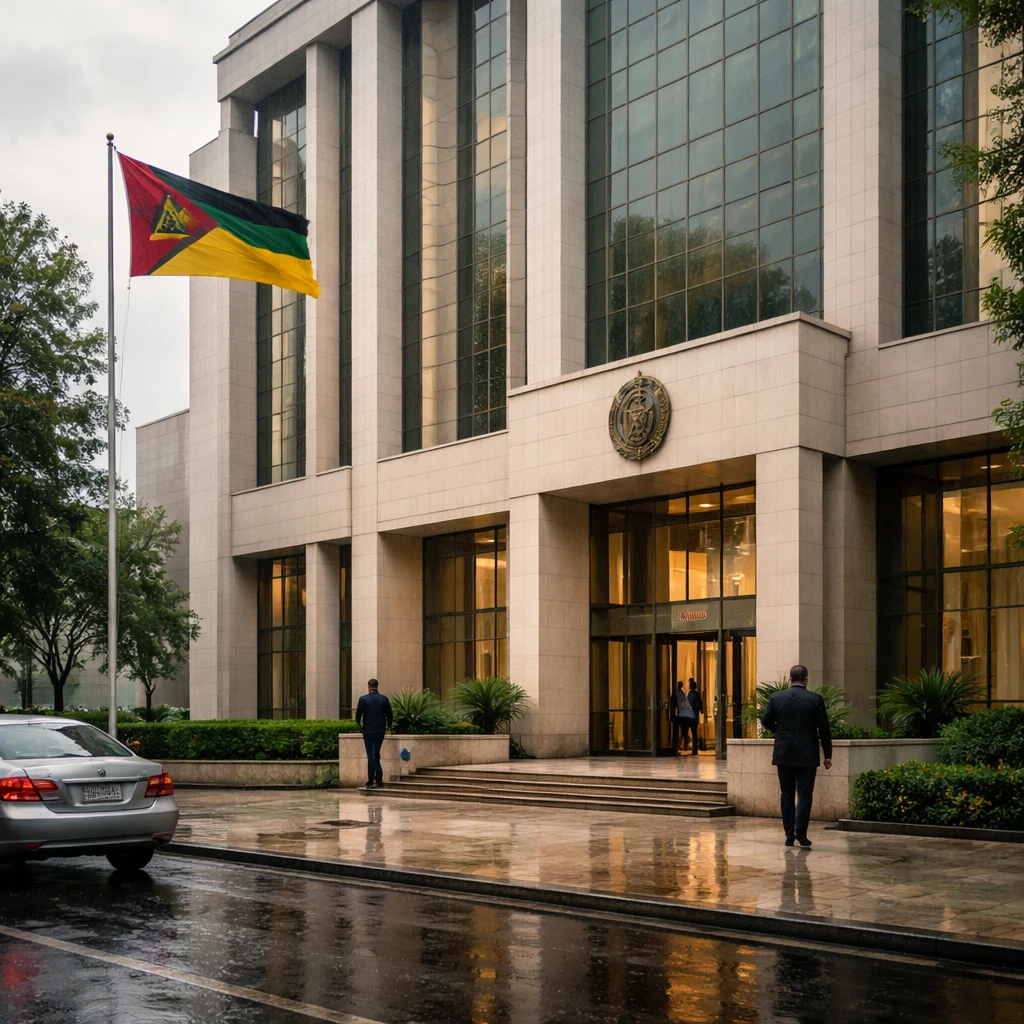
Mozambique's central bank left its benchmark MIMO policy rate at 9.25% on Wednesday, continuing a pause in rate moves through a third consecutive meeting. The decision extends the easing-cycle pause that began in January 2024 as officials weigh persistent inflationary pressures.
Annual consumer inflation rose to 7.51% in June, up from 7.22% in May, continuing a trend of increasing prices that began in April. Against that backdrop, the Bank of Mozambique opted to maintain policy settings unchanged rather than resume cuts or implement hikes.
Governor Rogerio Zandamela, speaking at a press conference, said that inflation risks remain elevated. He identified several factors of concern cited by the central bank: higher fuel prices, growing public debt levels, climate-related shocks and the conflict in the Middle East. The governor's remarks reiterated the bank's cautious stance on policy given those risks.
Officials signaled that they expect inflation to rise in the near term but anticipate it will return to single-digit levels over the medium term. The central bank noted that tighter monetary conditions are contributing to efforts to contain price pressures.
The country continues to grapple with a substantial debt burden. A joint World Bank and International Monetary Fund debt sustainability analysis has classified Mozambique's debt as unsustainable, and the central bank states that the debt level remains one of the country’s primary economic challenges.
This policy decision and the outlook described by officials underline the central bank's attempt to balance near-term inflationary dynamics with the longer-term objective of price stability, while the debt assessment highlights ongoing fiscal constraints.
Key points
- Bank of Mozambique held the MIMO policy rate at 9.25% - third straight meeting without change.
- Annual inflation climbed to 7.51% in June from 7.22% in May, continuing a rise that began in April.
- Governor Rogerio Zandamela cited higher fuel prices, growing debt, climate shocks and the Middle East conflict as elevated inflation risks; a joint World Bank and IMF analysis finds debt unsustainable.
Risks and uncertainties
- Inflation risks remain elevated according to the central bank, with a short-term increase expected before a return to single-digit rates over the medium term.
- Higher fuel prices and climate-related shocks are flagged as sources of price pressure.
- The country faces a substantial and classified-as-unsustainable debt burden, which the central bank identifies as a primary economic challenge.