
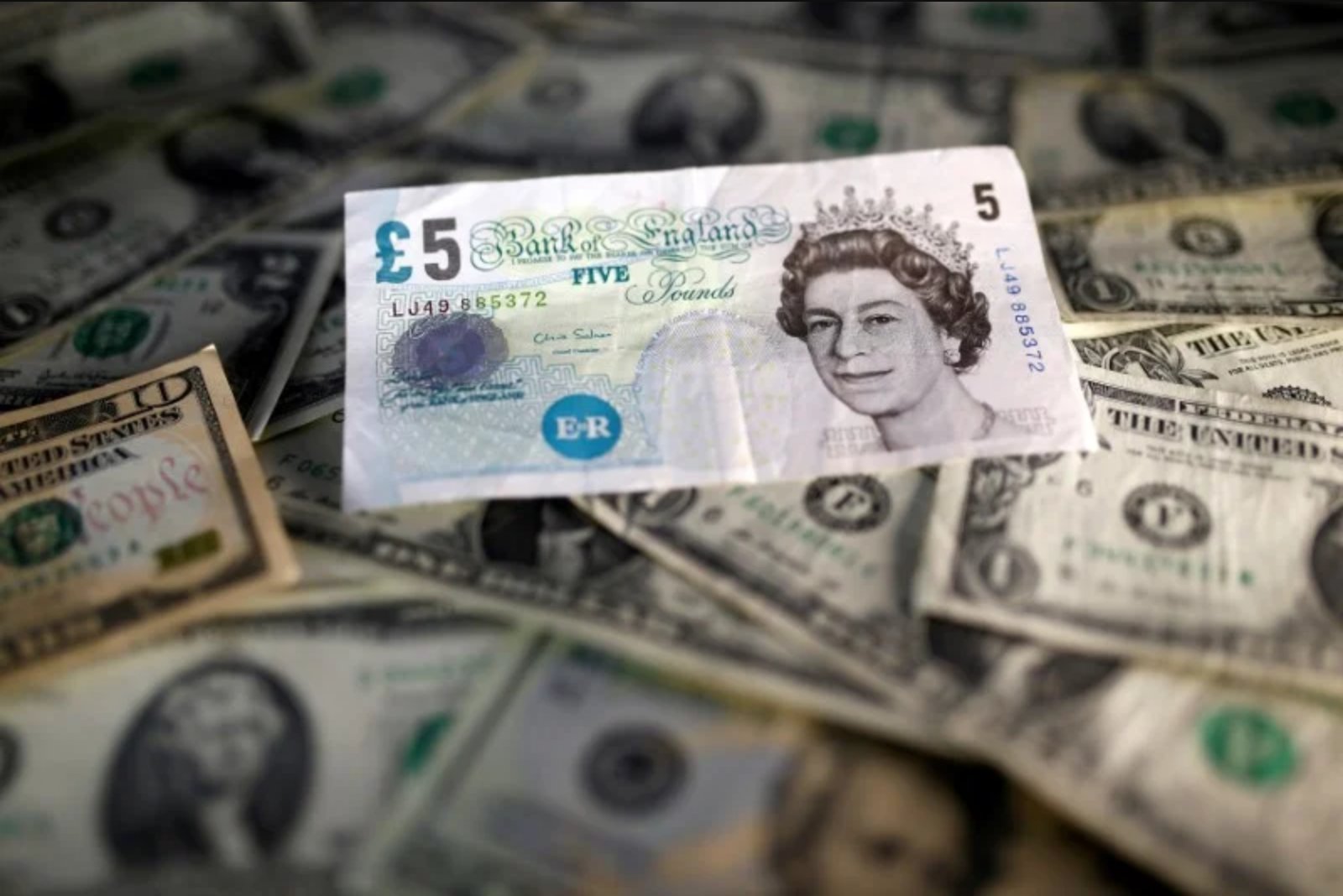
Sterling traded lower on Tuesday while the euro also gave back ground, as renewed concerns around U.S.-Iran diplomacy helped push Brent crude towards $107 a barrel and left the dollar on firmer footing.
In early U.S. trade, GBP/USD was trading down 0.19% at $1.3232 and EUR/USD was 0.24% weaker at $1.1344, as of 04:48 ET (08:48 GMT).
Market confidence that talks between Washington and Tehran would make meaningful progress has waned. Iranian officials reportedly said a deal is unlikely before the Nov. 3 U.S. midterm elections, and the Trump administration declined an Iranian proposal to reopen the Strait of Hormuz. Brent crude earlier pushed as high as $109 a barrel on Monday, underpinning energy-linked dollar demand.
Dollar dynamics and strategist commentary
Francesco Pesole, FX strategist at ING, said the path for the dollar lower depends on stability in bond markets, and that outcome is closely tied to oil. "We need to see some stability in bonds for the dollar to correct lower. That relies heavily on oil, and the latest news isn’t encouraging. Upside risks are rising again for the greenback," he said.
Pesole added that equities had so far absorbed the shock of higher oil prices but cautioned that lofty equity valuations and rapidly rising rates create a growing tail risk that would likely be associated with significant dollar gains.
Markets are pricing around 17 basis points of Federal Reserve tightening by October, a stance that market participants describe as hawkish. ING’s baseline view is that both the Fed and the European Central Bank will hold off on policy moves until December, though ING acknowledged that a Fed hike in October would challenge that expectation.
Data due and positioning
Investors are watching U.S. data for further direction. US September consumer confidence was expected to stabilize around 89, and the JOLTS job openings report was anticipated to add texture to the August jobs picture. ING also signalled that it expects the U.S. jobs report due on Friday to be revised lower, noting last month’s payrolls reading looked "too strong."
Swap markets have also reflected stress in cross-currency funding conditions. The SOFR-ESTR two-year swap spread widened beyond 155 basis points, close to July’s peak near 163 basis points. Meanwhile, markets price roughly 9 basis points of ECB tightening by October.
UK prices and the pound
Analysts said the pound’s recent softening appears to be more a function of dollar strength than of a marked deterioration in UK fundamentals. Domestic price data was only mildly softer: the British Retail Consortium’s shop price index showed inflation easing to 1.4% in September from 1.5% in August, a touch below the 1.5% forecast and above the three-month average of 1.3%.
Within the BRC data, food inflation slowed to 2.5% from 2.8%, helped by promotions, while non-food inflation eased to 0.8% from 0.9%, with back-to-school discounting cited as a factor. The BRC noted retailers were absorbing higher business rates, employment costs, energy bills and packaging taxes, but warned there is a limit to how much additional cost can be taken on by firms.
Broader UK CPI inflation had risen to 3.1% in August, and the article referenced expectations that CPI could top 4% in early 2027 if conflict in Iran lifts energy prices further.
Euro area outlook and ECB remarks
The euro held up relatively better than the pound despite dovish language from European Central Bank President Christine Lagarde, who said tight financial conditions were limiting the pass-through of energy costs and argued the ECB should pursue a "measured response" given there was no evidence of second-round effects. ING’s baseline assumes a firmer EUR/USD by year-end if neither central bank acts before December.
Pesole noted that any strong U.S. macro release could prompt a test of the 1.1320-1.1330 summer lows for EUR/USD, and that Lagarde’s comments removed some of the euro’s support. ING also suggested that further dollar strength could push USD/CHF gains toward the 0.84-0.85 area.
Market implications
Overall, currency moves reflected a mix of geopolitics, oil prices and expectations around central bank timing. Traders and investors will remain sensitive to developments in U.S.-Iran negotiations, energy markets and upcoming U.S. economic releases that could shift the perceived path for Fed policy and thereby FX and cross-asset positioning.