
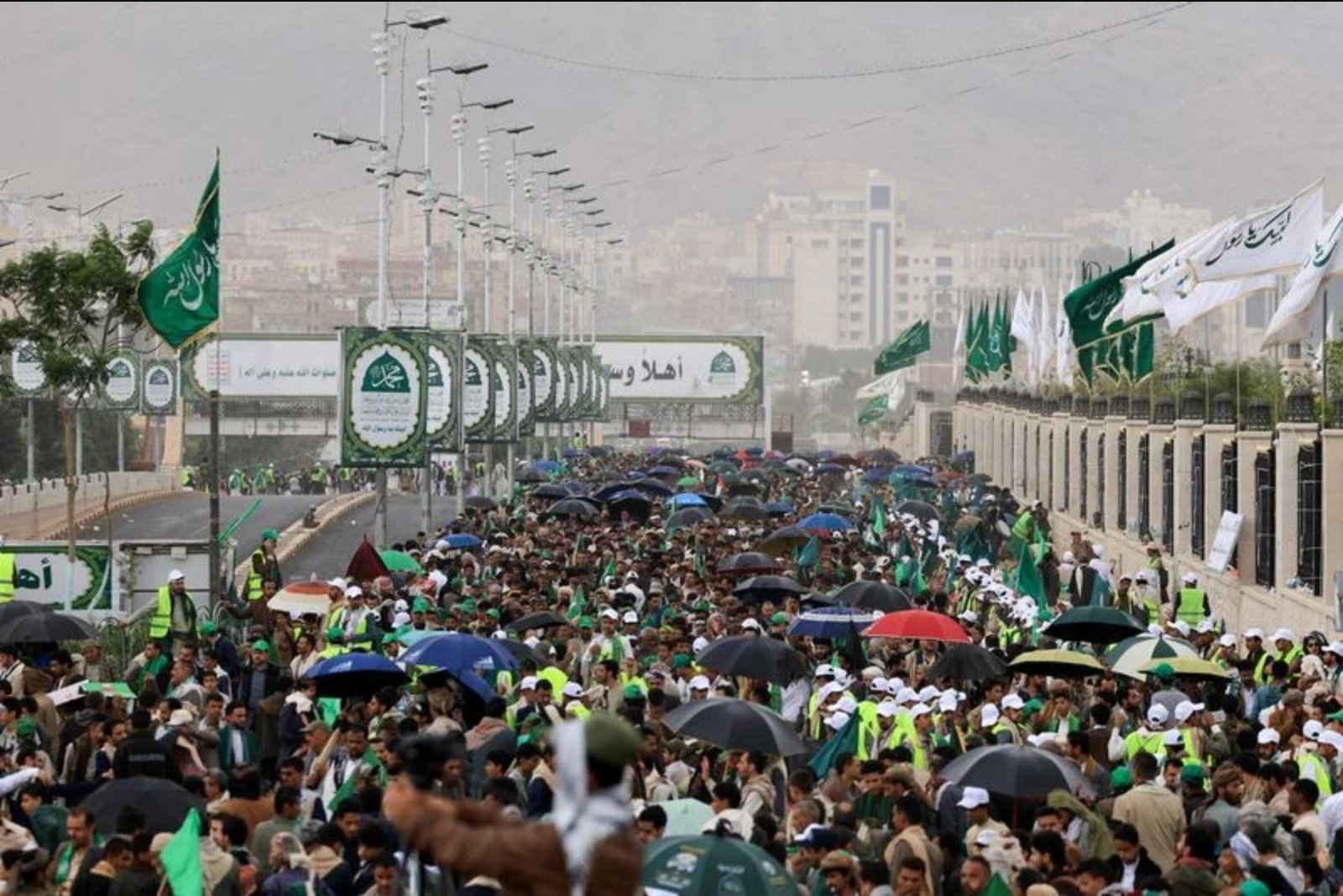
Yemen's Saudi-backed government announced the start of a military counteroffensive aimed at reclaiming territory under Houthi control. The resumption of active combat between the Houthis and Saudi Arabia has ended the fragile pause in Yemen's conflict and increased threats to shipping in the Red Sea - a key artery for global trade - while compounding pressure on Middle Eastern energy shipments already constrained by Iran's actions in the Strait of Hormuz.
Who are the Houthis?
The Houthis are a combined military, political and religious movement that holds sway over much of northwest Yemen. Their operations have directly affected global trade and energy markets by targeting commercial vessels and tankers in the Red Sea. According to public accounts of their actions, the group began firing on ships in the Red Sea and launching drones and missiles at Israel in November 2023, describing those strikes as expressions of support for Palestinians during the Israel-Gaza war that began the prior month. Reports indicate the group renewed attacks on Red Sea shipping, and on Saudi Arabia, again this year in response to what they described as the United States' war on Iran - a close ally of the Houthis.
Origins and objectives
The movement originated in the far north of Yemen in the 1990s as a revivalist initiative tied to the Zaydi branch of Shi'ite Islam. Historically, the Zaydi sect ruled parts of Yemen, but over time the northern stronghold became economically disadvantaged and politically marginalised. The Houthis initially engaged in a succession of guerrilla campaigns against Yemen's national army and were involved in a short-lived border dispute with Saudi Arabia.
When Ali Abdullah Saleh, Yemen's long-serving president, was removed from power amid the 2011 Arab Spring protests, the group rejected a Gulf-backed political transition and expanded its control in northern Yemen. With backing from Iran, the movement's secretive leader, Abdul Malik al-Houthi, is reported to have transformed a cadre of mountain fighters into a force numbering in the tens of thousands. In 2014 the Houthis took the capital, Sanaa, forcing the internationally recognised government to relocate south toward Aden.
Why Saudi Arabia intervened
Concerned about the growth of Iranian influence in Yemen and the prospect of unrest spilling across its border, Saudi Arabia led a military campaign against the Houthis in early 2015. The stated objectives were to remove the group from power, restore Yemen's internationally recognised government and revive the political transition plan. That intervention precipitated a prolonged civil conflict that produced a major humanitarian crisis and years of intense fighting, including airstrikes by Saudi Arabia and coalition partners such as the United Arab Emirates.
Despite sustained military efforts, neither side was able to secure decisive gains across Yemen's difficult mountainous terrain. The Houthis retained control of the northwestern areas where a substantial share of the population resides and demonstrated notable missile and drone capabilities. Over time those weapons were used to strike oil installations and other critical infrastructure in Saudi Arabia and the UAE.
A United Nations-brokered truce in 2022 held until this year, when the resumption of fighting ended that period of relative calm.
Impact of Houthi attacks on shipping and energy
Between 2023 and 2025, the Houthis' actions in the Red Sea materially disrupted international trade. Attacks and threats to vessels compelled many cargo ships traveling between Europe and Asia to reroute around Africa, a significantly longer and costlier journey. During the concurrent conflict involving Iran, the Houthis' targeting of oil tankers added to pressure on exports from the Gulf after Tehran largely choked off passage through the Strait of Hormuz, contributing to an elevated global oil market strain.
While some Houthi missile and drone strikes have inflicted meaningful damage within Saudi Arabia and the UAE over the years, those same tactics have had limited effect when used against more distant targets, including Israel, according to available accounting of their operations.
Relationship with Iran
Iran positions the Houthis as part of a broader regional alignment it calls the "Axis of Resistance", which also encompasses Lebanon's Hezbollah and Shi'ite militias in Iraq. However, observers note that the relationship between Iran and the Houthis is not identical to Tehran's links with Hezbollah or Iraqi groups. The Houthis do not accord Iran's supreme leader the same role as a religious authority as those other organisations do. Their primary drivers are described as domestic, even as they share an ideological affinity with Iran.
U.S. statements assert that Iran has provided the Houthis with arms, funding and training, with assistance from Hezbollah, while the Houthis reject the characterization of themselves as an Iranian proxy and maintain they develop weapons independently.
What remains uncertain
As fighting recommences, the scale and duration of the counteroffensive and the potential for further escalation remain unclear. The implications for maritime security and energy flows hinge on how sustained the Houthi campaign will be and on responses from regional and external powers. Those open questions underpin market and logistical uncertainty for trade lanes and energy supply chains.