
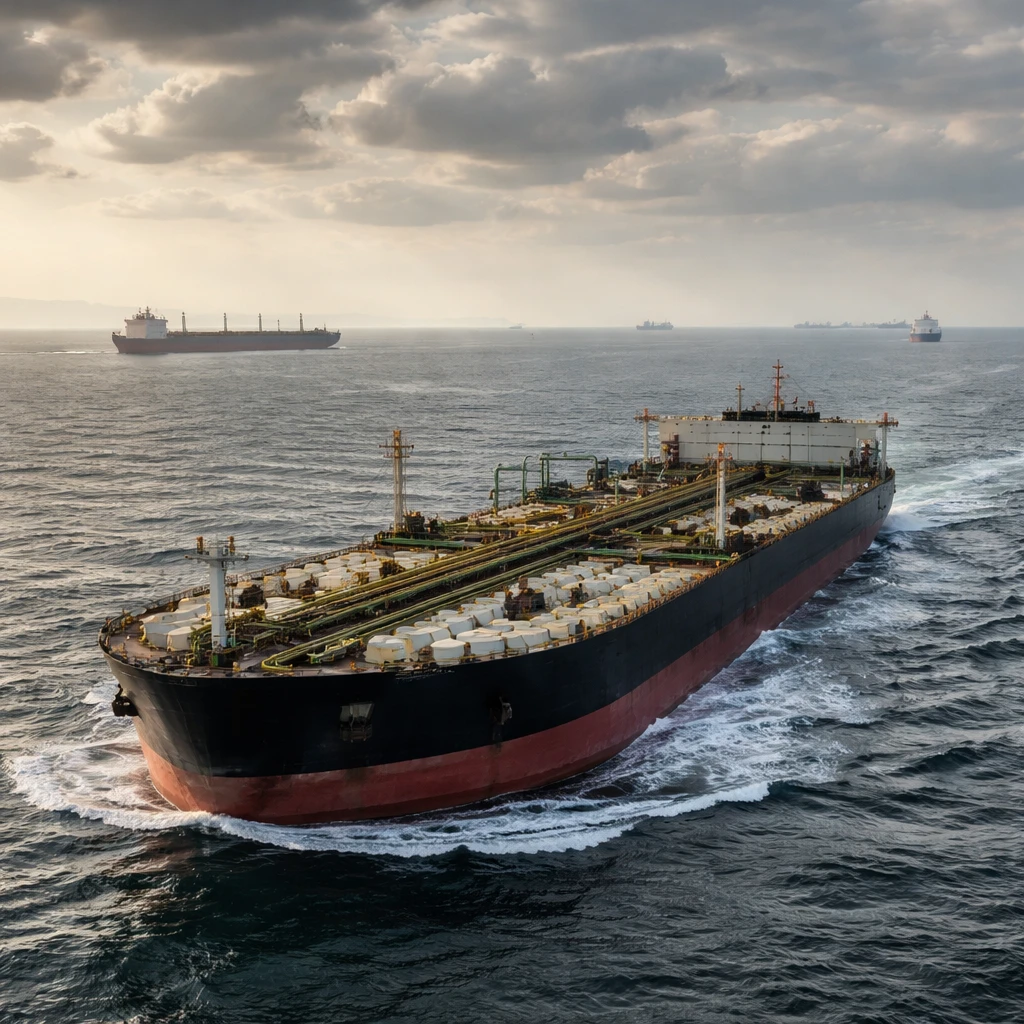
Physical crude oil prices across the Middle East, Europe and Africa firmed this week, reaching levels not seen in roughly two months and bringing certain grades close to $110 per barrel. Market participants cited supply disruptions linked to regional conflicts in Iran and Ukraine as the main drivers forcing buyers to look for replacement cargoes.
According to LSEG data, Dated Brent - the benchmark used to price more than 60% of global physical crude cargoes - rose to $105.70 per barrel on Thursday. That marked its highest settlement since late May and represented the first time Brent moved back above $100 since early June. North Sea Forties crude, which is priced against Brent, climbed to $108.77 on Friday.
Maritime security incidents in the Red Sea contributed to the tightening. Yemen's Iran-aligned Houthis carried out attacks on tankers in the Red Sea this week, prompting some Saudi shipments to be rerouted on longer voyages around Africa. Those attacks came after the collapse of a preliminary U.S.-Iran peace deal and have been associated with increased disruption to exports transiting the Strait of Hormuz.
Separately, Kazakhstan announced on Thursday that it had reduced oil production after suspected Ukrainian drone attacks forced the closure of its main export terminal for CPC Blend crude on the Black Sea. The temporary shutdown removed a portion of supply from the market and added to the concerns over seaborne exports.
Regional spot premiums rose sharply as sellers and buyers adjusted to the tighter flows. Reuters data showed spot premiums for the Middle East benchmark Dubai to swaps doubled on Thursday to $12.74 per barrel. Oman’s premium climbed to $12.62 per barrel on the same day. Both premiums were at their highest levels since the end of May, reflecting elevated competition for available barrels.
With cargoes being rerouted and a key export terminal offline, trading and logistics desks have been actively seeking alternate sources to meet delivery schedules. The combination of maritime attacks and the Black Sea disruption contributed directly to the upward pressure on physical prices and on spot premiums this week.
- Market benchmarks cited: Dated Brent $105.70 on Thursday; North Sea Forties $108.77 on Friday.
- Regional impacts: Tanker attacks in the Red Sea and closure of CPC Blend export terminal on the Black Sea tightened supply.
- Spot premiums: Dubai to swaps $12.74 per barrel and Oman $12.62 per barrel on Thursday, both highest since end of May.