
Recent decisions by U.S. courts and federal agencies have produced a wave of favorable outcomes for leading pesticide manufacturers, altering the legal and regulatory landscape for three widely contested herbicides: glyphosate, dicamba and atrazine.
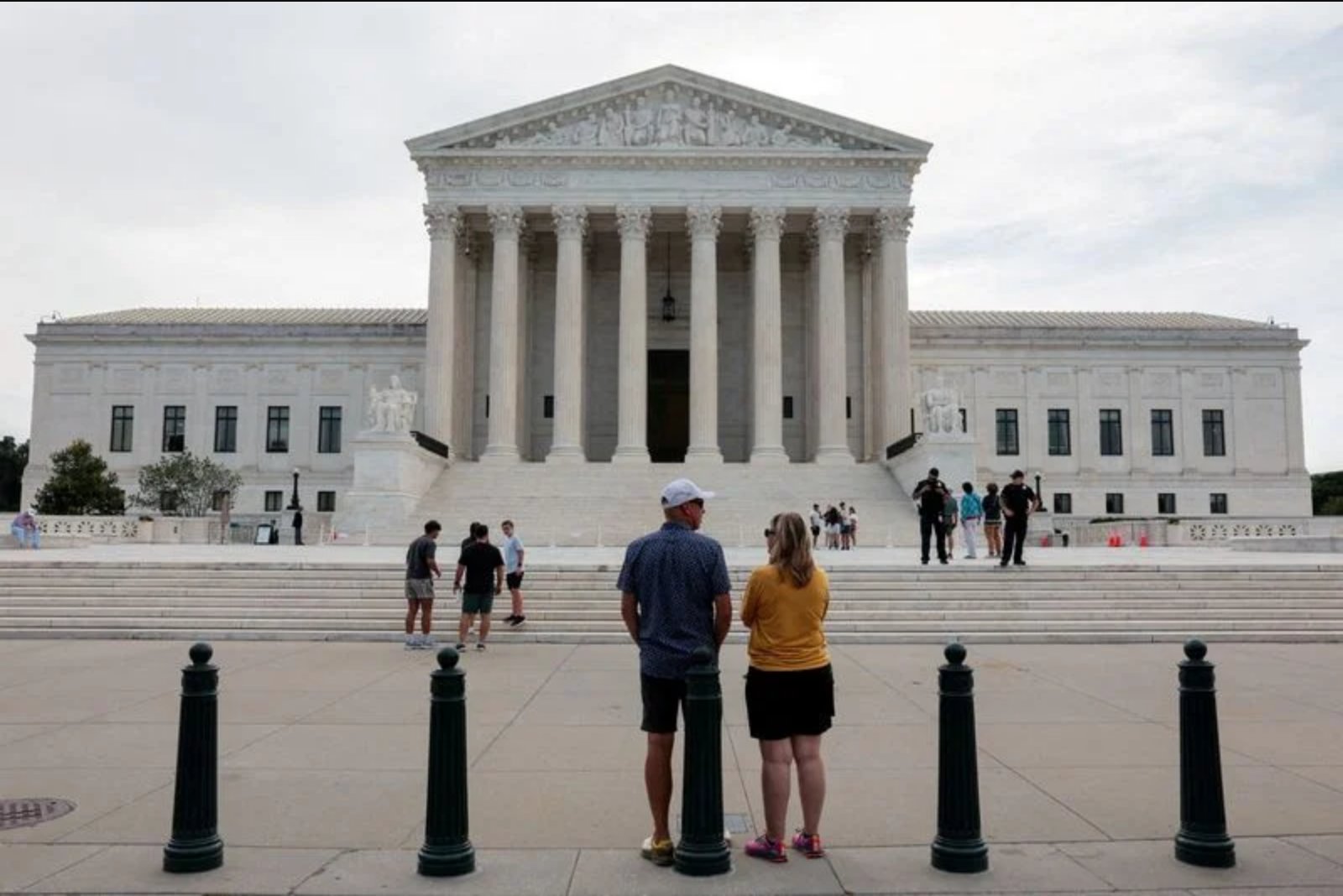
At the center of the legal developments is the U.S. Supreme Court's June 25 ruling that sharply limited the ability of plaintiffs to pursue state-law suits against Bayer over claims that glyphosate - the active ingredient in the Roundup weedkiller - should have carried cancer warning labels. The high court's 7-2 decision prevents plaintiffs from suing the company under state statutes for failing to include such warnings, removing a major avenue of liability. Bayer, which acquired Monsanto - the original U.S. maker of Roundup - in 2018, saw its shares register their largest one-day increase in 23 years after the decision.
Following the ruling, Bayer moved to unwind a large federal litigation that had consolidated nearly 4,000 lawsuits alleging that Roundup causes cancer. Company filings and statements indicate that lifting or dismantling that consolidated litigation would relieve a financial strain Bayer has warned could otherwise force the company to halt production of the weedkiller. Bayer has maintained that glyphosate can be used safely, even as critics have long asserted links between the chemical and cancer as well as other health concerns.
Concurrently, Bayer has reorganized its Roundup operations into a new business unit and has pursued duties on glyphosate imports from China.
Regulatory momentum has also moved in favor of certain herbicides. Dicamba, an herbicide produced by Bayer and Syngenta and used on genetically engineered cotton and soybean varieties engineered to tolerate it, was effectively returned to the field after a period of legal uncertainty. Environmental groups have argued that dicamba drifts from target areas and can damage neighboring crops and vegetation. A U.S. District Court ruling in 2024 had found that the Environmental Protection Agency (EPA) violated public input procedures in granting approval for three dicamba products and vacated those registrations, which led to farmers being unable to spray dicamba on crops in 2025.
In February 2026, the EPA approved products containing dicamba for two growing seasons under a set of new constraints. Those measures include a reduced maximum application rate and limits on spraying during hot weather. The agency described the approval as "deliberately temporary" and said it imposed the strictest set of guardrails it has ever placed on the herbicide. Critics, such as the Center for Biological Diversity, argued that the imposed measures would be ineffective and hard to enforce.
A separate regulatory assessment concerns atrazine, a widely used herbicide manufactured by Syngenta and commonly applied to crops including corn and sugarcane. Scientific studies referenced by public health authorities have suggested possible links between atrazine exposure and elevated rates of certain cancers and pre-term births. As part of the EPA's registration review of atrazine, the U.S. Fish and Wildlife Service issued a biological opinion in April that concluded the chemical is not likely to cause the extinction of the threatened or endangered species examined in the review.
In its biological opinion, the Fish and Wildlife Service wrote: "We anticipate that the registration of atrazine is not likely to jeopardize the continued existence of these species." That determination represents a shift from a 2021 EPA biological evaluation that found atrazine likely to adversely affect more than 1,000 protected species. The EPA emphasized that the Fish and Wildlife Service's opinion was produced outside the agency and said it would continue to consider any new science as the atrazine registration review proceeds.
The Center for Biological Diversity responded sharply to the Fish and Wildlife Service's conclusion, with Nathan Donley, the group's environmental health science director, saying the federal actions allow what he described as "this extraordinarily dangerous pesticide" to remain in use and continue impacting land and water. The group framed the recent decisions as favoring the pesticide industry.
Separately, the World Health Organization's International Agency for Research on Cancer (IARC) concluded in 2025 that atrazine is "probably carcinogenic to humans." Syngenta, on an atrazine information site, has stated that when used according to directions the chemical does not cause adverse effects to human health or the environment.
The policy and legal shifts have prompted observers and advocacy groups to interpret federal priorities differently. Ken Cook, chief executive officer of the Environmental Working Group - an organization that has long called for tighter controls on pesticides - said the current administration appears to be aligning its constituency with "big farmers and pesticide companies," contrasting that with what he described as a more cautious approach under the previous administration.
The EPA has defended its recent approvals and decisions by arguing that its actions, in some instances paired with additional restrictions, benefit both farmers and the environment by providing "modern, more precise chemistries that do more with less." Bayer framed the Supreme Court's glyphosate ruling as positive for science, for farmers and for industries that rely on regulatory clarity to advance innovation.
For now, the trajectory for glyphosate, dicamba and atrazine in the United States reflects a combination of judicial restraint and agency determinations that preserve market access for these products while layering in procedural or use-based limitations. Advocacy and environmental groups continue to press for greater protections, citing public health and ecological concerns, while manufacturers and many in agriculture emphasize the role of these herbicides in current crop production systems.
As the regulatory reviews and legal proceedings continue to unfold, companies, growers, advocacy groups and regulators will be watching for further changes in how risks are assessed, how use is restricted and how litigation is resolved.