
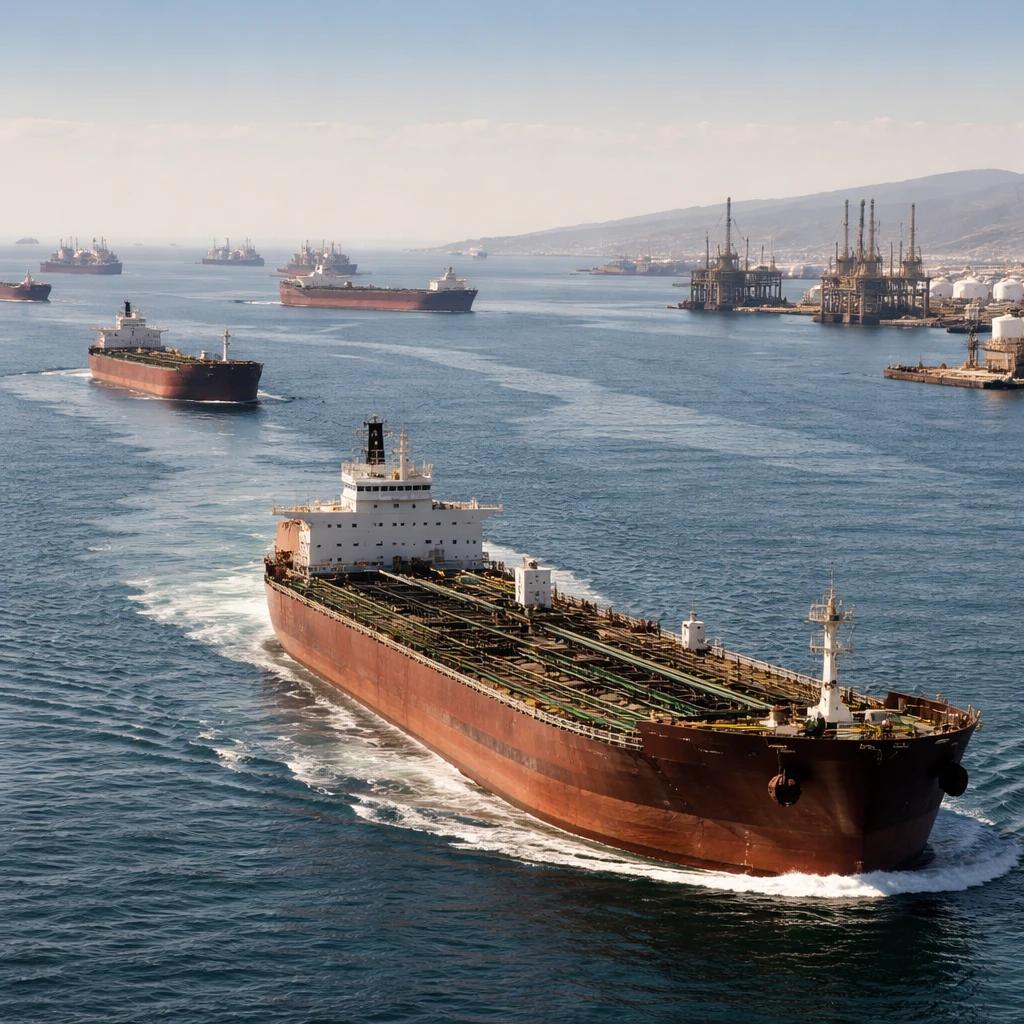
July 7 - Oil futures edged higher on Tuesday as market attention shifted from easing Middle East tensions to the balance between rising supply and demand prospects. Brent crude futures climbed 28 cents, or 0.39%, to $72.29 a barrel. U.S. West Texas Intermediate crude advanced 29 cents, or 0.26%, to $68.84 a barrel as of 0046 GMT, after settling back to roughly pre-Iran war levels on Monday.
Market participants have grown more focused on tangible shifts in crude availability and whether demand will respond, even as geopolitical risk premiums appear to have moderated. "The steps towards recovery in supply have eased the immediate risk premium, but the market remains wary of putting too much faith in the stability of the current truce given the on again-off again nature of U.S.-Iran relations," said Tim Waterer, chief market analyst at KCM Trade.
Investors are closely following talks between the United States and Iran over shipping through the Strait of Hormuz while also tracking the recovery in Gulf oil exports. President Donald Trump said on Monday the United States would either reach a deal with Iran or "finish the job," renewing his threat of military action as Tehran projects defiance following the funeral of former Supreme Leader Ayatollah Ali Khamenei.
Concrete increases in production have begun to materialize across the region. The United Arab Emirates boosted crude output above 3.8 million barrels per day in June - its highest level since April 2020 and above pre-Iran war levels - after exiting OPEC+ production quotas in May, according to Reuters estimates.
At the group level, the Organization of the Petroleum Exporting Countries and its allies, including Russia, agreed on Sunday to further raise output targets by 188,000 barrels per day from August, on top of comparable increases applied for June and July. Those additions are arriving as traders assess how quickly physical markets will absorb added barrels.
Price action was also influenced by Saudi pricing for Asian buyers. Saudi Arabia trimmed the August official selling price for its Arab Light crude to Asia to $1.50 a barrel below the Oman/Dubai average - an $11 cut from the prior month and the largest reduction in more than two decades, according to a Saudi Aramco pricing statement released on Monday.
Analysts and traders say the next meaningful move in oil prices will hinge on demand developments. "We will be watching for early signs of demand response, particularly from China. The market has priced in a lot of the positive supply news, so the next leg in oil prices will depend on whether physical reality matches the optimistic headlines," Waterer added.
For now, modest price gains reflect the tug-of-war between visible supply restoration in the Gulf and lingering uncertainty about the durability of diplomatic progress and the pace of demand recovery.