
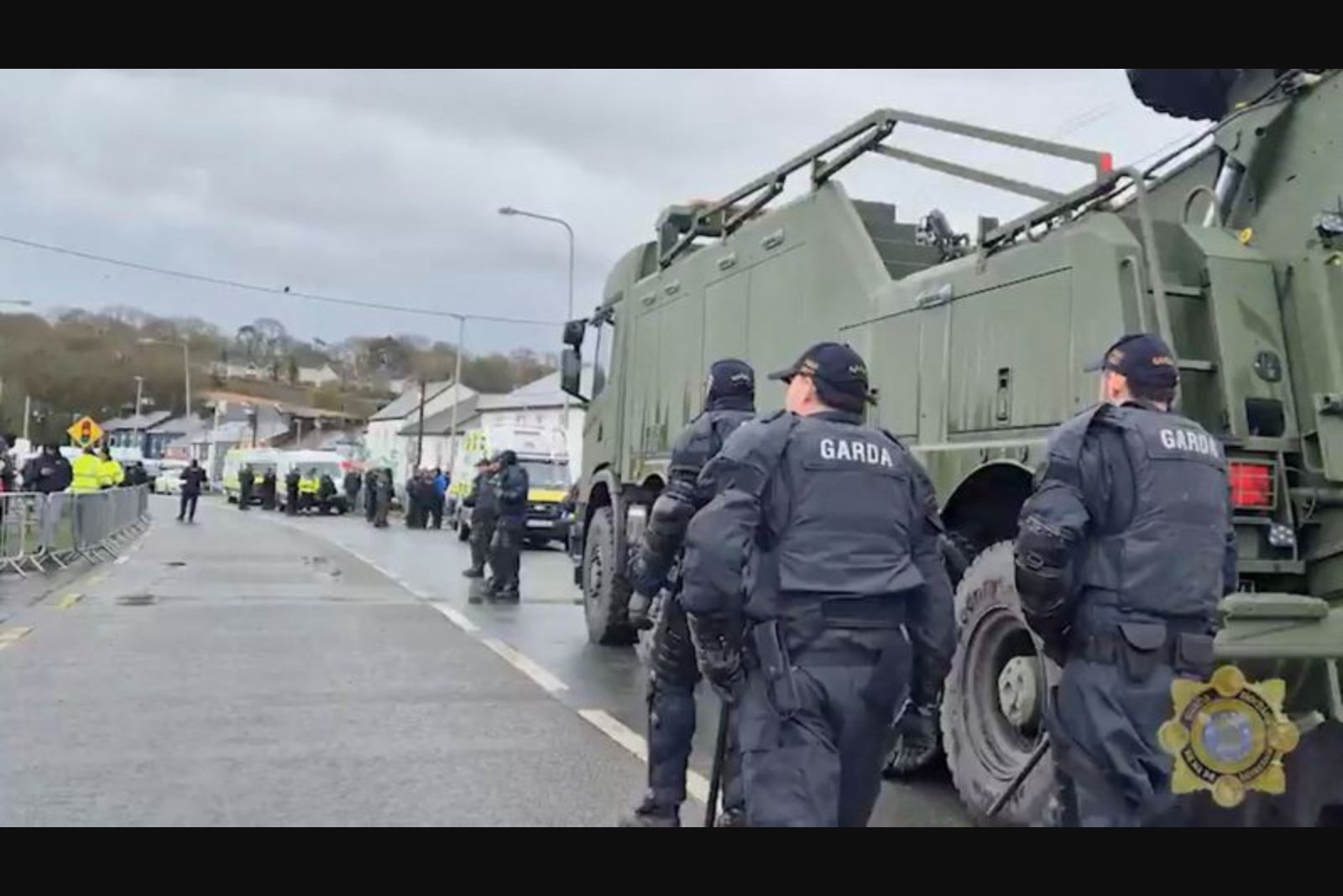
Dublin, April 12 - Irish police moved in on Sunday to remove tractors and trucks that had been blocking roads in central Dublin for five days, ending a prolonged period of gridlock tied to protests over sharp increases in fuel costs. Authorities said the operation followed a week in which demonstrators targeted fuel infrastructure and key transport hubs.
The protests, driven by anger over a more than 20% rise in diesel prices since the outbreak of the U.S.-Israeli war against Iran, saw participants deploy tractors and trucks to obstruct operations at an oil refinery, two ports, a fuel terminal and multiple roads around the country. The action disrupted transport in Dublin and contributed to a shortage at retail pumps, with roughly one-third of petrol stations across Ireland reported to be without fuel.
Police had already cleared the blockade at the country’s only oil refinery on Saturday, and on Sunday authorities said they had commenced an operation to dismantle a blockade at Galway Port. Officials framed the clearances as necessary steps to restore movement and limit wider economic impact.
Government posture and industry talks
The government has maintained a refusal to enter direct negotiations with the protesters, who include farmers, drivers and contractors. As an alternative to direct talks, ministers are engaging with agricultural and transport industry organisations to discuss measures aimed at easing the burden of higher fuel costs.
Finance Minister Simon Harris warned that the situation had created a "very dangerous moment" for the country, reflecting official concern about the immediate economic and logistical consequences of the blockades.
Public sentiment and political context
A poll published in the Sunday Independent indicated that 56% of voters surveyed expressed support for the protesters. The poll also found that, despite that majority, most supporters of the two governing parties opposed the demonstrations. The government response — declining to negotiate directly while holding sector-level talks — underscores the balance officials are attempting between addressing cost pressures and restoring public order.
Outlook
With law enforcement actions clearing key sites and authorities engaging industry groups on potential measures to alleviate fuel cost increases, immediate transport disruptions are being addressed. The unfolding operations at Galway Port and the prior removal of the refinery blockade are examples of steps taken to re-establish fuel distribution and mobility across the country.