
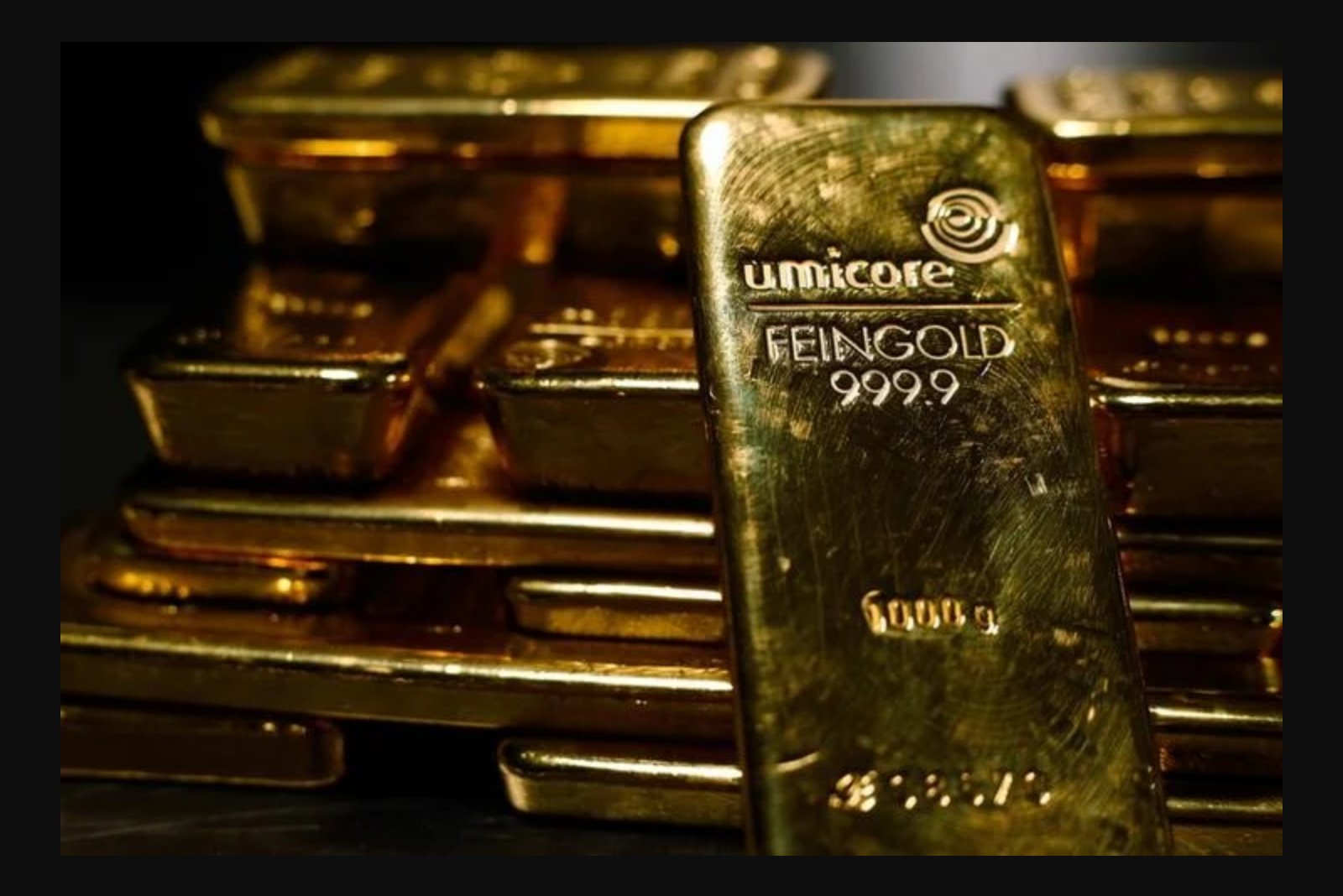
Gold prices steadied on Friday after U.S. payrolls for June came in softer than many analysts had expected, a result that reduced market expectations of additional interest-rate hikes this year and prompted a notable rebound in bullion.
Market moves and prices
By 19:55 ET (23:55 GMT), spot gold was quoted up 0.1% at $4,128.74 an ounce. Gold futures climbed 0.4% to $4,142.25 per ounce. Across the week, spot gold was trading about 0.9% higher.
Trading activity was relatively muted on Friday, with volumes dulled as market participants positioned for a U.S. market holiday.
What drove the rebound
The sharp upward movement in gold on Thursday followed the release of U.S. nonfarm payrolls for June, which were softer than anticipated. Because the Federal Reserve considers the strength of the labor market a key condition in deciding whether to tighten policy, the weaker payrolls print reduced the likelihood among investors that the Fed will pursue further rate hikes this year.
That shift in expectations provided relief for gold after the metal had suffered significant declines during the second quarter, when concerns about higher interest rates pressured bullion. In the June quarter, gold lost roughly 13%, a retreat that erased the metal's gains for the year.
Broader market reactions
The U.S. Dollar Index, which had been trading near 13-month highs, pulled back after the payrolls data, helping to lift prices across precious metals. Spot silver rose 0.15% to $61.0580 per ounce, while spot platinum gained 0.2% to $1,627.92 per ounce.
Precious metals entered the second quarter nursing deep losses amid mounting concerns about potential Federal Reserve rate increases. Policymakers adopted a hawkish tone at their June meeting, and Fed Chair Kevin Warsh also warned this week that the central bank would maintain its 2% annual inflation target.
Outlook and context
The softer payrolls data has temporarily eased a key input into the Fed's policy calculus and allowed bullion to recoup some ground after a difficult quarter. However, the metals remain sensitive to shifts in rate expectations and dollar strength, and trading conditions can be thin around holidays, which may exaggerate short-term moves.