
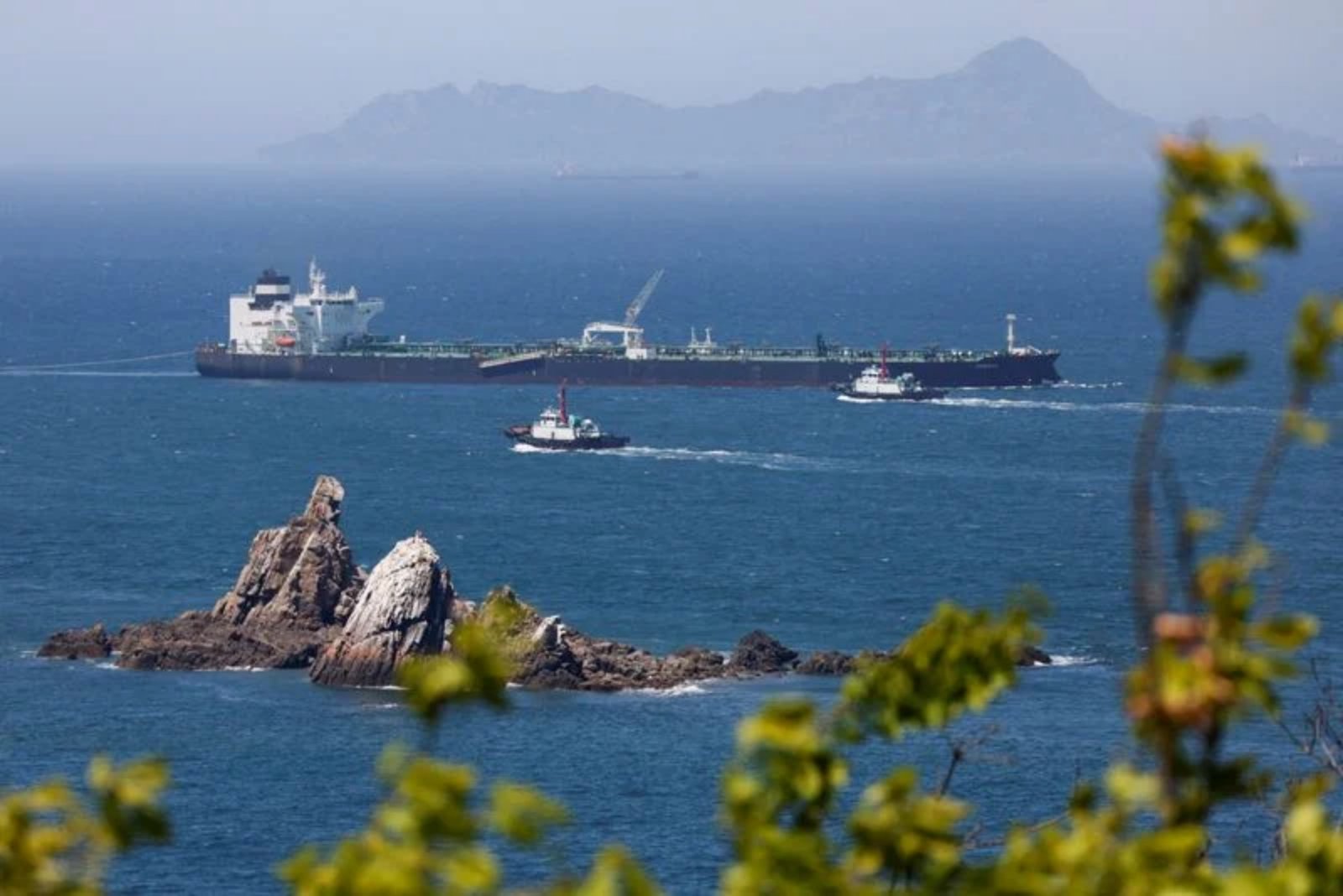
The international oil system has managed to cope with an unprecedented supply shock since the outbreak of the Iran war, yet the relief has come at the cost of drained emergency buffers and unresolved structural damage that could make prices more volatile going forward.
Tehran's throttling of tanker traffic through the Strait of Hormuz in response to U.S. and Israeli attacks launched on February 28 triggered fears of a global energy catastrophe. The four-month conflict produced what the International Energy Agency called the largest disruption to energy supplies in history, at one point wiping out a headline 14 million barrels per day of supply.
Still, the most dire outcomes did not materialise. Shortages of gasoline, diesel and jet fuel in Asia and Europe failed to occur, and benchmark Brent, which climbed to about $126 per barrel in April - roughly $20 below the 2008 record - has since eased to levels below those at the start of the conflict. John Baffes, senior economist at the World Bank, said this reflected confidence in the greater resilience of contemporary energy and economic systems.
Part of that resilience stems from longer-term structural change. World Bank data indicate that since the oil crisis of the 1970s, oil intensity - the role oil plays in economic output - has fallen by more than half in most advanced economies and by about 20% in emerging and developing countries. That secular decline in dependence on oil blunted the immediate impact of supply losses.
Beyond structural decline in oil intensity, three tangible factors prevented the worst-case scenario during the Gulf conflict: Gulf exporters found alternative export routes; major consuming markets, notably in Asia and led by China, reduced purchases; and countries collectively tapped strategic reserves, including a record coordinated release led by the IEA.
When the war began, China held nearly 1.4 billion barrels of oil in storage, according to U.S. Energy Information Administration figures. That total exceeded the combined stocks of all 32 IEA members, which stood at 1.2 billion barrels, with the United States accounting for 413 million barrels of that total. Analysts, including Ilia Bouchouev of the Oxford Institute for Energy Studies, point to China's rapid electric vehicle uptake and flexible oil and petrochemical operations as factors that helped the country moderate market demand.
The IEA organised a release of 400 million barrels from strategic stocks, providing additional short-term relief as public statements from Washington repeatedly suggested the conflict would not persist. Neil Atkinson, a former IEA official, said traders generally expected the disruption to be temporary.
Societe Generale analysts noted that Washington's messaging that more supply was on the way discouraged hedge funds from maintaining large long positions that would profit from rising prices. The signing last month of a preliminary agreement to halt the fighting accelerated a market recovery toward normal trading patterns. Atkinson observed that the market appeared to accept the ceasefire deal as genuine.
But the recovery conceals unfinished business. Production and export activity in Saudi Arabia, Kuwait, Qatar, Iraq and Bahrain is resuming, yet in many cases it will take years to fully repair energy infrastructure damaged by Iranian attacks. Evidence from tanker movements through the Strait of Hormuz provides a more cautious view of prospects for a swift return to pre-war flow levels.
Crucially, global oil inventories were drawn down at an unprecedented rate to cover the shortfall. According to the IEA, that record decline in stocks removed the very buffers designed to shield markets from disruptions. The world is therefore operating with depleted reserves and, until inventories are rebuilt, forward prices may be more vulnerable to abrupt spikes.
Bouchouev warned that the absence of the usual stock cushions does not make normal operations impossible, but it raises the probability of sharper price moves in response to further supply interruptions. Saul Kavonic, head of research at MST Marquee, said markets could be underestimating the chance of renewed disruption, adding that Iran may continue to find reasons to impede flows through the strait.
The economic cost of such volatility can be substantial. Based on global oil consumption of 104 million barrels per day, Reuters calculations show every $5 rise in the oil price increases annual global costs by roughly $190 billion. Rebuilding strategic inventories will be costly; the European Central Bank had previously estimated 2027-2028 oil prices of $63 to $64 per barrel, but its June report raised that outlook to an average of $65 to $75, suggesting replacement costs are higher.
At current Brent prices, analysts estimate it would cost more than $70 billion to restore the stocks that were released to offset the Iran war supply losses. Until reserves are replenished, the global economy lacks its historical safety net and will face a market environment more sensitive to new shocks.
What remains uncertain is how quickly and completely production and export channels can be repaired across affected Arabian Gulf states, how durable the tentative ceasefire will be given slow progress on a final settlement - including unresolved issues such as Iran's nuclear programme - and how rapidly national and international inventories can be rebuilt without pushing prices excessively higher.
For markets and economic sectors, the near-term picture looks relatively calm, but the underlying balance is fragile. Transport, aviation and refining sectors remain exposed to price jumps if supply disruptions recur. Financial markets, particularly commodities trading and energy-linked equities, will be sensitive to signs that spare capacity or inventories are eroding further.
The global system coped with a historic shock through a combination of demand discipline, strategic stock releases and export rerouting. Those measures bought time and prevented immediate shortages, but they did so at the cost of draining emergency stocks and stretching damaged infrastructure. Until those buffers are restored and uncertainties over the ceasefire and reconstruction are resolved, the oil market will carry heightened vulnerability to episodic price shocks.