
Overview
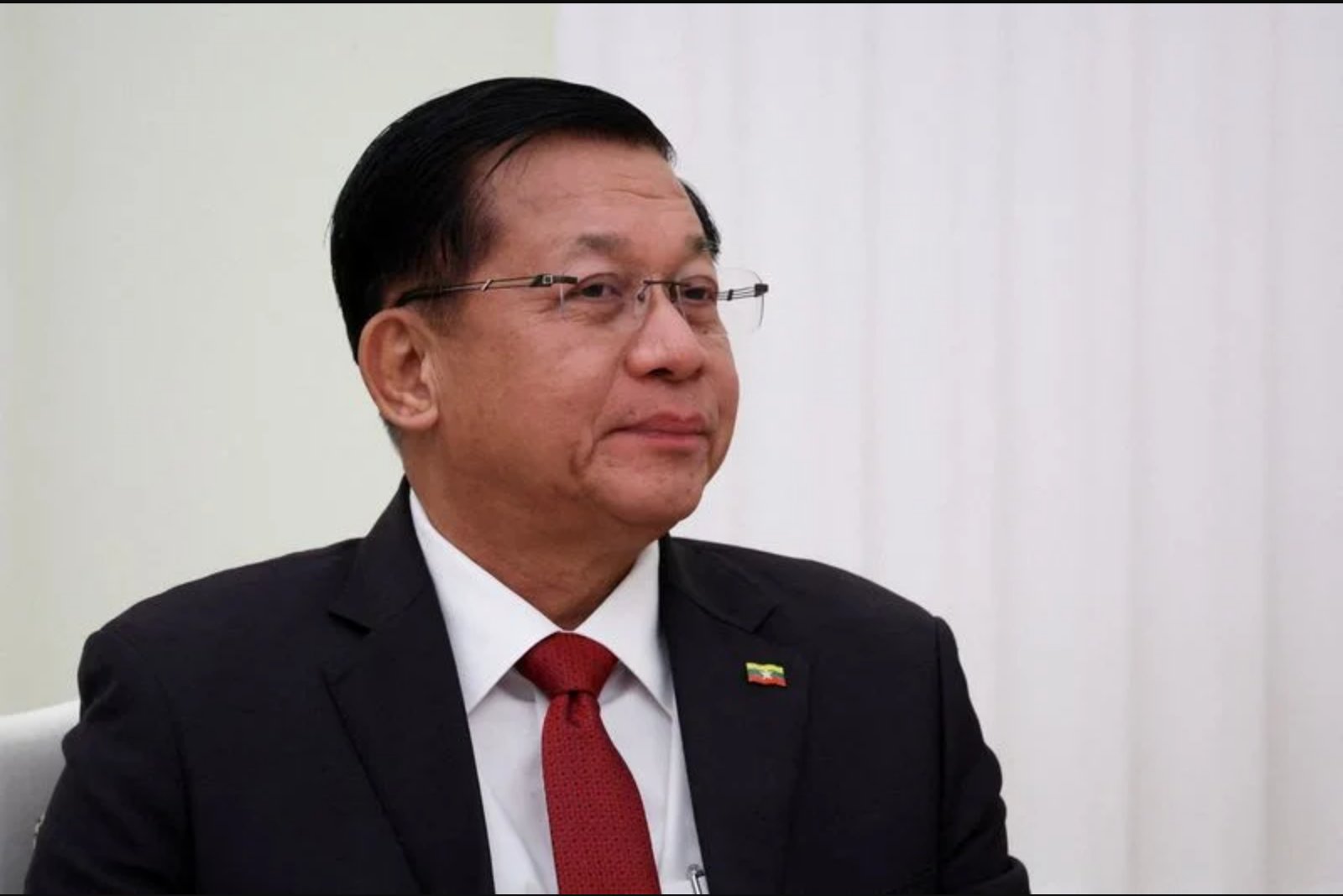
President Min Aung Hlaing of Myanmar will begin a five-day state visit to China that culminates in talks with Chinese President Xi Jinping. The visit represents the highest level of engagement between the two governments since Min Aung Hlaing became president following a general election held late last year and early this year. Analysts say the state visit provides a visible diplomatic boost for Min Aung Hlaing as he seeks to solidify his hold over a country still engulfed in armed conflict.
Diplomatic optics and recent travel
The trip to Beijing follows a recent official visit to India in which Min Aung Hlaing met Prime Minister Narendra Modi. Observers note a contrast in ceremonial parity: while India offered warm reception, China is conferring full state-visit honors, an elevation that demonstrates China is willing to treat Myanmar’s current administration as a formal partner.
"An official state visit hosted by Xi Jinping is a visible signal that China is prepared to deal with Myanmar’s new administration as a full partner," said Richard Horsey, the senior Myanmar adviser at Crisis Group. Horsey contrasted the Chinese reception with India’s, saying India offered a warm welcome but did not extend full state-visit protocol.
What drives Beijing’s engagement
Analysts emphasise that China’s outreach is motivated largely by concrete strategic and economic interests rather than a focus on Myanmar’s internal political arrangements. China is Myanmar’s top trading partner and primary investor, with its influence anchored by large Belt and Road Initiative projects such as a cross-country oil and gas pipeline and a deep-sea port.
David Mathieson, an independent analyst based in Thailand who follows Myanmar closely, distilled Beijing’s priorities: "China’s interests are not on federalism, but rare earths, infrastructure, mining, and securing the economic corridor to the Indian Ocean." Mathieson added that Beijing perceives a diminishing Western presence in Myanmar and will push to expand its influence in response.
Beyond investment, China also functions as an important supplier and diplomatic interlocutor for Myanmar’s military, occasionally helping negotiate ceasefires along border areas where ethnic armed groups with strong links to China operate.
Delegation composition and local economic levers
The Myanmar delegation travelling with Min Aung Hlaing includes the chief ministers of Kachin and Shan states, both of which border China, and Myanmar’s industry minister, according to state media. The inclusion of these officials suggests the talks will focus on border trade and resource projects.
Kachin State hosts one of the world’s major heavy rare earth belts and has been the scene of active fighting between the military and a major armed group. Shan State provides multiple overland trading routes with China. Those geographic and resource connections align with the topics analysts expect Beijing to press.
Aung Kyaw Soe, another Thailand-based independent analyst, pointed to the likely revival of the Myitsone Dam as a discussion point. The Myitsone Dam is a $3.6 billion Chinese-led hydroelectric project in Kachin State that was suspended in 2011. "In 2025, the military’s second-in-command, General Soe Win, personally began bringing up the subject of restarting Myitsone, so I think they will discuss restarting it during Min Aung Hlaing’s current trip to China," Aung Kyaw Soe said.
Context of conflict and the election
Myanmar has been mired in a widespread civil war since Min Aung Hlaing removed the elected government led by Aung San Suu Kyi in February 2021. The initial mass protests against the coup evolved into a nationwide armed uprising, creating active frontlines between the military and a mixture of newly formed pro-democracy armed units and longstanding ethnic armies.
The ongoing conflict has had severe human costs: fighting has killed more than 93,000 people and displaced over 3.7 million, according to the figures cited during coverage of the visit. Despite the turmoil, the military organised a general election in December and January that excluded major opposition elements and resulted in a dominant victory for an army-backed party, clearing the path for Min Aung Hlaing to assume the presidency.
Other diplomatic sensitivities
The visit is occurring against the backdrop of a recent arrest in China of Min Zin, an American scholar specializing in Myanmar, who was taken into custody on suspicion of espionage. Horsey said the detention would likely receive heightened attention during Min Aung Hlaing’s trip because Min Zin is regarded as a prominent scholar whose work aimed to deepen understanding between the two countries: "Min Aung Hlaing’s visit will put a greater focus on Min Zin’s arrest, because he is one of the most prominent Myanmar scholars working to improve understanding between the two countries," Horsey said.
Bottom line
The state visit gives Min Aung Hlaing a diplomatic platform that enhances his international standing amid domestic conflict and a contested election outcome. At the same time, analysts caution that Beijing’s gestures are calibrated to secure China’s strategic needs - from rare earth access and infrastructure projects to stronger border ties and an economic corridor to the Indian Ocean - rather than to endorse a specific political model for Myanmar.