
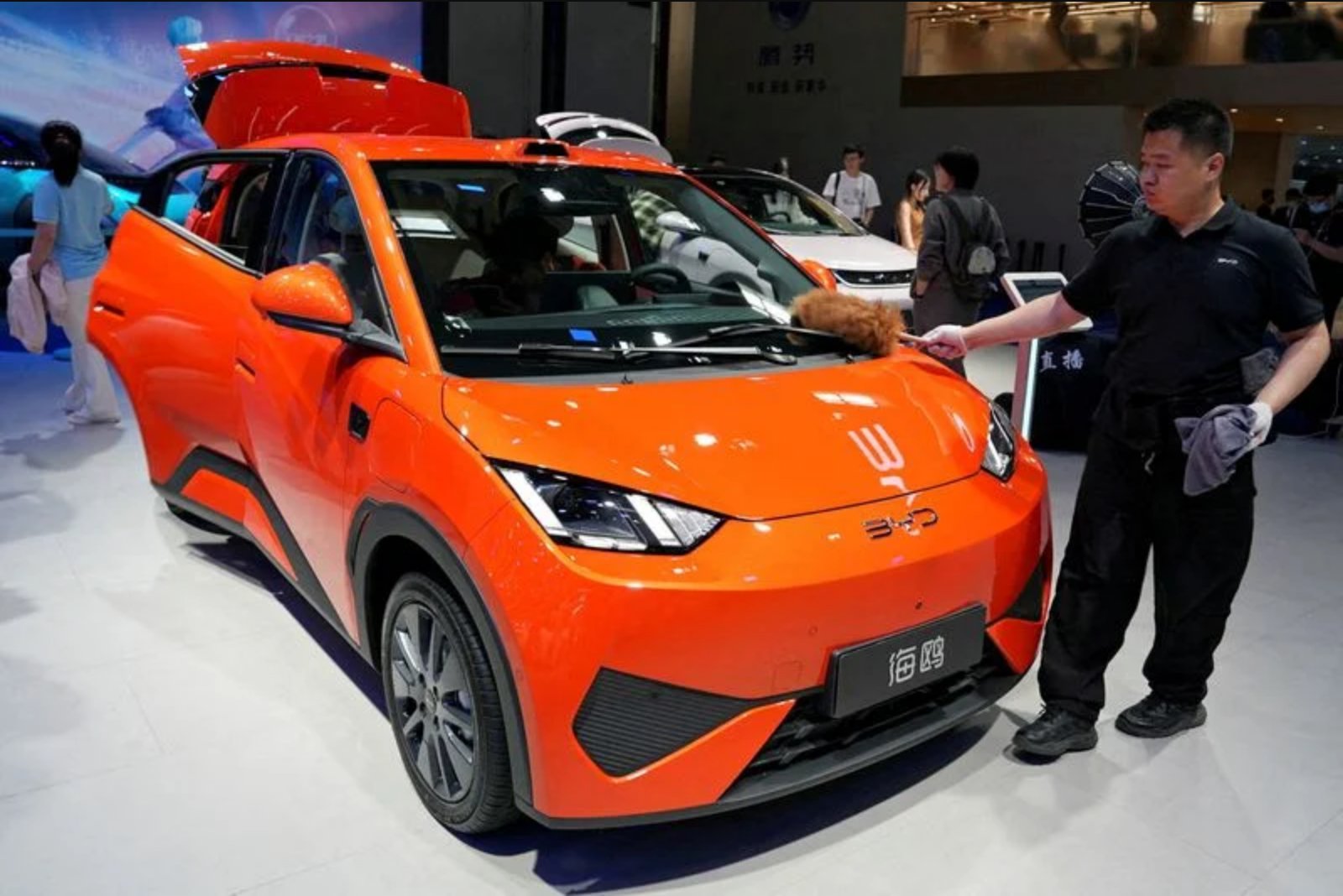
Chinese automaker BYD is intensifying its battery manufacturing footprint in Brazil as part of a wider strategy to deepen local production and meet government-driven localisation requirements, a senior company executive said. The moves include a rollout of passenger car battery production, an expansion of bus battery lines, and preparations for investment in grid-scale battery systems.
Alexandre Baldy, senior vice president of BYD Brazil, told Reuters in a Monday interview that the company intends to push domestic content in vehicles made in Brazil to 50% by the start of 2027. "We are localizing," Baldy said, "so that we can truly become a Brazilian manufacturer. The battery is one more item, an important component."
To satisfy government conditions and reduce its tax burden, BYD is increasing local sourcing at its factory in Bahia state. The carmaker sees higher domestic content as central to its objective of becoming Brazil's top-selling automotive brand by 2030; the company is already ranked among the top five brands in the country.
The passenger car battery production forms part of an existing 5.5 billion reais investment plan for BYD's flagship plant in Camaçari, Bahia. In addition to passenger car batteries, BYD is dedicating between 50 million and 60 million reais to expand a production line that manufactures batteries for its electric buses.
Separately, BYD is preparing to invest up to 500 million reais in a new production line for Battery Energy Storage Systems (BESS), the company said. Those systems are intended to store electricity for the national grid and the timing aligns with a planned first auction that will introduce industrial-scale batteries in December.
The company framed the BESS push as opening a fresh segment for batteries in Brazil. Baldy said:
"This truly opens a new frontier for a new battery segment."
BYD will determine within the next 90 days whether the BESS investment will take the form of an additional production line at its Manaus facility - currently focused on bus batteries - or the construction of a new plant at another location.
Company executives also addressed BYD's activities related to mineral rights in Brazil. While BYD has invested in rights to plots in a lithium-rich area of the country, the firm currently has no plans to develop those holdings because of the low price of the mineral used in battery production. Baldy stated explicitly:
"It is not in our plans, nor is it a subject of internal discussion. We are focused on consolidating our passenger car factory for BYD vehicles and investing to expand our electric bus manufacturing capacity as well."
BYD also said it plans to invest about $100 million in energy storage systems to support the national grid. Battery storage systems such as the BESS units BYD plans to produce are viewed in the company commentary as a potential solution for challenges faced by solar and wind generators in Brazil. According to the remarks, intermittent generators have experienced heavy losses and halted investments because the national grid cannot absorb their output at peak hours, which has forced some generation to be curtailed.
The investments and localisation push are positioned as complementary efforts: increasing local component sourcing to meet regulatory and tax incentives, expanding electric bus capacity, building passenger car battery production into the existing Camaçari investment program, and preparing for grid-scale storage demand expected after the December auction.
Contextual note - Currency conversion used in company statements: $1 = 5.0925 reais.