
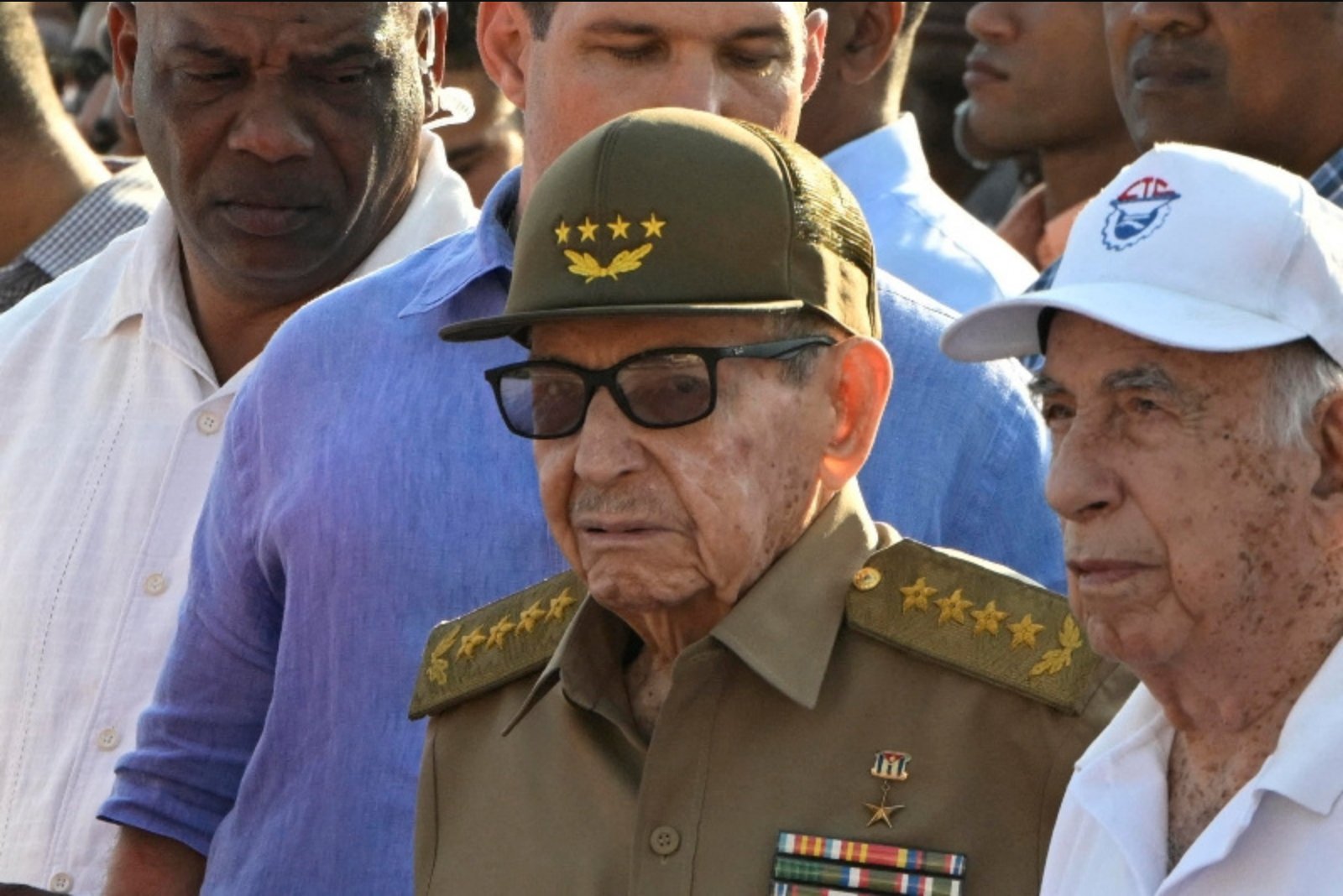
A U.S. Justice Department official, who requested anonymity, told reporters that federal prosecutors intend to announce criminal charges against former Cuban president Raul Castro next Wednesday. Prosecutors expect to unseal an indictment in Miami on May 20 related to a 1996 episode in which Cuban military aircraft shot down planes operated by a group of Cuban exiles.
The prosecutors' office in Miami is scheduled to host an event that day to honor victims of the 1996 incident, according to an invitation that has been circulated. The Miami office did not immediately reply to requests for comment about the expected indictment or the event.
Any indictment arising from the investigation would first need to be approved by a grand jury before it could be unsealed and made public. The planned announcement was first reported by the Miami Herald.
Background on Raul Castro
Raul Castro, now 94, is the brother of the late Fidel Castro, the revolutionary leader who headed Cuba's communist government for decades. Raul Castro relinquished the presidency in 2018 and transferred leadership of the Communist Party in 2021. At the time of the 1996 shootdown, Raul Castro served as Cuba's defense minister.
The Cuban government has maintained that the strike was a legitimate defensive action in response to planes it said had intruded on Cuban airspace. The United States publicly condemned the attack in 1996 and imposed sanctions in reaction, but criminal charges against Cuban officials were not pursued at that time.
Pressure on Havana
The expected move to charge Raul Castro arrives as relations between Washington and Havana remain tense. The Trump administration has portrayed Cuba's current communist government as corrupt and incompetent and has advocated for regime change. Measures taken under the administration included threats to sanction countries supplying Cuba with fuel and other actions that have been described as exerting severe economic pressure on the island, contributing to power outages and strains on the economy.
In a rare diplomatic engagement, CIA Director John Ratcliffe visited Havana and delivered a message from President Donald Trump that the United States would only engage with Cuba on economic and security matters "only if it makes fundamental changes."
The anticipated criminal case against Raul Castro is being compared by officials to an earlier U.S. drug-trafficking indictment of former Venezuelan President Nicolas Maduro. That indictment was cited by the Trump administration as justification for an operation in January that led to Maduro's capture and transfer to the United States to face charges; Maduro has pleaded not guilty.
Earlier this year, President Trump warned that Cuba could be "next" after Venezuela in terms of intensified U.S. action.
Prosecutors and related investigations
The top federal prosecutor in Miami, Jason Reding Quiñones, who is identified as an ally of President Trump, is overseeing the expected action involving Castro. He is also supervising an investigation of former CIA Director John Brennan and a broader probe into whether earlier investigations of the former president amounted to a conspiracy.
At this stage, the matter remains at the prosecutorial level, and the formal unsealing of any indictment will depend on grand jury approval and subsequent public filing. Details about the specific charges that might be contained in an indictment were not disclosed by the Justice Department official who spoke on condition of anonymity.
What happens next
If prosecutors move forward, the unsealing of an indictment in Miami on May 20 would make the charges public and could prompt diplomatic responses from the Cuban government. As with any federal criminal case, defendants are entitled to legal procedures and, should an indictment be filed, defendants would be presumed innocent until proven guilty in a court of law.