
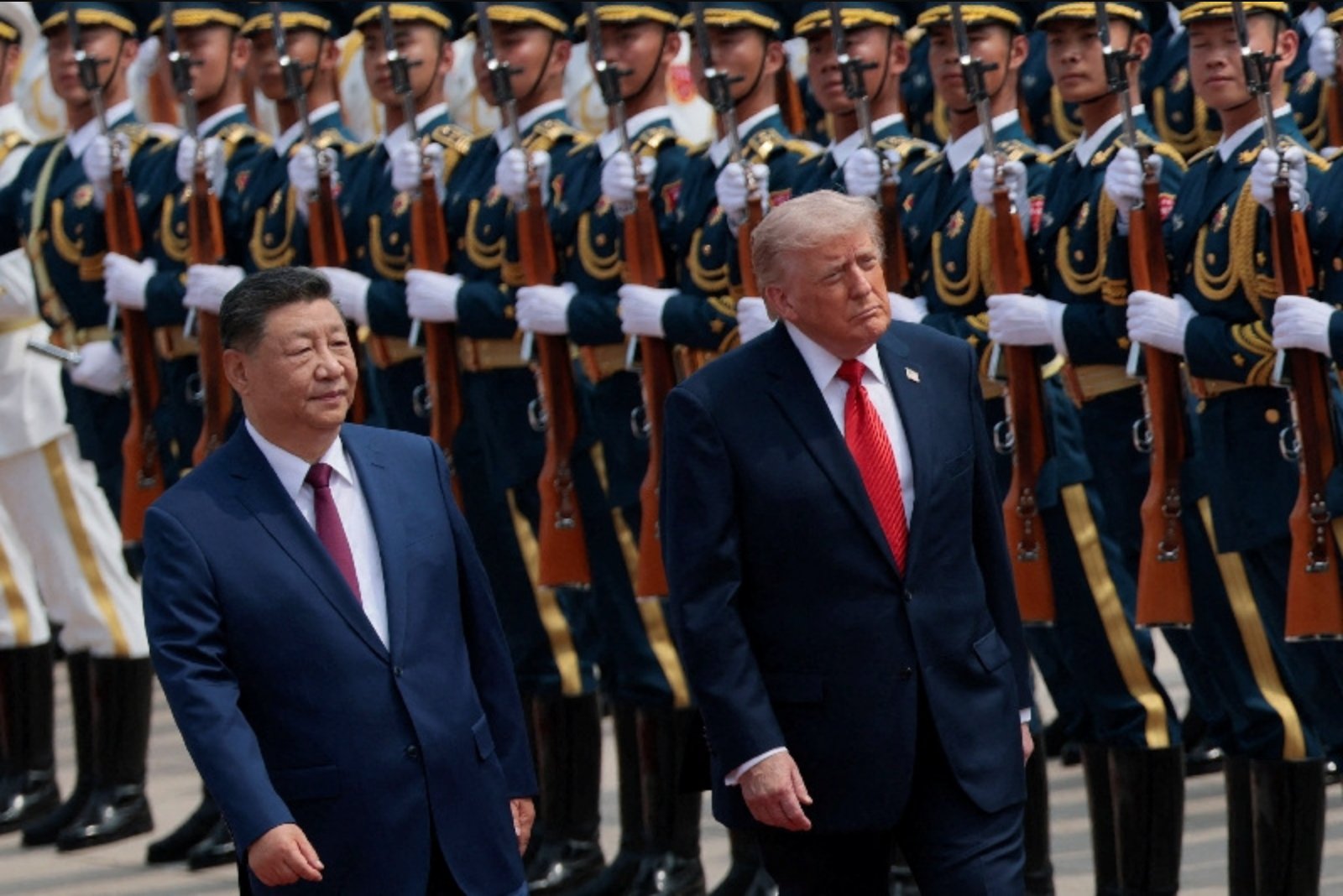
President Donald Trump’s two-day state visit to Beijing provided spectacle and broad diplomatic conversation but delivered limited measurable results on the thorny issues that separate the United States and China. The talks with President Xi Jinping covered Iran, trade, Taiwan and investment governance, yet produced little in the way of concrete agreements or immediate policy shifts.
No clear breakthrough on Iran
In the run-up to the visit, President Trump publicly played down the need for Chinese assistance on the conflict with Iran, though aides in his administration indicated Beijing - a major purchaser of Iranian oil - could be influential in negotiating a path toward ending the confrontation. That conflict, involving the U.S. and Israel against Iran, has crowded out other policy priorities, pushed up energy costs and posed political challenges for Republicans ahead of the November midterm elections.
Mr. Trump left Beijing without any obvious signal that he had secured China’s help on Iran. It remains unclear from the meetings how forcefully China would press Iran to reach a deal or what Beijing would expect in return for that effort. During the visit the president indicated he could consider easing sanctions on Chinese refineries that maintain business ties with Iran, a move that would roll back one of the relatively few punitive measures the U.S. has taken in response to Chinese support of Iran.
At a private meeting in a Chinese Communist Party compound in central Beijing, Mr. Trump said of the two nations' perspectives on the conflict: "We feel very similar. We want that to end. We don't want them to have a nuclear weapon. We want the straits open." President Xi offered no public comment on the U.S. position at that time. Separately, China’s foreign ministry issued a statement noting, "This conflict, which should never have happened, has no reason to continue," and indicated a willingness to help the parties find peace.
Pageantry outshone substantive trade deals
The ceremonial aspects of the visit were unmistakable: state dinners, military honors and high-profile photo opportunities. The leaders highlighted potential purchases of U.S. goods - farm commodities, beef and Boeing aircraft - but details underpinning those claims were thin.
Mr. Trump left without extending the trade truce that is due to expire later this year. Market participants were disappointed that the deal the president cited for China to buy 200 Boeing jets was not larger, and U.S. soybean futures slipped to their weakest level in over two weeks on Friday after the summit failed to produce specific procurement commitments for American agricultural products.
On larger economic topics ranging from expanded trade to artificial intelligence and Taiwan policy, the two presidents appeared to make limited progress beyond agreeing to disagree and, in some cases, to continue discussions. Both sides agreed in principle to establish separate boards to govern bilateral trade and investment issues, but Chinese Foreign Minister Wang Yi said officials remained in the process of working out the boards' details.
Unlike their 2017 encounter, the two leaders did not issue a joint public statement following their meetings. There were no mutually agreed summaries of their talks and no fact sheet issued that enumerated specific outcomes. China’s public communications omitted detailed references to purchase agreements or explicit commitments by President Xi toward U.S. demands. A person familiar with the trip’s planning said there was little pressure within the White House to lock in a large new commercial package. In sum, the spectacle of statecraft eclipsed substantive policy gains.
Careful handling of Taiwan
One of the central questions for reporters after the first round of talks was whether Taiwan was discussed and, if so, how the leaders framed the issue. Standing at the Temple of Heaven with President Xi, Mr. Trump chose not to elaborate publicly on the conversation. China had already released an extended summary of Xi’s private remarks, in which the Chinese leader warned that mishandling disagreements over Taiwan - the democratically governed island that Beijing claims - could push U.S.-China relations to a "dangerous place."
Throughout much of the visit Mr. Trump appeared to stick with the U.S. policy of strategic ambiguity on Taiwan. As he departed for Washington, he said that President Xi sought clarification on where he stood on defending the island, but Mr. Trump reiterated his reluctance to detail that position. "I said I don't talk about that," he told reporters aboard Air Force One. He also did not make an immediate commitment to sell additional arms to Taiwan, saying he would decide at a later time.
Disciplined messaging and choreography
The president, who is often noted for departing from prepared remarks, maintained a disciplined approach during the Beijing engagements. He adhered to scripted remarks, including a prewritten toast at a state dinner with President Xi. White House officials said Mr. Trump was intent on staging a summit that could improve bilateral ties, and Chinese officials are known for carefully choreographed events that leave little room for surprises.
President Xi balanced gestures of hospitality with pointed cautions about the relationship. "We must make it work and never mess it up," Xi said, underscoring both the cooperation and the tensions inherent in the bilateral relationship.
Domestic headwinds remain
Back in the United States Mr. Trump returns to persistent domestic challenges. Gasoline prices remain high, inflation continues to be a concern and voter discontent ranks as a political risk. The administration was seeking a clear diplomatic or economic win as it manages the fallout from the war with Iran. While the visit may have provided a temporary distraction and public theater, it is unlikely to materially alter the broader political and economic narrative in the near term.
Conclusion
The visit demonstrated that statecraft remains a mix of ceremony and negotiation. While the optics were stage-managed and the dinner plates notable, the trip produced limited concrete policy outcomes. Key geopolitical and market-sensitive questions - notably China's role on Iran, the future of the trade truce, and clarity on Taiwan policy - remain unresolved following the summit.