
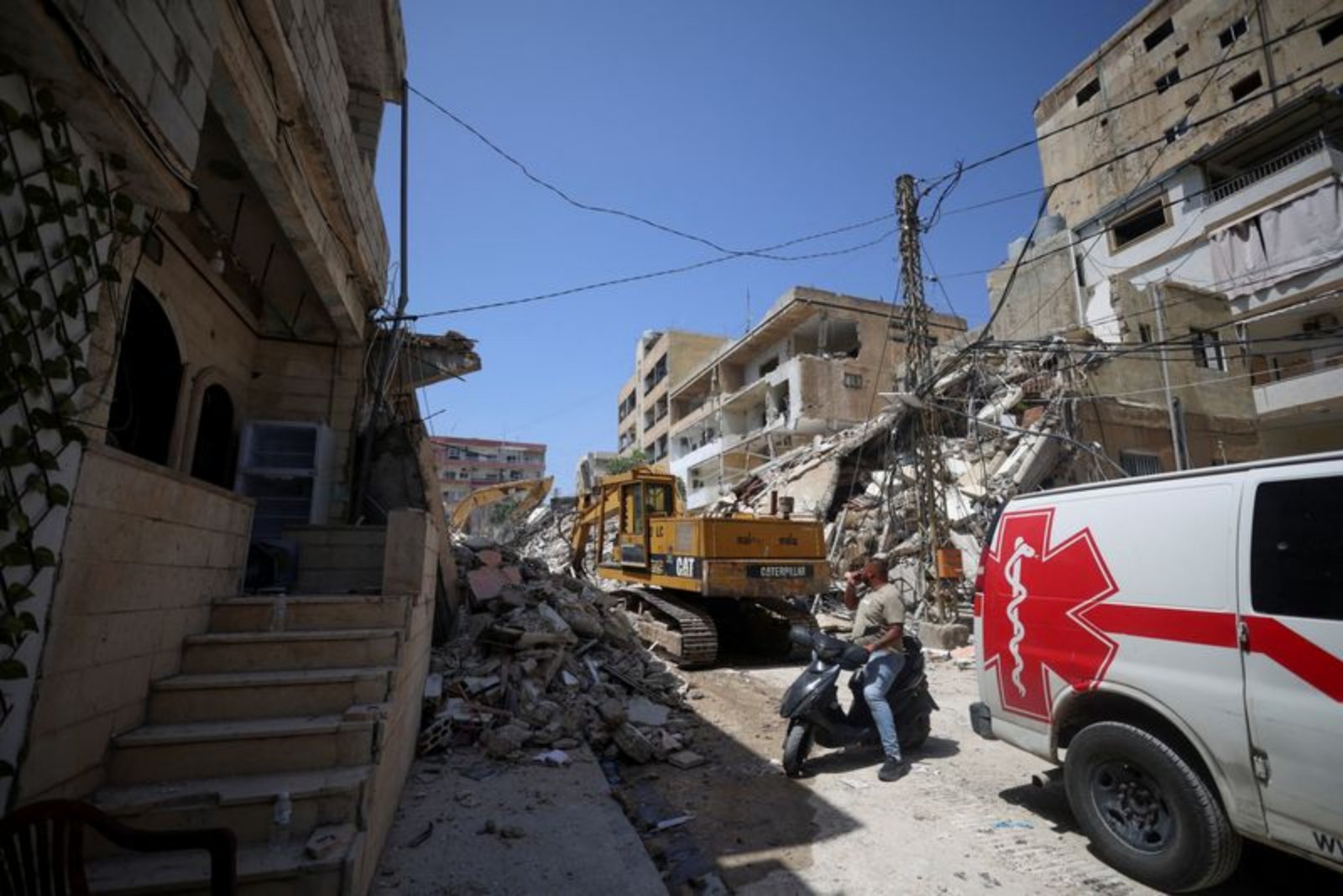
President Donald Trump on Thursday took an unusually confrontational public stance with Israel, saying the United States has forbidden further Israeli bombing in Lebanon. In a series of social media posts, the president wrote that "Israel will not be bombing Lebanon any longer. They are PROHIBITED from doing so by the U.S.A. Enough is enough!!!"
There was no immediate response from Israeli Prime Minister Benjamin Netanyahu’s office to Trump’s post. Earlier, however, Netanyahu had said Israeli forces were still positioned in southern Lebanon "to defend against the near threat." He added that "there are things we plan to do regarding the remaining rocket threat and the drone threat, which I will not detail here."
The comments arrive against the backdrop of a U.S.-backed Israeli-Lebanese ceasefire that took effect at 2100 GMT on Thursday. That truce halted the fighting that initially escalated on March 2 after Hezbollah fired into northern Israel in what it described as support for Iran’s confrontation with the United States and Israel. Lebanese authorities say the Israeli offensive that followed has killed 2,000 people.
While Moscowers of diplomacy and battlefield pauses have altered the immediate fighting, several parallel elements remain active. The United States is enforcing a naval blockade on vessels entering and leaving Iran, a measure the president said would remain in place as the U.S. transaction with Iran is concluded. In an all-capitals post, Trump wrote: "The naval blockade will remain in full force and effect as it pertains to Iran, only, until such time as our transaction with Iran is 100% complete."
Trump stressed repeatedly that any U.S. deal with Iran is independent of developments in Lebanon. "This deal is not tied, in any way, to Lebanon," he wrote in one post, later adding, "Again! This deal is not tied, in any way, to Lebanon, but we will, MAKE LEBANON GREAT AGAIN!"
Those comments followed Iranian statements on the Strait of Hormuz. Iranian Foreign Minister Abbas Araqchi said the strait was open to commercial vessels for the remainder of the 10-day truce between Israel and Lebanon. The president, however, later posted: "Iran has agreed to never close the Strait of Hormuz again. It will no longer be used as a weapon against the World!"
The U.S.-Israeli conflict with Iran, which began on February 28, had effectively closed the Strait of Hormuz, a critical maritime chokepoint through which roughly a fifth of the world’s oil and liquefied natural gas typically transit. After 38 days of fighting, a two-week ceasefire in the Iran war took effect on April 8. The United States began enforcing the naval blockade on Monday following that pause.
On the nuclear front, Trump said he expected a deal with Iran to be reached "soon," asserting that most substantive points had already been negotiated though the timing was unclear. The president reiterated that the United States would secure nuclear material from Iran and added that "No money will exchange hands in any way, shape, or form."
Trump, who withdrew the United States in 2018 from the 2015 nuclear accord that had constrained Iran’s nuclear program, framed the broader conflict in terms of preventing Iran from obtaining nuclear weapons. Iran, for its part, maintains that its uranium enrichment program is for peaceful civilian purposes; the enrichment process can yield material used for either power generation or weapons depending on how it is conducted, a distinction Iran emphasizes.
Trump also said he had rebuffed an offer of assistance from NATO, writing that he told the alliance to stay away unless they intended to "load up ships with oil." On his platform he called NATO allies "useless when needed, a Paper Tiger!" He then thanked Gulf partners Saudi Arabia, the United Arab Emirates and Qatar for their roles.
Responding to Washington’s overtures, NATO members said on Monday they would not participate in a U.S. plan to blockade Iranian ports, offering instead to intervene only after active fighting has ceased.
The terms of the Israel-Lebanon ceasefire do not compel Israeli forces to withdraw from southern Lebanon. Israeli defense officials say troops are maintaining positions inside Lebanon to form a "buffer zone" intended to prevent Hezbollah attacks on Israel. The continued presence of troops, combined with both the U.S. naval blockade and unresolved negotiations over Iran’s nuclear material and finances, leaves multiple theaters of tension in place even as the ceasefire in Lebanon temporarily pauses cross-border exchanges.
For now, the situation remains fluid: a ceasefire has reduced immediate hostilities along the Israel-Lebanon front, but U.S. and regional maneuvers tied to Iran are continuing simultaneously. The president’s public prohibition on Israeli bombing and his insistence that a U.S.-Iran settlement be handled separately from Lebanon reflect a diplomatic approach in which different levers - military, naval and negotiatory - are being used concurrently.
How these measures interact over the coming days - including enforcement of the naval blockade, the positioning of Israeli forces in southern Lebanon, and the precise content and timing of any U.S.-Iran transaction - will determine whether the current pauses hold or give way to renewed confrontation.