
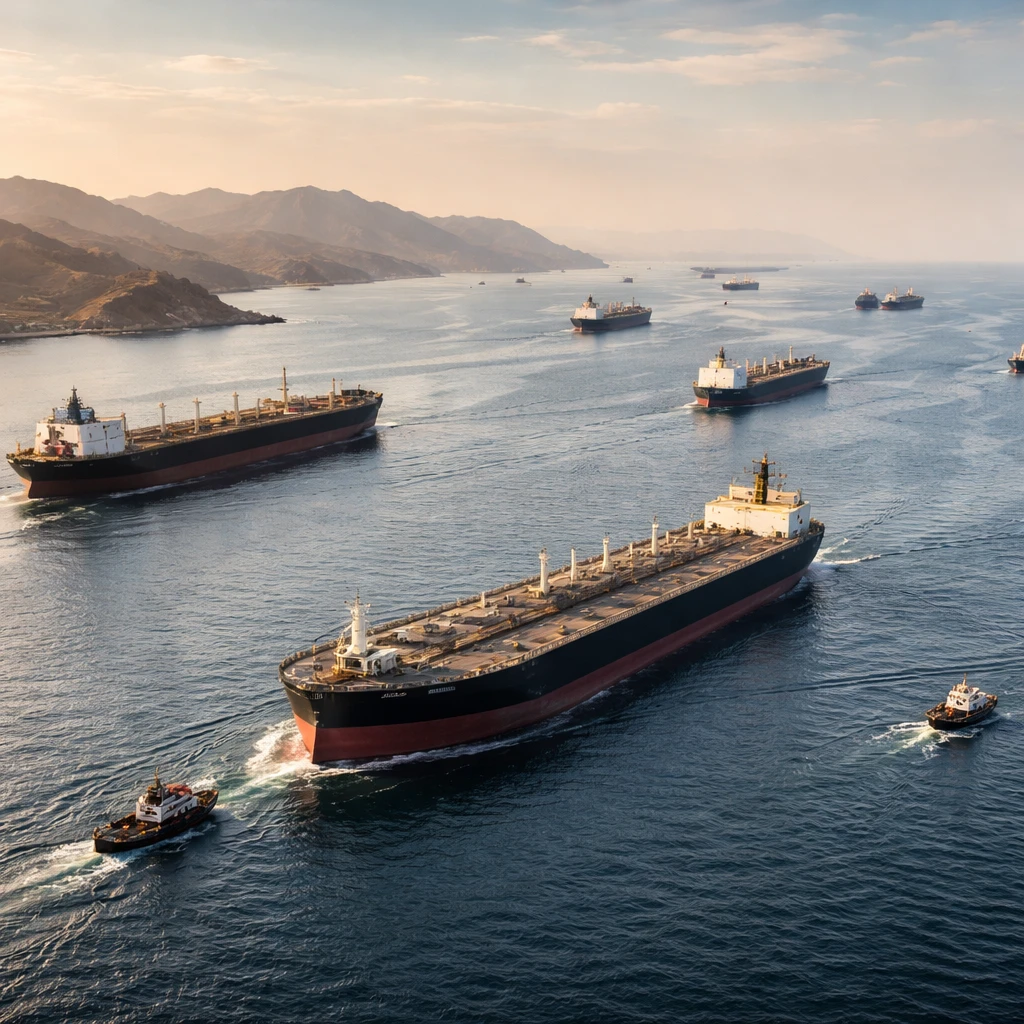
Wolfe Research said Thursday that Iran's public declaration to reopen the Strait of Hormuz is a constructive signal, while also noting that questions remain about the scope and practical implementation of that reopening. The firm highlighted market reactions that followed the announcement - a notable selloff in paper oil futures and a more measured upside in U.S. equities.
Iranian Foreign Minister Araghchi stated that passage for all commercial vessels through the Strait of Hormuz would be completely open for the remainder of the ceasefire period and would follow the coordinated route previously announced by Iran's Ports and Maritime Organisation. The announcement did not explicitly address tolls; Wolfe Research observed that the language implies there will be none. Iran's foreign ministry later described the move as "nothing new" and framed it as implementation of the ceasefire, while some Iranian state media expressed criticism of the more positive tone adopted elsewhere.
Wolfe Research emphasized that the willingness of ship operators to resume transits is the critical determinant of whether flows will actually return. Initial signals from the maritime sector were encouraging but cautious. The Norwegian Shipowners' Association spelled out several issues that need clarification before ships can safely transit, naming the presence of mines, Iranian conditions and the practical details of implementation as outstanding concerns.
German shipping group Hapag-Lloyd indicated that it had initially refrained from passing through the strait, but later signaled that "probably we will pass soon," which Wolfe Research cited as a tentative positive sign for resuming traffic. Wolfe Research also noted that Iran had already agreed to a full, immediate and safe opening of the Strait as part of last week's ceasefire.
President Trump told reporters that a deal appears likely by the coming weekend and posted on Truth Social that "the Hormuz situation is over." He also publicly thanked Pakistan, Saudi Arabia, the UAE and Qatar in separate posts. Wolfe Research pointed out that if traffic resumes at scale in the near term, the development would be meaningful - though the firm cautioned that it may take time to position new tankers to load cargoes and for shut-in production to be fully restored.
The research firm concluded that the announcement clearly reduces downside risk to markets, even if it does not guarantee an immediate restoration of shipping flows. Markets have so far priced in the signal as constructive for stability, reflected in lower oil futures and a modest advance in U.S. equities, but the pace and extent of normalization depend on operational and safety decisions by ship operators and further on-the-ground implementation.
Market and sector implications
- Energy - oil futures dropped sharply, reflecting reduced near-term disruption risk.
- Shipping - carrier statements remain cautious, with practical and safety concerns driving decisions on transit.
- Equities - U.S. stocks moved higher in a calmer fashion compared with oil markets.
Trade note - See the trade on HLAG, but can't pull the trigger? Most traders can read a chart. The hard part is the moment: entry window open, pattern forming, and you're still waiting for more confirmation. That's the conviction gap - and our chart analysis closes it. Unlike other AIs that just read data, our Vision AI literally "sees" your charts and hands you a complete trading plan: entry, stop-loss, and profit target in under 60 seconds. Know exactly what to do next, every time. Try Chart Analysis for HLAG