
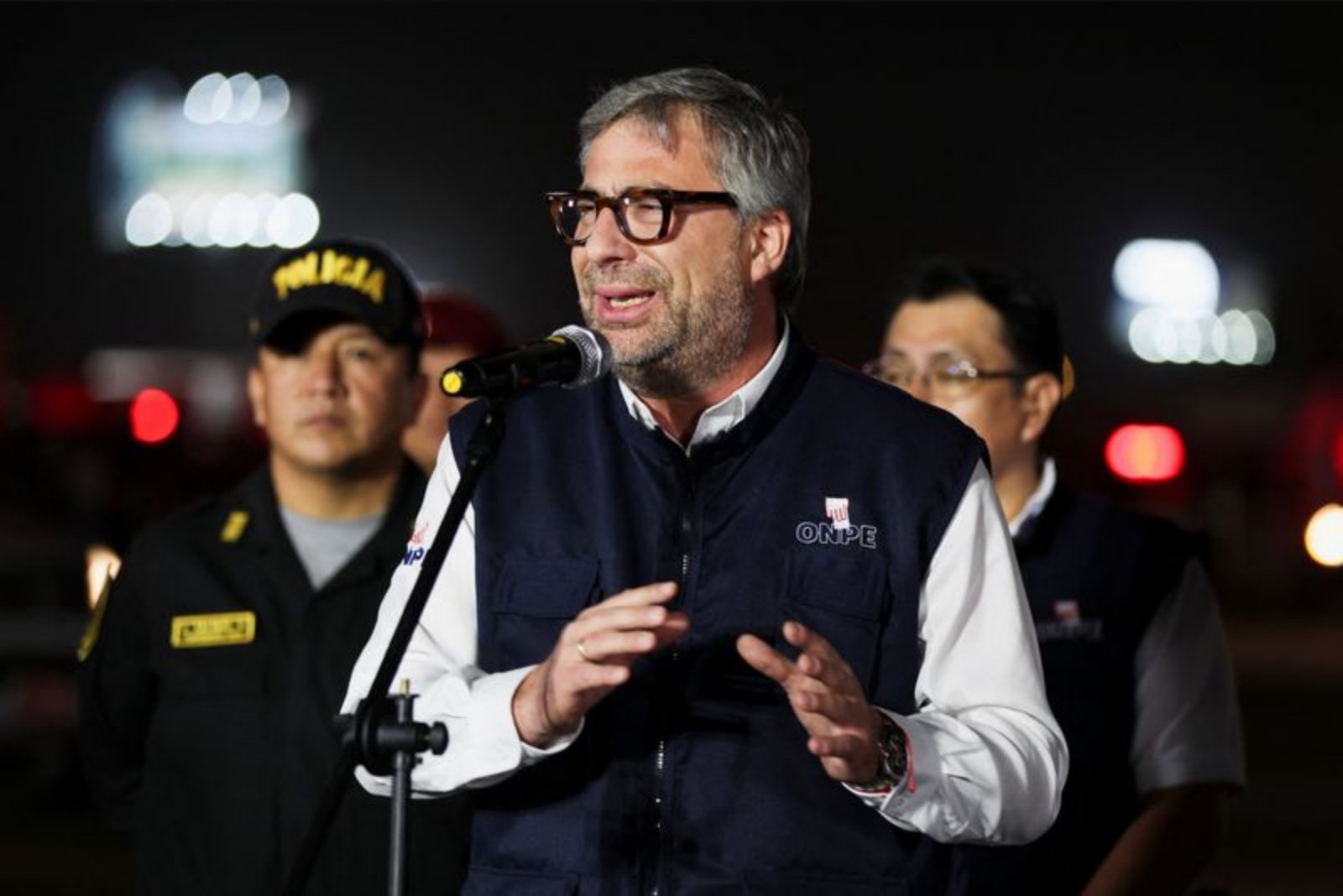
Pressure intensified on the head of Peru’s electoral body this week as a slow and error-filled tally of the April 12 presidential vote left the second spot for a June runoff unsettled. Piero Corvetto, who leads the National Office of Electoral Processes (ONPE), has come under sustained criticism from business and political figures amid lingering uncertainty over procedural problems and the pace of counting.
With 93.3% of ballots processed, conservative Keiko Fujimori remains in first place with 17% of the vote. The race for the runner-up position is tightly contested. Leftist Roberto Sanchez was recorded at 12.0% and ultraconservative former Lima mayor Rafael Lopez Aliaga at 11.9%, an approximate margin of 13,000 votes separating the two as of Friday.
Electoral authorities indicated that the final tabulation could take as long as two weeks, a timeline provided by the local election-monitoring group Transparencia. The count has been slowed in part because roughly 5% of ballots were flagged for review after officials identified missing information or errors in polling station records. Those ballots will be examined by a special electoral jury before being incorporated into the official total.
The delays and logistical problems that occurred during the April 12 vote have prompted widespread criticism. Business leaders and lawmakers across the political spectrum have publicly called for Corvetto to step down, arguing that someone else should manage preparations for the runoff. "Errors this serious have consequences," Jorge Zapata, head of the business chamber CONFIEP, said on local radio station RPP.
Corvetto has acknowledged there were logistical setbacks that forced voting to be extended by a day in some locations, primarily in Lima. Those disruptions gave rise to allegations of fraud from opponents, most prominently Lopez Aliaga, who has urged a suspension of the counting process. Corvetto has denied that irregularities occurred, but the situation has nevertheless escalated to legal scrutiny.
Peru's top electoral court, the National Jury of Elections, has filed a criminal complaint with prosecutors against Corvetto. The complaint cites possible offenses that include alleged violations of voting rights. Meanwhile, a police inquiry was opened after voting materials from four polling stations were discovered on a public road in Lima on Thursday. ONPE reported on X that the votes from those stations had already been entered into the count.
European Union election observers said this week they found no evidence of fraud.
Market and investor reactions have been mixed amid the unfolding vote count. Sanchez's ascent to second place raised investor concerns because of his stated intention to rewrite the constitution and to expand state control over natural resources. Those worries have been softened somewhat by projections and partial results suggesting that the next Congress, to serve the 2026-2031 term, appears likely to be dominated by right-leaning parties. That composition could act as a check on sweeping economic change.
By midday on Friday the sol currency was little changed, while Lima's benchmark stock index registered a modest rise of 0.4%.
Peru continues to experience extended political turbulence, having cycled through multiple presidents in recent years, though its economy remains one of the more stable in the region. As the count proceeds and legal processes unfold, officials warn the situation could take time to resolve and that the composition of the next administration and legislature will be an important determinant of policy continuity.
Corvetto's representatives did not immediately respond to requests for comment.