
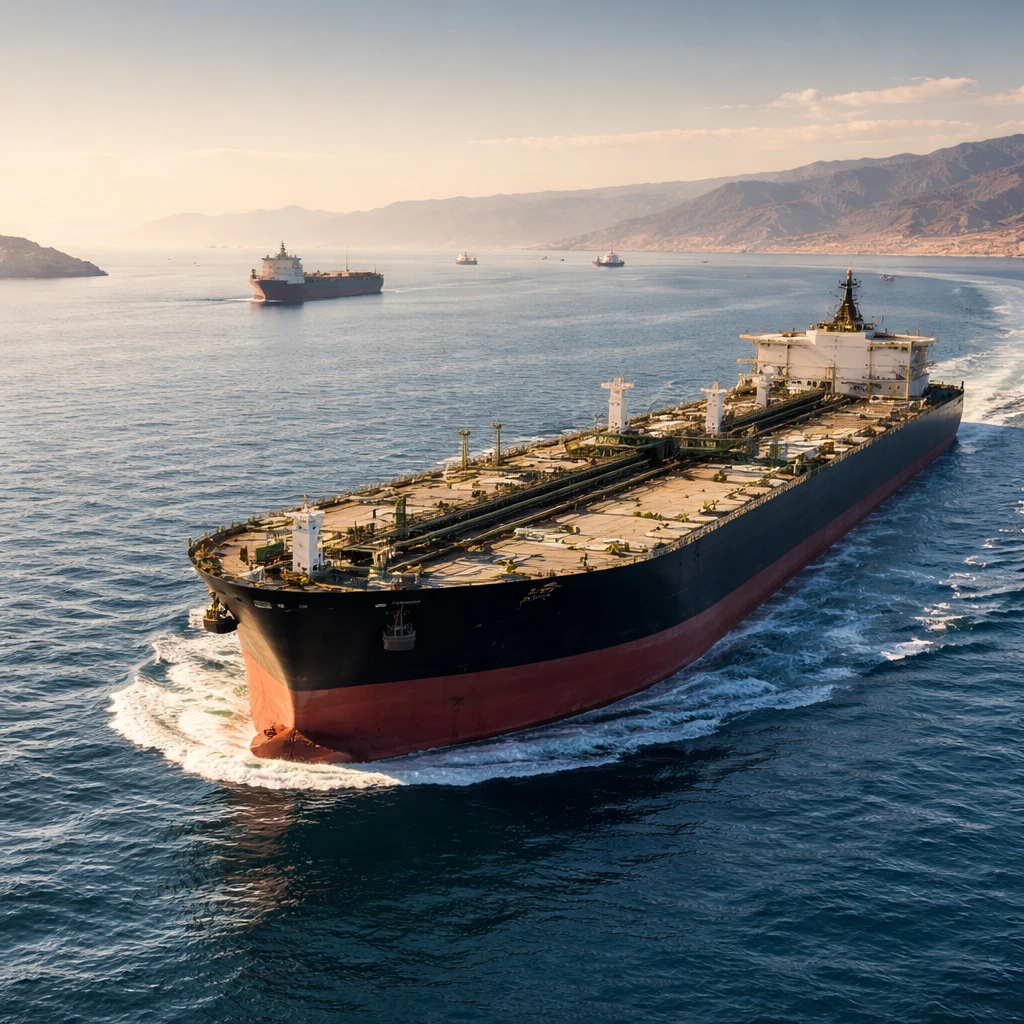
Markets across asset classes reacted swiftly after Iran declared the Strait of Hormuz temporarily open, prompting a notable advance in risk assets and a pullback in energy prices. Iran’s foreign minister Abbas Araghchi announced the move on X, saying: "In line with the ceasefire in Lebanon, the passage for all commercial vessels through Strait of Hormuz is declared completely open for the remaining period of ceasefire."
The statement came amid sharp market movements. President Donald Trump highlighted the development on social media, writing that the waterway was now "FULLY OPEN AND READY FOR FULL PASSAGE." He followed up by clarifying that, even with the strait open, a U.S. blockade on vessels entering and exiting Iranian ports would remain in place. Those twin signals - an Iranian announcement of reopening and a U.S. note that some restrictions would persist - set the tone for the day’s trading.
Immediate market reaction was broad-based. Risk-sensitive assets climbed while traditional safe havens and the U.S. dollar moved in opposite directions. Oil prices, which had surged during the period the waterway was effectively closed, slumped on the news. Gold advanced and the dollar weakened as traders recalibrated geopolitical risk premia. The reopening, though temporary, represented welcome relief after the effective closure of a maritime chokepoint that channels roughly one-fifth of the world’s oil and gas and that had caused what has been described as the biggest supply disruption in history, sending oil prices sharply higher.
On Wall Street, the S&P 500 benchmark was last up 1.2% and was on track for a record close. Here are some popular exchange-traded funds that track the S&P 500: SPDR® S&P 500® ETF Trust (NYSE:SPY), Vanguard S&P 500 ETF (NYSE:VOO), and iShares Core S&P 500 ETF (NYSE:IVV).
The reopening prompted rapid commentary from investors, strategists and industry associations. Their responses underline two themes: immediate relief for markets and lingering uncertainty about the reopening’s permanence and the broader regional damage to energy production and refining capacity.
Stephen Kolano, chief investment officer at Integrated Partners, framed the market rally around the centrality of the strait to the Iran conflict. He said markets were reacting to "what has been the most critical piece in the Iran conflict, which is the reopening of the Strait of Hormuz, at least temporarily. They’re beginning to ease pressure on energy prices, fertilizer and other key supply chain materials as a result."
Kopano emphasized that, should the straits remain open, markets will need to balance lasting supply disruption effects against demand trends: "The key now is, should the straits stay open, the markets will need to assess the longer-term impact of supply disruptions to oil, gas and refining capacity against demand trends to determine where energy prices may settle over the next few months, particularly given lower supply estimates following shutdowns during the conflict. All of this is unfolding against the backdrop of first-quarter earnings in the United States."
"Markets are up in response to what has been the most critical piece in the Iran conflict, which is the reopening of the Strait of Hormuz, at least temporarily. They’re beginning to ease pressure on energy prices, fertilizer and other key supply chain materials as a result." - Stephen Kolano, chief investment officer at Integrated Partners
Keith Lerner, chief investment officer and chief market strategist at Truist, pointed to the way lower energy costs have amplified a broader rally across risk assets. "The move lower in energy prices is adding fuel to what has already been a historic rally across risk assets," he said. Lerner noted that a drawn-out conflict and elevated oil prices had been investor concerns; any credible sign of de-escalation provides immediate relief and helps assets move higher together. He also observed that a solid start to earnings season reinforced the rally and that the reopening forced a reassessment among investors positioned for a prolonged conflict, producing "a degree of FOMO and repositioning."
"The move lower in energy prices is adding fuel to what has already been a historic rally across risk assets. ... Any credible signal that points toward de‑escalation, or at least a quicker path back toward pre‑crisis energy price levels, provides immediate relief." - Keith Lerner, chief investment officer and chief market strategist at Truist
José Torres, senior economist at Interactive Brokers, highlighted the implications of plunging oil prices for macro concerns that worried Wall Street. He said the drop in oil costs is significant for corporate margins, consumer spending capacity and inflation expectations, areas that influence central bank rate paths. "Now that the worst appears to be behind us on the geopolitical front, investors are breathing a sigh of relief just as the big weeks of earnings season are around the corner," Torres added, while cautioning that to push equities higher from current elevated levels, firms will need to deliver robust earnings and upbeat outlooks.
"Plunging oil prices are a spectacular development for Wall Street that has been afraid of what elevated energy costs would mean for the rate path, corporate margins, consumer spending capacity and inflation expectations." - José Torres, senior economist at Interactive Brokers
Joseph Brusuelas, principal and chief economist at RSM US, described the reopening as timely in the face of supply shortages headed for Asia and Europe. He expects the "paper price of oil" and gasoline to ease in the near term, but he warned against expecting a return to pre-war price levels. Damage to energy production and refining capacity in the Persian Gulf will take time to repair, "months and in some cases years," he said. He also noted that demand destruction among lower-income households will likely continue, while expectations of lower fuel prices could give higher-income consumers a modest spending tailwind as equities rise.
"The reopening of the Strait of Hormuz to commercial traffic is encouraging and well timed given the supply shortages of energy supplies in Asia and those about to hit Europe. ... But do not expect a return to pre-war prices. The destruction of energy production facilities as well as refining capacity in the Persian Gulf will take months and in some cases years to repair." - Joseph Brusuelas, principal & chief economist at RSM US
Mohamed El-Erian, former CEO of PIMCO, described the reopening as a welcome relief for the global economy but stressed that its ultimate impact depends on durability. He said the reopening will require "sustained confidence-building measures from all three warring parties" to be meaningful in the long term. Ship operators' actions will also determine how quickly energy flows normalize: bringing out vessels currently in the region is one step, but the real test is whether operators will send new ships into the area, which is necessary to restore full global energy flows and get regional production back online.
"The reported reopening of the Strait of Hormuz by Iran is undoubtedly a welcome relief for the global economy. Needless to say, its true impact depends on the durability of this reopening, which will require sustained confidence-building measures from all three warring parties." - Mohamed El-Erian, former CEO of PIMCO
Viktor Shvets, head of global desk strategy at Macquarie, emphasized that the opening was enabled by a ceasefire between Israel and Lebanon but cautioned that the agreement looks temporary and fragile. He pointed to entrenched militias and political currents across the region, noting that Gaza, Lebanon and the West Bank remain volatile and could derail any fragile accord. He also said there is little expectation that Iran will abandon its allies.
"The opening of Hormuz was made possible by a ceasefire between Israel and Lebanon. However, this can be only described as a temporary and tenuous agreement... Gaza, Lebanon and West Bank remain volatile 'powder kegs' that could derail any agreement. We also do not expect Iran to abandon their allies." - Viktor Shvets, head of global desk strategy at Macquarie
Thomas Kazakos, secretary general of the International Chamber of Shipping, framed the announcement as providing cautious reassurance for the maritime community and for seafarers who had been confined aboard vessels for more than seven weeks. He said there remains uncertainty about what the announcement means in practice, and he urged that it should mark the start of a broader and more durable return to freedom of navigation in one of the world’s most critical maritime corridors.
"This development offers a cautious measure of reassurance to the global maritime community and, most importantly, to the seafarers who have been placed in harm’s way and confined on board their vessels for more than seven weeks. While this announcement is a positive step there is still much uncertainty around what it means in practice." - Thomas Kazakos, secretary general of the International Chamber of Shipping
What this episode makes clear is that, while the market impact of a temporary reopening is immediate and material, the path forward depends on several open questions that market participants and industry operators must answer. Will the ceasefire and reopening hold long enough for shipping companies to resume normal routing and for producers to bring offline capacity back into service? How quickly will refiners and field operations recover from damage inflicted during the disruption? And how will investor expectations about earnings and growth adjust as oil and gasoline prices evolve?
Those questions underscore the dual nature of the market response: relief that reduces immediate tail risks and an awareness of lingering vulnerabilities that could reassert themselves if the cessation of hostilities falters or if physical damage proves deep and long-lasting.
For now, traders and company managers alike appear to be reacting to a narrower set of nearer-term risks, while keeping an eye on earnings season and the operational realities of restoring energy flows through a critical global choke point.