
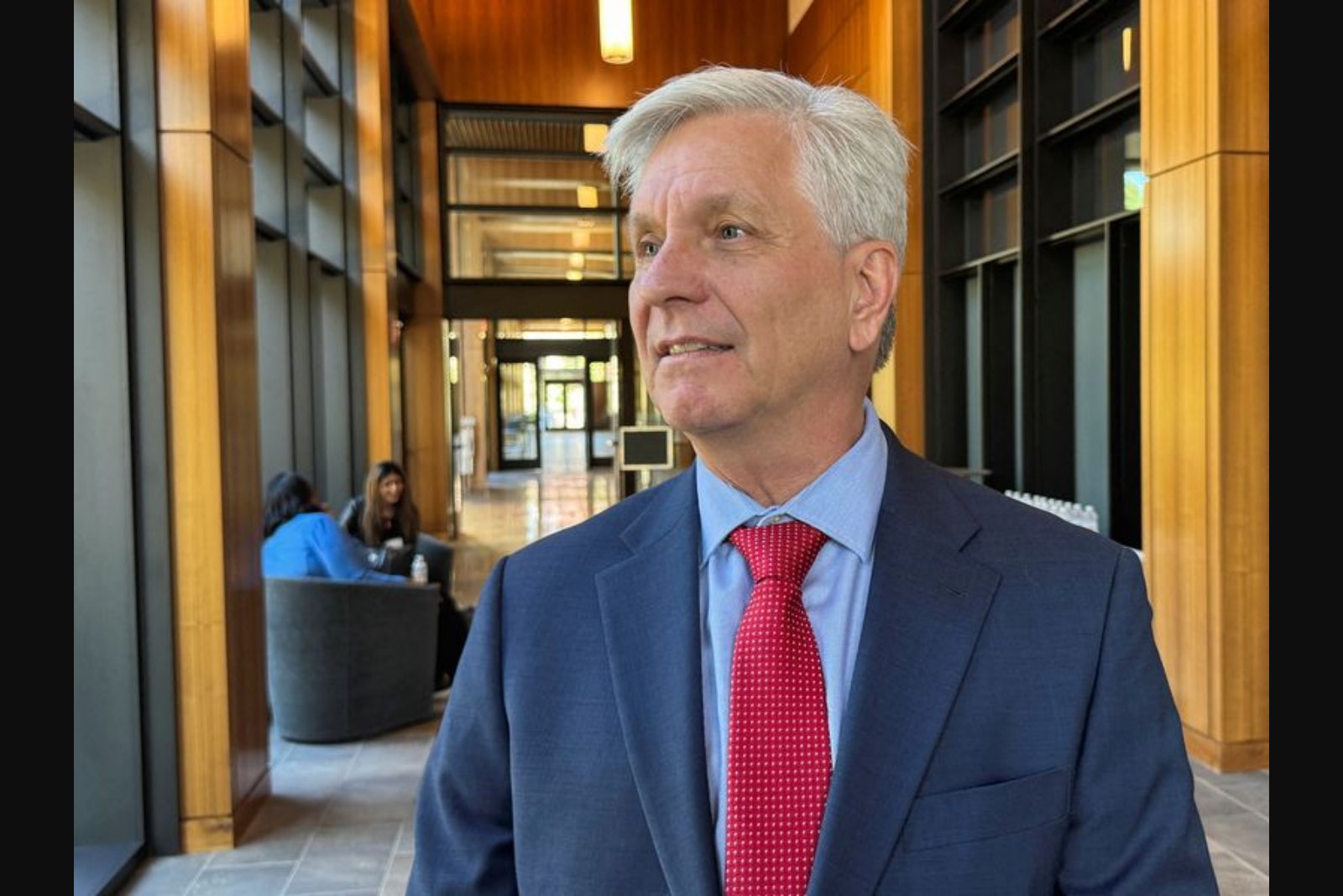
Federal Reserve Governor Christopher Waller said on Friday that the war in the Middle East is likely to lift inflation in the near term and poses a difficult environment for policymakers, but he added that a rapid resolution could keep the prospect of cutting interest rates later this year alive.
Speaking in remarks prepared for delivery at an event at Auburn University, Waller stressed the risks posed by sustained pressure on energy markets and shipping through narrow maritime routes. “The longer energy prices remain elevated and the Strait is constrained, the greater the chances that higher inflation gets embedded across a wide variety of goods and services, various supply chain effects start to emerge, and real activity and employment start to slow,” he said.
Waller said that if the economy were to experience a combination of persistent inflation and weakening hiring, policymakers would face difficult trade-offs under the Fed’s dual mandate. “I’ll have to balance the risks to the two sides of the Fed’s dual mandate to determine the appropriate path of policy, and that may mean maintaining the policy rate at the current target range if the risks to inflation outweigh those to the labor market,” he said.
At the same time, Waller flagged the conditional nature of his outlook. If the hostilities were to end quickly, he said, that scenario would support a path in which core inflation moves back toward 2% and would make him more disposed to contemplate rate reductions later in the year to help the labor market once the economic outlook is steadier. “I see a forecast in which underlying inflation would continue to move toward 2%, leaving me cautious about rate cuts now and more inclined toward cuts to support the labor market later this year when the outlook is more steady,” he said.
Waller emphasized the unusually high degree of uncertainty facing the central bank. He argued that a sequence of shocks reduces the usual tendency to treat disruptions as transitory. “With a sequence of shocks, policymakers need to be more vigilant,” he said, adding, “this is because if the shocks hit one after another, they will keep inflation elevated for quite some time.”
In the near term, Waller said he expected the overall personal consumption expenditures price index to reach 3.5% for March, a level well above the Fed’s 2% objective. He also noted that structural shifts in the job market have changed the arithmetic of labor-force dynamics: the level of monthly job creation required to keep the unemployment rate steady now stands at roughly zero, he said, meaning that isolated monthly job losses do not necessarily imply a recession.
Waller’s comments are likely among the last policy-related public remarks by Fed officials before the blackout period ahead of the Federal Open Market Committee meeting on April 28-29. At that meeting, officials are widely expected to hold the target federal funds rate steady in a range between 3.5% and 3.75% as they continue to assess how developments from the Middle East war are affecting U.S. inflation and growth.
Fed officials have been cautious about signaling policy direction amid rapid developments tied to the conflict, which the Fed’s public commentary describes as launched by U.S. President Donald Trump and Israel against Iran. The fighting has pushed energy prices higher, adding upward pressure to already-elevated inflation and increasing the risk that underlying inflation, which is also above the central bank’s 2% target, could move higher.
New York Fed President John Williams, speaking on Thursday, said he anticipates overall inflation running “well above” 3% for a few months. He cautioned that the current level of uncertainty argues against issuing firm forward guidance about the future path of interest rates. “With so much uncertainty, it’s not a time to try to give...strong forward guidance about the outlook for interest rates,” he said.
Against that backdrop of shifting economic signals and wartime developments, Waller noted the potential for diplomatic or military turns to alter the outlook quickly. He pointed to recent signs that if diplomatic moves hold, the economic picture could improve: Iran said the Strait of Hormuz is “completely open” for transit amid an ongoing ceasefire even as President Trump said the U.S. would maintain its blockade of Iranian ports. Those reports coincided with declines in oil prices and a rally in stocks, as investors increased the odds they attach to a Fed rate cut by year-end.
Waller’s remarks underscore the balancing act facing the Fed: near-term energy and supply disruptions elevate inflation risks, but a rapid de-escalation of the conflict could allow underlying inflation to moderate and leave space for policy easing later in the year if the labor market softens in a more measured fashion.
Summary
Fed Governor Christopher Waller argued that the Middle East war is likely to boost inflation in the near term and complicate monetary policymaking, but a swift resolution would permit underlying inflation to move back toward the Fed’s 2% goal and could keep open the possibility of interest-rate cuts later this year. He noted elevated uncertainty, forecasted PCE inflation near 3.5% for March, and said changes in labor market dynamics have reduced the job gains needed to keep unemployment steady to roughly zero.
Key Points
- Elevated energy costs and constrained shipping routes risk embedding higher inflation across goods and services - impacts most directly the energy, manufacturing, and transportation sectors.
- A swift resolution to the conflict would likely allow underlying inflation to trend back toward 2%, keeping the option of rate cuts later this year open - relevant to markets, banks, and labor-sensitive sectors.
- Fed officials expect to hold rates at 3.5% to 3.75% at the April 28-29 FOMC meeting while monitoring developments - important for fixed-income and equity markets.
Risks and Uncertainties
- Prolonged disruptions to energy supply and constrained maritime transit could entrench inflation and slow employment - a downside risk to consumer-facing industries and supply-chain-reliant manufacturers.
- A sequence of economic shocks could keep inflation elevated for an extended period, forcing the Fed to maintain restrictive policy longer - a risk for interest-rate-sensitive sectors such as real estate and financials.
- Rapid developments in the conflict and diplomatic positions create high uncertainty, limiting the Fed’s ability to offer forward guidance - affecting market volatility and investor expectations.