
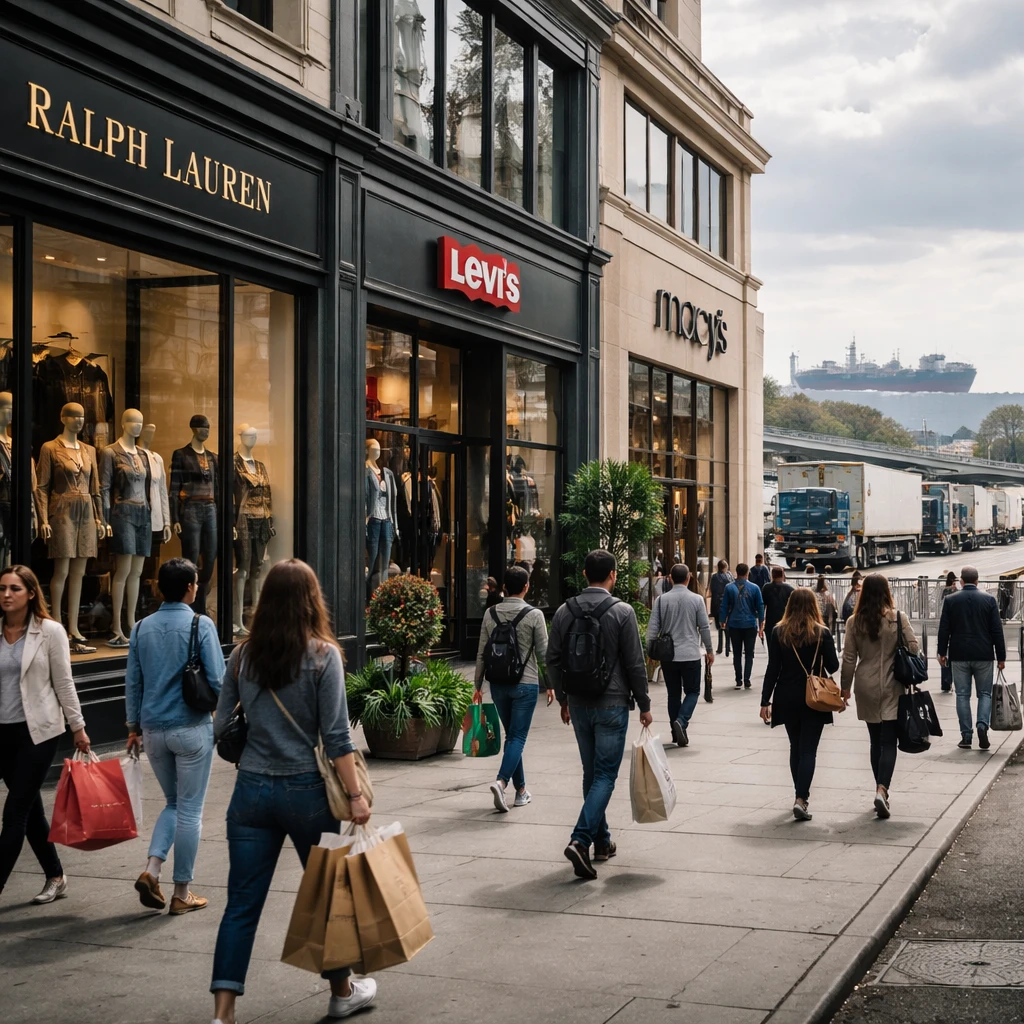
Jefferies has released an updated view of U.S. apparel and footwear stocks following Q1 earnings and management discussions, emphasizing selective stock choices amid uncertainty linked to oil-price swings.
The broker reiterated Ralph Lauren (RL) as its preferred pick in the group, while cautioning that the brand's European performance and a conservative outlook for the fourth quarter merit close observation. Jefferies also reiterated a Buy rating on Levi Strauss (LEVI).
Among other names, Jefferies singled out Deckers Outdoor (DECK) as a candidate for upside to estimates and highlighted the company’s active share-repurchase program. The firm described Capri Holdings (CPRI) and VF Corp (VFC) as turnaround stories that have now fully recovered; VF Corp in particular is benefiting from improved consumer metrics at its Vans brand. In contrast, Macy’s (M) remains a laggard in the group despite signs of comparable-sales improvement.
A core investor worry underscored by Jefferies is whether recent oil-price volatility associated with the U.S.-Iran conflict will prove to be a short-lived cost shock or develop into a prolonged headwind for sales and freight. The note said investor sentiment has improved in recent weeks amid hopes for de-escalation, but it cautioned that the outlook remains unpredictable.
Jefferies detailed how higher oil prices can compress retailer margins through elevated freight rates, fuel surcharges and broader logistics costs, while having a smaller direct effect on product inputs such as synthetic materials. The firm also stressed that a sustained rise in gasoline prices could disproportionately reduce spending among low- to middle-income consumers, and that increases in cotton prices warrant monitoring for companies with exposure to denim categories.
These observations frame the firm’s current positioning across the retail apparel and footwear complex, balancing company-specific fundamentals against an uncertain cost and demand backdrop driven by energy-price dynamics.
Summary
Jefferies maintains Ralph Lauren as its top sector pick and keeps a Buy on Levi Strauss, calls out Deckers for potential upside, views Capri and VF Corp as recovered turnarounds, and identifies Macy’s as underperforming. The firm warns that oil-price volatility tied to geopolitical tensions could affect margins and consumer spending.
Key points
- Ralph Lauren remains Jefferies’ preferred stock in the U.S. fashion group, though European results and conservative Q4 guidance need watching.
- Levi Strauss retains a Buy rating; Deckers may see estimate upgrades and is engaging in buybacks.
- Turnarounds Capri and VF Corp have recovered, with Vans data improving for VF; Macy’s is lagging despite comp-sales inflection.
Risks and uncertainties
- Oil-price volatility could create a short-term cost shock or evolve into a longer-duration drag on sales and freight - affecting retailers’ margins and logistics costs.
- Sustained gasoline-price increases could reduce discretionary spending among low- to middle-income consumers, pressuring sales for value-oriented apparel segments.
- Rising cotton costs may increase input expense for denim-focused brands, potentially squeezing margins if costs cannot be passed to consumers.