
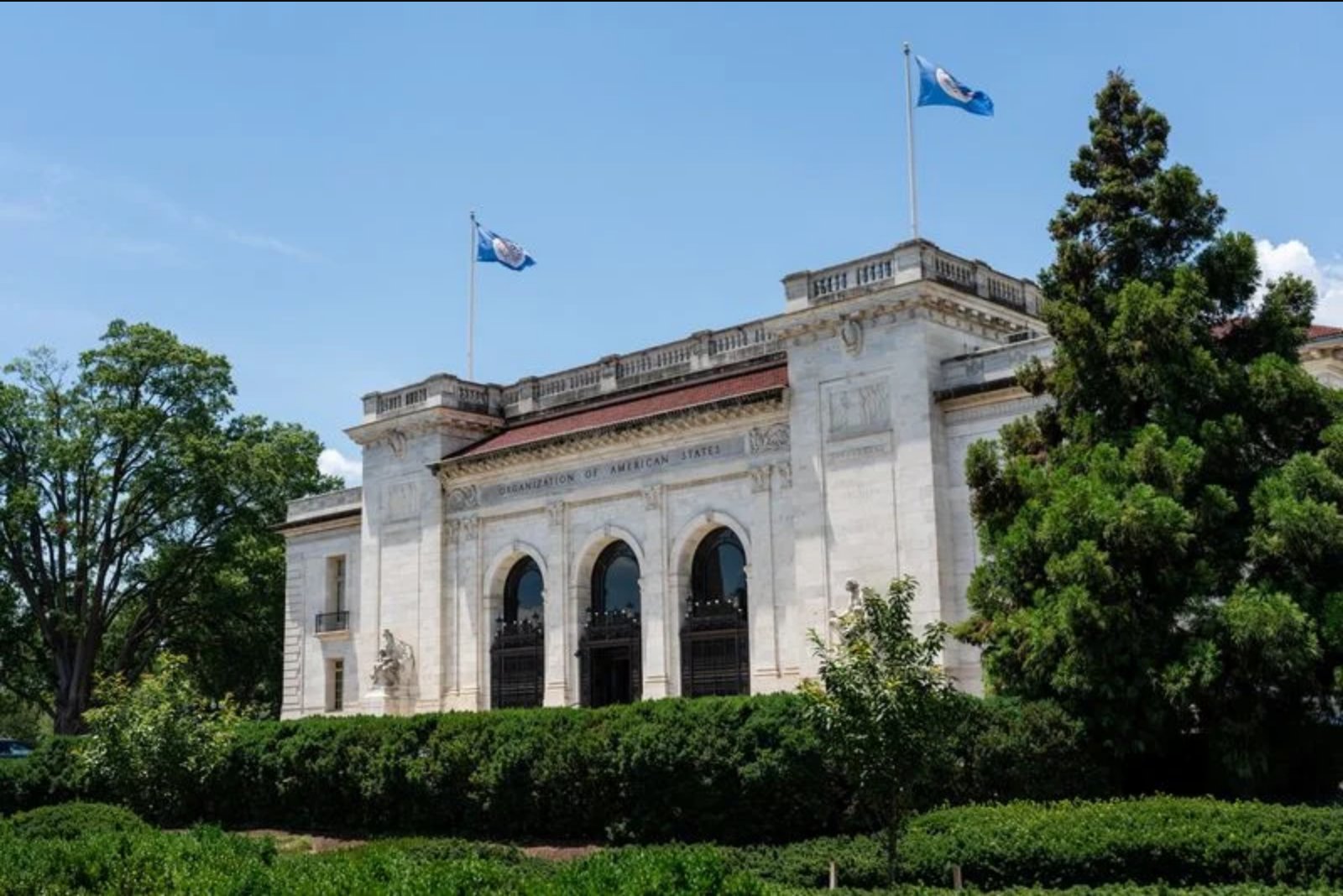
Multiple senior U.S. diplomats assigned to the Organization of American States have recently departed the mission, either through resignation or dismissal, after conflicts with the current ambassador, according to multiple sources familiar with the personnel changes. Those exits have removed a substantial portion of the mission's institutional memory and senior leadership.
The Organization of American States, founded in 1948, serves as the principal multilateral forum for the Western Hemisphere, with mandates that include regional security, human rights, democracy and economic development. The Washington-based body has been instrumental in resolving contested elections in Latin America and in coordinating diplomatic responses to human rights abuses in countries such as Cuba and Nicaragua.
In the past several months the U.S. delegation to the OAS has seen the deputy chief of mission, the chief of staff, a senior political counselor and at least one additional foreign service officer leave their posts, sources said. Those officials represented a significant share of a mission that typically includes only a small number of full-time foreign service officers, and their departures effectively removed almost the entire senior career team at the post.
Sources who spoke about the personnel moves declined to be identified because the discussions concern internal staffing matters. They described clashes between several career diplomats and Ambassador Leandro Rizzuto Jr., who was appointed by President Donald Trump. The sources characterized the ambassador's management approach as confrontational and unpredictable.
In one episode earlier this year, two sources said, the ambassador described staff who expressed concerns directly to State Department leadership as "rats." The ambassador did not respond to a follow-up email asking specifically about that remark.
In an interview, the ambassador acknowledged that multiple senior diplomats had recently been fired or had quit. He defended his efforts to shift the mission's emphases, saying he is trying to move the OAS' focus away from human rights and democracy and toward economic issues. He said that change has unsettled some State Department staff.
"I'm a business guy, so the bottom line is I want results, and without making it personal, if you can't do the job, I'd rather you have another job," the ambassador said. He also said he had forced out his deputy chief of mission and his chief of staff, while his political counselor had resigned. He described himself as "the fairest guy," and added that he advocated for employees who were giving their all.
The State Department did not provide responses to a detailed list of questions about the departures when asked. The senior diplomats who left either did not respond to requests for comment, declined to comment, or could not be reached.
The ambassador stated that those who have been dismissed or who resigned have been replaced by high-performing successors. Sources at the mission, however, emphasized the loss of long-standing expertise and institutional continuity that career staff provided.
Observers say the personnel changes are consistent with broader patterns at the State Department under the Trump administration, which has in many instances sidelined senior career diplomats in favor of political appointees. Critics point to a substantial transformation in the department's workforce, including several hundred dismissals in large-scale layoffs last year and the removal of nearly 30 career ambassadors in December, leaving a number of posts unfilled.
Administration officials have also publicly questioned the relevance of many multilateral institutions, including the OAS, while suggesting these bodies could adopt reforms to demonstrate modern utility. Proposals from some administration circles have included assigning the OAS a more visible role in hemispheric security and law enforcement, though such shifts remain a subject of internal debate.
The ambassador in question, described by sources as a billionaire heir to a cosmetics fortune, had earlier been nominated during President Trump's first term for an ambassadorial post that required Senate approval, but that nomination did not proceed amid controversy over social media postings. He subsequently served in an ambassadorial role that did not require Senate confirmation and later secured confirmation for his current post in the administration's second term, taking office late last year.
After assuming the position, the ambassador had a large oil painting of himself installed in the central vestibule of the U.S. mission to the OAS, according to three sources. The ambassador did not respond to an email seeking comment about the painting.
Sources who spoke about the departures pushed back against any suggestion that State Department career staff were broadly incompetent or disengaged. They noted that the recent workforce transformations at the department have been sweeping, and critics argue the changes have often disadvantaged career public servants with specialized institutional knowledge.
While administration officials have reasserted U.S. engagement in Latin America, including through high-profile actions described by some as demonstrating renewed attention to the region, the recent turnover at the OAS mission highlights tensions between political appointees and the career foreign service, and raises questions about continuity at a key multilateral institution for the Western Hemisphere.
Summary
Several senior career diplomats at the U.S. mission to the Organization of American States have resigned or been dismissed following clashes with Ambassador Leandro Rizzuto Jr., removing much of the mission's institutional leadership. The ambassador has defended his actions and said he is refocusing the mission toward economic issues; State Department responses were not provided. The departures reflect broader personnel shifts within the State Department under the current administration.
Key Points
- Senior staff exits include the deputy chief of mission, the chief of staff, a senior political counselor and at least one other foreign service officer, substantially reducing experienced personnel at the U.S. OAS mission - sectors impacted: diplomacy, government staffing.
- Ambassador Leandro Rizzuto Jr. is shifting the mission's emphasis from human rights and democracy toward economic issues and has defended removing staff he deems unable to deliver results - sectors impacted: foreign policy implementation, multilateral institutions.
- The departures occur against a backdrop of broad State Department workforce changes, including mass dismissals and removal of career ambassadors, which have transformed diplomatic staffing - sectors impacted: government operations, public sector human resources.
Risks and Uncertainties
- Loss of institutional expertise at a small, specialized mission could weaken continuity and effectiveness in handling OAS priorities - impacted sectors: diplomacy, international policy coordination.
- Ongoing tension between political appointees and career diplomats may produce further turnover or gaps in leadership at multilateral posts - impacted sectors: State Department operations, multilateral engagement.
- Shifts in mission focus away from longstanding OAS priorities like human rights and democracy toward economic or security roles could create policy divergence with other OAS members or career staff - impacted sectors: international human rights advocacy, regional security cooperation.