
Colombia's upcoming presidential runoff has placed security at the forefront of national debate after illegal armed groups widened their footprint during the current administration. Analysts, former officials and government sources interviewed for this report say the next president will face the dual task of reclaiming territorial control from criminal organizations and curbing violence that continues to affect civilians, particularly in rural regions.
Sunday's vote presents two sharply different policy paths. Right-wing candidate Abelardo De La Espriella, 47, a lawyer and political newcomer who is leading in pre-runoff polls, has pledged a tougher military response focused on armed groups, drug trafficking and organized crime. He has also said he would terminate peace negotiations that, in his view, have failed to produce tangible results during the outgoing administration.
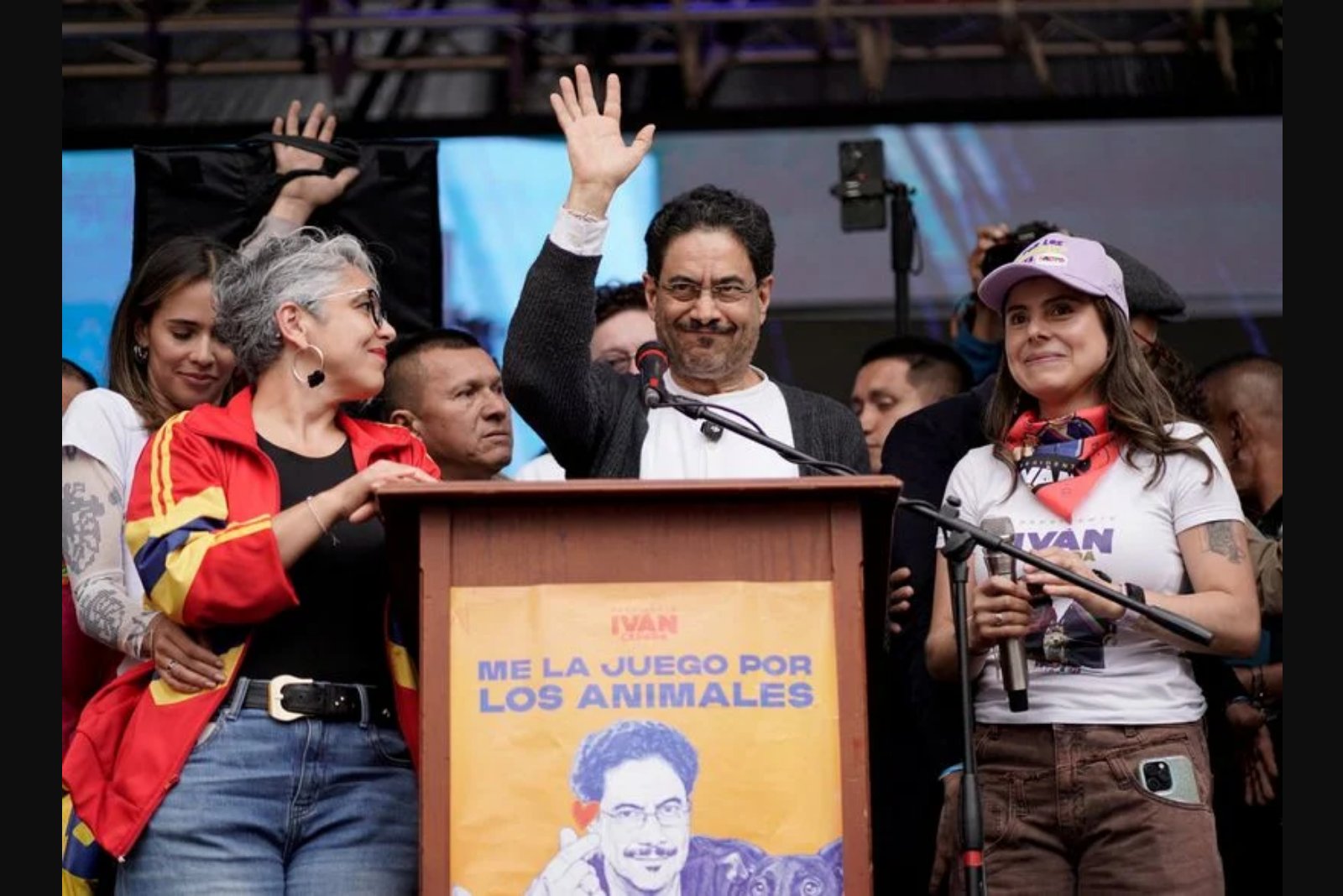
By contrast, Senator Ivan Cepeda, 63, favors maintaining peace talks and would push for legislation that offers legal benefits to criminal gangs in exchange for dismantling their networks. His approach emphasizes negotiated solutions to reduce violence while creating incentives for demobilization.
Security as the defining campaign issue
Political analyst Eduardo Pizarro characterized security as the campaign's central concern and credited that focus with helping De La Espriella win the first-round vote. "Security was the central issue of this campaign, which led to De La Espriella's victory in the first-round," Pizarro said. He pointed to rising perceptions of insecurity in urban centers and to expanded armed group activity in rural areas that has increasingly affected civilians through extortion, illegal mining-related violence and other crimes.
Official statistics show declines in homicides and robberies in most major cities, while extortion has grown in at least one urban area, illustrating the uneven nature of public-security trends across the country.
Expansion of armed groups and areas of control
A security report reviewed by analysts and officials indicates that the ranks of illegal armed organizations nearly doubled from 13,000 members in 2022 to roughly 25,000 by the first half of 2026. These forces include the Clan del Golfo criminal gang, dissident factions of the former Revolutionary Armed Forces of Colombia (FARC) and the National Liberation Army (ELN).
The groups have extended their reach primarily into rural territories vital to drug trafficking routes and illegal mining operations. According to a report from the ombudsman's office, roughly a quarter of Colombia's municipalities report the presence of or activity by such armed groups, underscoring the breadth of their territorial influence.
Institutional challenges and the need to rebuild capacity
Former and retired military leaders consulted for this piece described significant challenges within the security forces. One retired officer who served on the military high command during the current administration warned that armed groups may intensify attacks early under a new government as they attempt to display strength and secure bargaining positions in any negotiations. Speaking on condition of anonymity, the officer said: "The next government must understand that what the country needs is not only a stronger security strategy or a negotiated solution, but that both options must be combined in a coordinated way."
Security sources say that more than 70 army and police generals, including specialists in intelligence, were removed from active service during the outgoing government, a change that officials contend reduced the forces' operational capacity.
A former general, also requesting anonymity, flagged shortages affecting military mobility, noting that much of the fleet of U.S.-made Black Hawk and Russian Mi-17 helicopters has been grounded because of spare-parts shortfalls. He added that a voluntary substitution program to help farmers shift from coca cultivation to licit crops is another necessary component of a broader security and economic strategy. "It will not be easy - there is a lot of work to do - but it can be achieved," the general said.
Government response and measures reported under the current administration
Defense Minister Pedro Sanchez defended the current government's record on security, pointing to removals of nearly 16,000 armed-group members from the conflict - mainly through captures and surrenders. He also cited a 60% rise in the destruction of heavy machinery used in illegal mining activities and the seizure of 3,300 metric tons of cocaine, a figure that Sanchez said approaches the combined confiscations of the prior three administrations.
Sanchez cautioned against what he called rhetorical exaggeration of security problems for political gain. "Some seek to promote fear in order to later sell hope. They promote a problem or enlarge or maximize that problem, exaggerate it, and then try to sell the solution, at least rhetorically. And in Colombia's case, they do it with the issue of security," he said. He emphasized that criminal networks cannot be defeated by force alone given their ties to corrupt officials and international trafficking networks, and argued that crop substitution, legalization programs for informal miners and investment in health, education and infrastructure are essential elements of a comprehensive strategy.
Peace agreement follow-through and the limits of trade-offs
Independent analysts at the Ideas for Peace Foundation (FIP) stressed that progress on elements of the 2016 peace agreement with the former FARC remains incomplete, particularly the social and rural reforms intended to reduce incentives for illicit economies. The FIP warned against framing policy as a binary choice between war or negotiation. "We cannot fall into the reductionism of choosing between peace or security," the foundation said in a recent report cited by analysts.
Observers and security experts agree that the incoming administration will confront a complex mix of military, legal and social questions: restoring territorial control and intelligence capabilities, denting the revenues that sustain criminal groups, and advancing stalled rural reforms. How those priorities are balanced - and whether a combined approach of coordinated security operations and socio-economic programs is implemented - will shape stability and governance in regions long affected by armed conflict.