
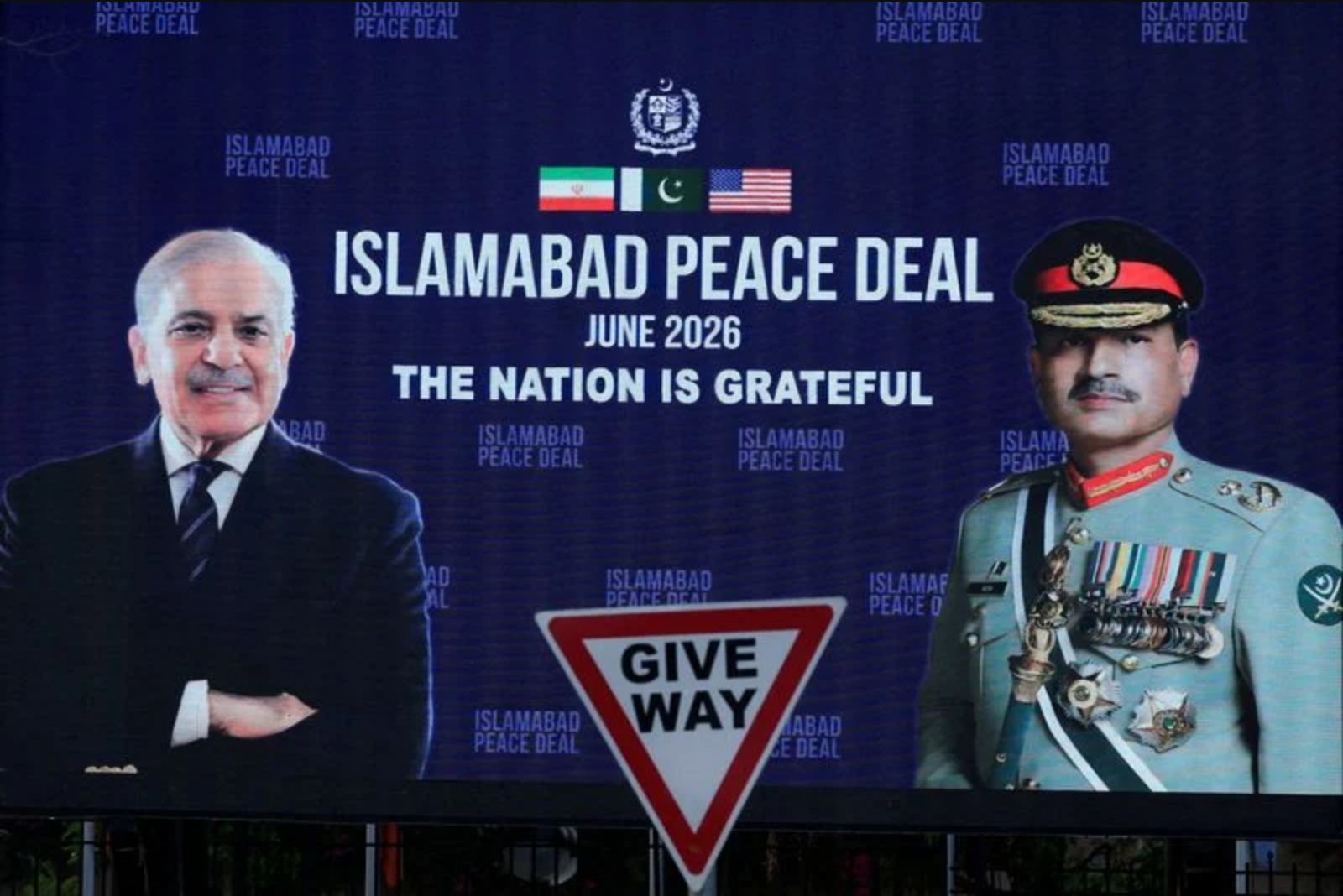
ISLAMABAD, June 18 - A sequence of late-night negotiations, shifting drafts and last-minute interventions by regional actors produced a preliminary U.S.-Iran agreement this week, according to participants in the talks. Pakistani mediators, who worked for weeks to bridge entrenched differences, say the interim deal now sets a 60-day period for both sides to reach a final, legally binding settlement on a range of complicated issues.
Those issues include Iran's nuclear programme, the future of sanctions relief, and arrangements for the Strait of Hormuz - a waterway normally carrying about a fifth of global oil and liquefied natural gas flows. Four Pakistani sources familiar with the negotiations told Reuters that reaching the interim framework required navigating numerous and frequently changing obstacles, from disagreements about tolls in the Strait to the fallout from the war in Lebanon.
In the early hours of Monday, Pakistan's prime minister set out a 14-point memorandum intended to halt the conflict and lift competing blockades affecting the strait, a move that followed weeks of intensive shuttle diplomacy. "There were many moments during the negotiations when it looked as if the process would grind to a halt," the prime minister told parliament later that day.
Sources directly involved in the process, who requested anonymity because of the sensitivity of the talks, said the agreement appeared to be on the brink of collapse several times, including during the final hours before the memorandum was announced. Two of these sources, along with a diplomat who had been briefed on the talks, said Qatar's decision to step in proved decisive in salvaging the framework.
Negotiators described the dynamics of the drafting sessions as at times microscopic - side disputes could depend on single words. A diplomat recalled a 45-minute exchange in late May over whether a clause should include the term "etc." or "including," though the diplomat did not identify the specific provision under discussion.
Analysts and participants warned that translating the interim framework into a comprehensive settlement will be harder than agreeing the outline. "Washington and Tehran appear to have different interpretations of the same text," said Alex Vatanka of the Middle East Institute in Washington. "Iran will try to turn ambiguity into leverage, while the U.S. will try to preserve pressure until nuclear concessions are secured. Mediation will therefore remain central, but difficult."
Qatar's engagement intensified after the first round of talks in early April ran into immediate disputes - notably over a U.S. blockade of Iranian ports in the Strait of Hormuz. Four Pakistani sources said those disputes sharpened late in the process and that U.S. President Donald Trump's public call at the end of May for Iran and Pakistan to join the Abraham Accords and normalise ties with Israel further complicated the negotiating environment.
One participant said Qatar's arrival on the scene in early June coincided with a crucial window when Doha was able to offer financial assurances to Iranian leaders. The diplomat who described Doha's role said Qatar had been reluctant at first to engage formally, but shifted its stance in mid-May after talks stalled for roughly 10 days and the prospect of military escalation grew.
Qatar agreed to deepen its involvement under two conditions: that a ceasefire be in place and that the country itself not be attacked, the diplomat said. Qatari envoys then made multiple discreet trips to Tehran - often routing through Turkey - to work through remaining differences in drafts prepared by Pakistani mediators.
On May 19, the Qatari delegation flew to Washington after leaving Tehran, met senior U.S. officials, and revised parts of the text while also contacting Iranian counterparts from within the White House, according to one source involved in the talks.
Even in the final stretch, negotiators said the process remained perilous. Around 11 p.m. on Sunday in Pakistan, with officials gathered at the prime minister's residence and in a situation room, the talks appeared to be unraveling after an Israeli strike in Lebanon, one Pakistani participant said. That participant added that army chief Field Marshal Asim Munir relayed messages between the parties through the night. Hours later, the interim agreement was announced.
Participants pointed to recurring complications from inconsistent public statements and slow internal decision-making. Four Pakistani sources said President Trump's changing public remarks repeatedly complicated the talks, and they cited Iran's delayed responses to urgent proposals as another obstacle. An international source familiar with the negotiations said Iranian decision-making had become unusually fragmented after U.S. attacks weakened elements of its leadership structure, contributing to delays and diffusion of authority.
"Messages get passed through many hands, and then come back days later," the international source said, describing Iran's internal security and information precautions. One Pakistani negotiator said direct communications improved after a representative of Supreme Leader Ayatollah Mojtaba Khamenei visited Islamabad, enabling Munir and his team to establish more direct channels.
The international source said Pakistan grew frustrated at the differing communication styles: "With the Americans, you never really knew what their position was, and it could change. And with the Iranians, you often didn’t get a clear answer for days and days."
Although both the United States and Iran have signed the interim agreement, sources cautioned that the arrangement is fragile. The diplomat briefed on the negotiations warned that Israeli strikes in Lebanon and a possible response by Hezbollah could quickly unsettle the deal. "I don’t think I’ve ever been close to a process which involves less trust than this one," the international source said.
The next 60 days are expected to focus on concrete text covering sanctions relief, nuclear restrictions, and practical steps for managing the Strait of Hormuz. Negotiators and analysts alike say the work will hinge on calibration of ambiguous language, the sequencing of concessions, and continuous mediation to bridge diverging interpretations.
For now, the framework provides a temporary breach in months of stalemate. Whether that opening can be converted into a durable, enforceable settlement remains uncertain and will depend on heavy diplomatic lifting amid one of the most trust-deficient negotiations participants have encountered.