
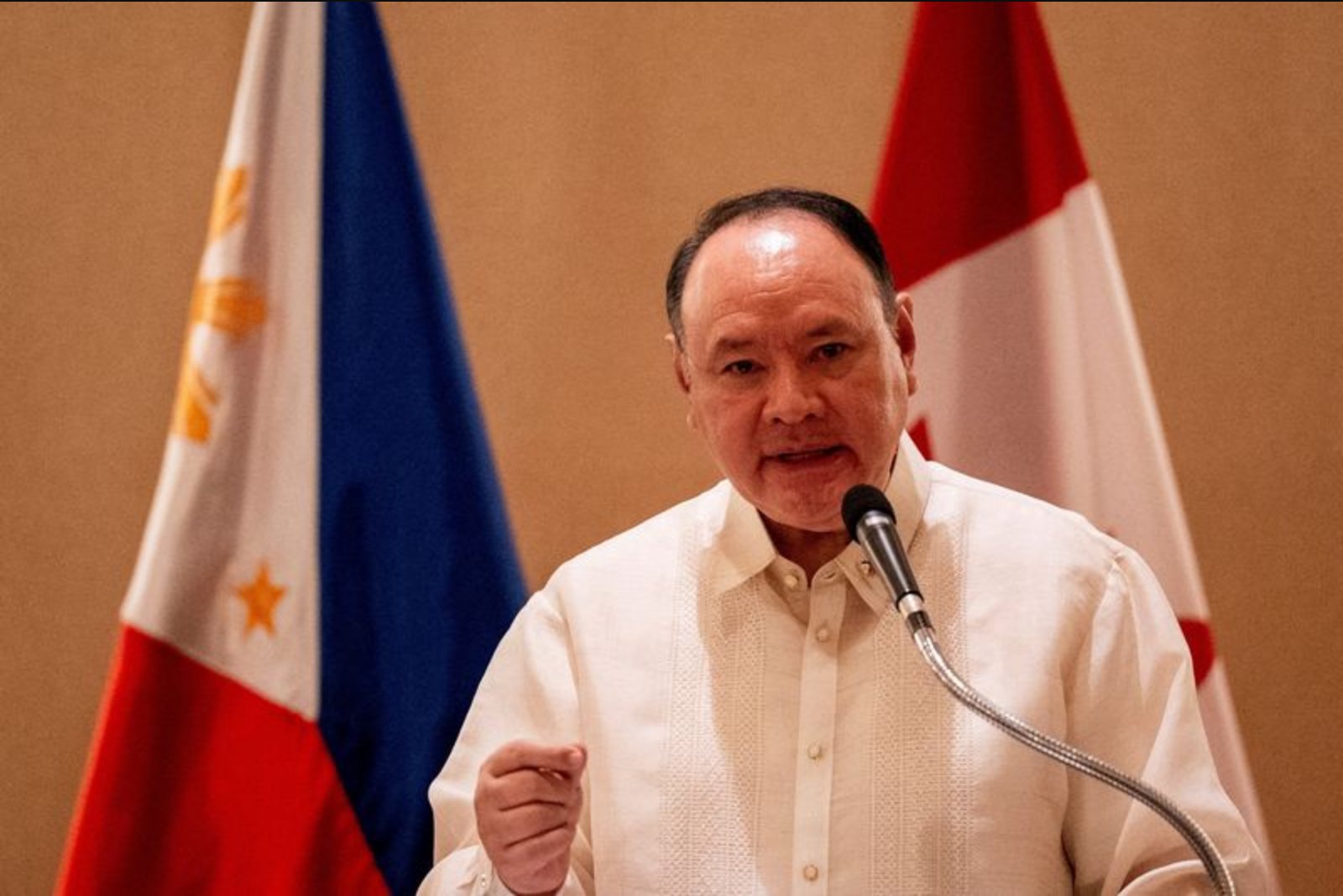
The Philippines does not believe that the conflict in the Middle East will weaken U.S. deterrence in the Indo-Pacific, its defence secretary said on Tuesday, while cautioning that China could try to capitalise on any perceived openings.
Gilberto Teodoro made the remarks in an interview conducted during the annual Balikatan exercises - joint military drills with the United States that this year have attracted the largest number of participating countries to date. For the first time, Japanese combat troops are taking part in the exercises, a development Manila has presented as part of its effort to broaden defence partnerships.
Teodoro described recent moves by China in regional maritime areas as "not surprising," saying Beijing tends to press advantages when it believes rival powers are distracted. He noted an uptick in Chinese naval activity around Taiwan, including the passage of an aircraft carrier through the Taiwan Strait, and referenced satellite imagery - reviewed by Reuters - showing a barrier installed this month at the mouth of the Scarborough shoal in the South China Sea.
Relations between Manila and Beijing have been marked by repeated maritime confrontations in the South China Sea in recent years. China asserts near‑total claims over the waters despite a 2016 arbitral ruling that invalidated those claims, and Teodoro warned that Beijing is likely to seize on what it perceives as moments of weakness.
"It is not surprising that any opportunity they see, perceived opportunity, or with a perceived weakness or a perceived opening, they will take advantage," Teodoro said.
Despite concerns raised by some analysts that the Iran war could stretch U.S. strategic resources, Teodoro said he has "full confidence in the Mutual Defence Treaty" between Manila and Washington and was "not concerned at all about reduced deterrence." He pointed to the scale and reach of the Balikatan exercises as an indication of U.S. commitment to regional security.
China has in the past criticised the joint drills carried out by the Philippines and its partners, arguing they increase regional tensions. The Chinese embassy in Manila did not immediately respond to a request for comment on Teodoro’s remarks.
Teodoro framed the expanded international presence at Balikatan as part of Manila's deliberate strategy to build defence resilience through a network of like‑minded partners in the face of what he described as an increasingly assertive China. That strategy, he said, extends to equipment acquisitions and wider defence cooperation.
On procurement, Teodoro confirmed that the Philippines and Japan are discussing a potential purchase of frigates, with talks taking place at both secretary and ministerial levels. He indicated the topic could be on the agenda during talks with Japanese Defence Minister Shinjiro Koizumi, who is scheduled to visit next week to observe the ongoing exercises.
Teodoro also welcomed Tokyo's decision to lift long‑standing restrictions on arms exports, saying the change broadens Manila's access to defence equipment at a time of mounting security challenges in the region. "The Japanese have a track record of affordable, high-quality equipment, which I do not see why they cannot extend to the defence space," he said. "Since this space is opening up, we’re very excited."
The policy shift in Tokyo removes barriers to exports of warships, missiles and other military hardware. The move has been welcomed by a number of U.S. allies, the article noted, at a time when debate over U.S. political commitments has intensified and the wars in Iran and Ukraine are placing strains on U.S. weapons supplies.
Teodoro’s comments underscore Manila's dual approach: publicly affirming confidence in treaty guarantees with Washington while simultaneously diversifying defence partnerships and supply options to enhance national resilience should regional pressures increase.