
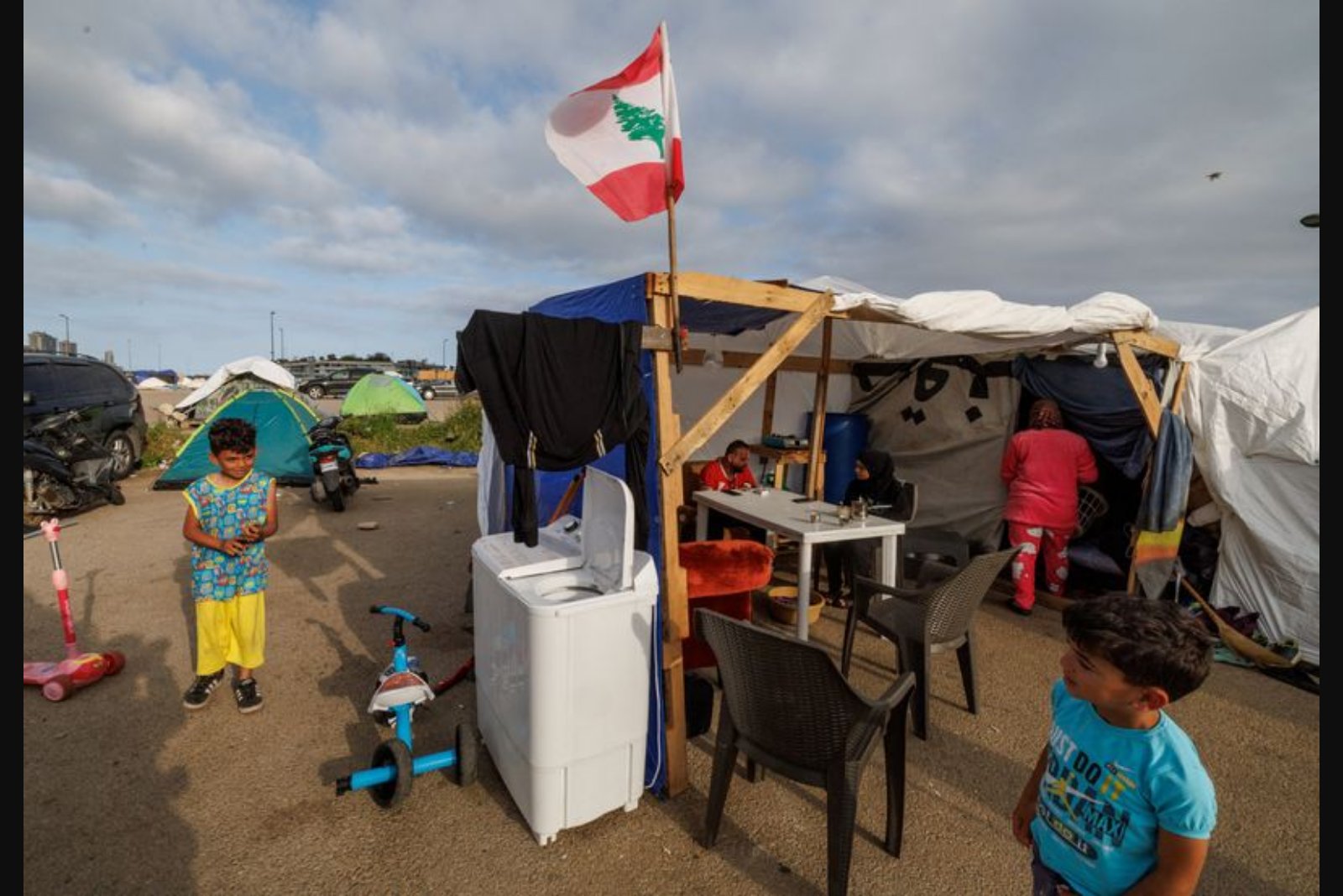
It has been almost two months since Rabih Khreiss and his family abandoned their lives in Khiyam, in southern Lebanon. The 45-year-old father of nine had supported his household through a car workshop, but after learning that Hezbollah had fired into Israel in the early hours of March 2 and anticipating retaliatory strikes, he fled with only the clothes on his family's backs. The strikes began within moments, and the family has not returned.
Today, Khreiss and his relatives live in a makeshift tent in Beirut, surviving on donations. ‘‘I feel like my children and I are prisoners in a room, sentenced to life imprisonment. But when will relief come so we can get out of this life sentence? No one knows,’’ he said.
Daily life under displacement
The family wakes each day in a shelter constructed from wooden beams and tarpaulins that flap loudly in the wind. With no access to showers, they wash in plastic tubs and handwash their clothing. An older sister who shares the tent has cancer and is struggling to obtain healthcare.
Khreiss described the psychological strain on his children, saying their young lives have been devoid of joy: ‘‘It’s showing in my children that they’ve never known joy or happiness, never been to an amusement park, never had fun like other children,’’ he said. ‘‘I brought them into this world, and I have to take responsibility for them and secure their future. But circumstances have forced me to do nothing for them. There’s nothing I can do.’’
He is considering selling his car if he is unable to find work, and fears that the anxiety over his children's future could trigger a stroke.
Damage at home and a pattern of violence
The conflict has left large areas of southern Lebanon depopulated and heavily damaged. Khiyam, a town of around 10,000 people before the latest fighting, has been described as almost entirely flattened, its former residents displaced. Israeli forces have occupied a strip of the south and carried out strikes they say target Hezbollah infrastructure. Those operations have included near-daily controlled demolitions in Khiyam.
Hezbollah has continued to engage in attacks against Israeli forces in Lebanon and against northern Israel. Although a ceasefire was brokered by the United States and signed by the Israeli and Lebanese governments, it was not specifically signed by Hezbollah. Both Israel and Hezbollah have accused the other of breaching the ceasefire, and strikes on Lebanon have continued despite the agreement.
For Khreiss, the present crisis follows earlier trauma. One of his older sons lost an eye when an Israeli strike hit their Khiyam home during the last major conflict between Hezbollah and Israel in 2024. Khreiss pulled his children from the rubble and said he aged ‘‘years’’ in the space of a single hour. His garage was damaged in that war, but he returned afterward and rebuilt. He now does not know whether his workshop or his home remain standing.
Wider displacement and stalled returns
The fighting has created a broad humanitarian challenge. Approximately 1.2 million people are displaced within Lebanon, many of whom had hoped the ceasefire might allow them to return south. With continued hostilities and occupation of southern areas, those hopes have been dashed for many, deepening a sense of despair among the displaced.
Khreiss spoke of his attachment to Khiyam: ‘‘Khiyam is my town, my region, my land, my home, my work, my people, my loved ones, everything. Of course, all my memories are in Khiyam. I miss everything about it,’’ he said, describing the town as set among hills and farmland, including olive groves.
Outlook
As hostilities continue despite diplomatic efforts, families like the Khreisses remain in prolonged displacement with limited access to basic services and healthcare. The continued military activity and the presence of occupying forces in the south keep many from returning to homes that may no longer exist, and place additional strain on those who once relied on small businesses and local infrastructure for their livelihoods.
Until there is sustained de-escalation and secure conditions for return, displaced families face an indeterminate period of dependency on aid and uncertainty about the status of their property and local communities.